
Dental Inlay vs Onlay is a common concern for patients who need to repair damaged teeth while preserving natural tooth structure. These restorations are stronger than traditional fillings but less invasive than dental crowns.
In recent years, Da Nang, Vietnam, has become a popular destination for affordable and high-quality dental care. Many international patients travel here for treatments such as dental inlays and onlays, which effectively restore damaged teeth and improve chewing function.
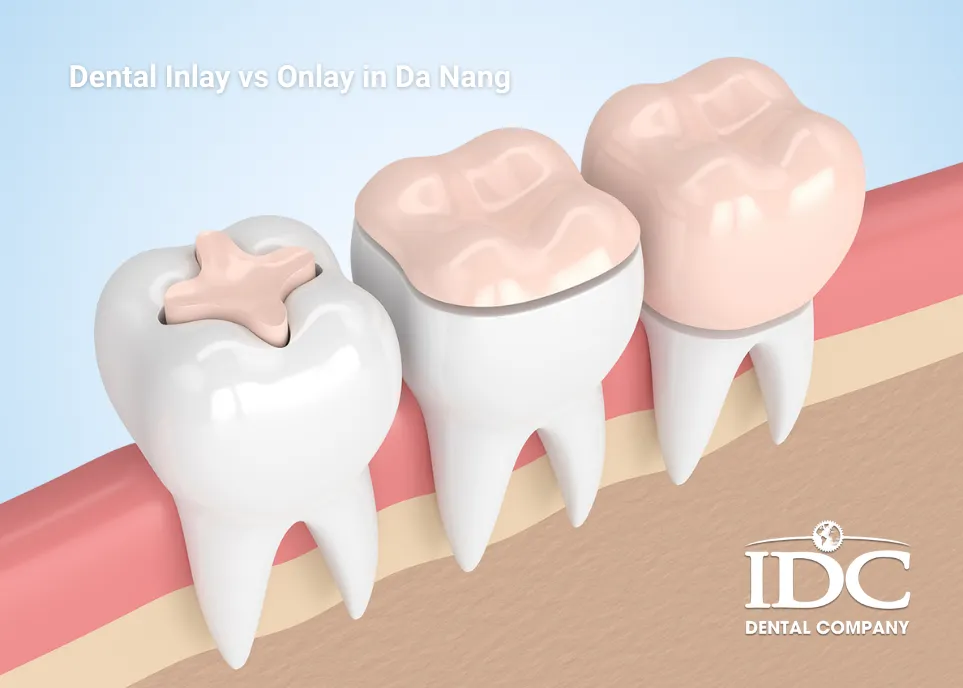
In this article, we will explain Dental Inlay vs Onlay in Da Nang, including the differences between the two treatments, when dentists recommend them, and why many patients choose Da Nang for restorative dental care.
What Is a Dental Inlay?
A dental inlay is a custom-made restoration designed to repair damage inside the chewing surface of a tooth. Unlike traditional fillings, which are molded directly in the mouth, an inlay is created in a dental laboratory and then bonded to the tooth.
Dental inlays are typically used when the damage or decay is too large for a simple filling but not severe enough to require a dental crown. Because they are precisely fabricated outside the mouth, inlays tend to fit more accurately and last longer than standard fillings.
When Do Dentists Recommend a Dental Inlay?
Dentists may recommend a dental inlay in several situations, including:
- Moderate tooth decay within the chewing surface
- Damage that affects the central area of the tooth but does not extend to the cusps
- Replacement of large, worn-out fillings
- Repair of minor tooth fractures
In these cases, an inlay can restore the tooth’s strength while preserving as much natural tooth structure as possible.
Materials Used for Dental Inlays
Dental inlays can be made from different materials depending on the patient’s needs and preferences. The most common materials include:
Porcelain or Ceramic
This is the most popular option because it closely matches the natural color of teeth and offers excellent durability.
Composite Resin
Composite materials provide a natural appearance and are often more affordable than ceramic options.
Gold
Although less commonly used today, gold inlays are extremely durable and can last for many years.
Benefits of Dental Inlays
Dental inlays offer several advantages compared to traditional fillings:
- Stronger and more durable than standard fillings
- Preserve more natural tooth structure than crowns
- Provide a precise and long-lasting fit
- Offer excellent aesthetics when made from ceramic
Because of these benefits, many dentists consider inlays to be an ideal solution for restoring moderately damaged teeth.
What Is a Dental Onlay?
A dental onlay is similar to an inlay but covers a larger portion of the tooth. While an inlay sits within the grooves of the tooth, an onlay extends over one or more cusps. For this reason, onlays are sometimes referred to as partial crowns.
Onlays are typically recommended when the tooth damage is more extensive and involves the chewing edges or cusps of the tooth.
When Is a Dental Onlay Needed?
Dentists may recommend an onlay in situations such as:
- Large cavities that weaken the tooth structure
- Fractured or cracked cusps
- Damage that extends beyond the central chewing surface
- Teeth that are too damaged for fillings but do not require full crowns
By covering the damaged cusps, an onlay helps protect the tooth from further fractures while restoring its function.
Materials Used for Dental Onlays
Similar to inlays, onlays can be made from several materials, including:
- Porcelain or ceramic
- Composite resin
- Gold
Porcelain onlays are especially popular because they offer both durability and a natural appearance that blends well with surrounding teeth.
Benefits of Dental vs Onlays
Dental onlays provide several important advantages:
- Protect weakened teeth from further damage
- Restore chewing strength and functionality
- Require less removal of tooth structure than crowns
- Provide a natural and aesthetic appearance
Because onlays cover the cusps of the tooth, they offer greater structural reinforcement than inlays.
Dental Inlay vs Onlay: Key Differences
Although dental inlays and onlays serve similar purposes, there are important differences between them.
Size and Coverage
The main difference between dental inlay vs onlay is the amount of tooth surface they cover.
An inlay is placed within the grooves of the tooth and does not extend over the cusps.
An onlay, on the other hand, covers one or more cusps and therefore provides additional protection for the tooth.
Strength and Durability
Both inlays and onlays are stronger than traditional fillings. However, onlays generally offer greater protection because they reinforce the chewing edges of the tooth.
Treatment Complexity
Inlays are usually recommended for moderate damage, while onlays are used when the tooth requires more extensive restoration.
Cost Differences
Onlays may cost slightly more than inlays because they cover a larger portion of the tooth and require more material. However, both treatments remain more affordable than full crowns.
Dental Inlay vs Filling vs Crown
Patients often wonder how inlays and onlays compare to other common dental restorations.
Dental Fillings
Fillings are used for small cavities and minor tooth damage. They are quick and inexpensive but may not last as long as indirect restorations.
Dental Inlays and Onlays
Inlays and onlays are custom-made restorations designed to provide greater durability and precision. They are ideal for moderate tooth damage.
Dental Crowns
A dental crown covers the entire tooth and is typically used when the tooth is severely damaged or weakened.
In many cases, inlays and onlays serve as a middle-ground solution between fillings and crowns.
The Dental Inlay vs Onlay Procedure in Da Nang
The process of receiving a dental inlay or onlay typically involves several steps.
Step 1: Dental Examination
The dentist first evaluates the tooth using a clinical examination and digital X-rays. This helps determine whether an inlay or an onlay is the best treatment option.
Step 2: Tooth Preparation
The damaged or decayed portion of the tooth is removed. The dentist then cleans and prepares the area for the restoration.
Step 3: Digital Scanning or Impressions
An impression or digital scan of the tooth is taken. This information is sent to a dental laboratory where the custom restoration is created.
Step 4: Fabrication of the Restoration
The inlay or onlay is carefully crafted using ceramic or other materials to ensure an accurate fit.
Step 5: Final Placement
During the final appointment, the dentist bonds the restoration to the tooth and adjusts the bite for comfort and function.
How Much Do Dental Inlays vs Onlays Cost in Da Nang?
One of the reasons many patients choose Vietnam for dental treatment is affordability.
The cost of dental inlays and onlays in Da Nang is significantly lower than in many Western countries.
Average Price Range
While prices may vary depending on the clinic and materials used, typical costs may include:
- Ceramic dental inlay: approximately $150 – $350
- Ceramic dental onlay: approximately $200 – $400
Factors That Affect Treatment Cost
Several factors can influence the cost of treatment:
- Type of material used
- Dentist experience and expertise
- Technology used in the clinic
- Complexity of the case
Even with these factors, treatment in Da Nang is usually much more affordable compared to countries such as the United States or Australia.
Advantages of Getting Dental Inlays or Onlays in Da Nang
Many international patients travel to Da Nang for dental care for several reasons.
Modern Dental Clinics
Many dental clinics in Da Nang are equipped with advanced technologies such as digital scanning, CAD/CAM systems, and modern sterilization equipment.
Experienced Dentists
Dentists in Da Nang often receive international training and have experience treating patients from around the world.
Affordable Dental Care
Patients can save a significant amount of money compared to dental treatment costs in Western countries.
Dental Tourism Opportunities
Da Nang is also known for its beautiful beaches, cultural attractions, and welcoming atmosphere. Many visitors choose to combine dental treatment with a relaxing vacation.
Who Is a Good Candidate for Dental Inlays or Onlays?
Dental inlays and onlays are suitable for many patients, including:
- Individuals with moderate tooth decay
- Patients with cracked or weakened teeth
- People looking for a long-lasting alternative to fillings
- Patients who want natural-looking restorations
A dentist will evaluate the condition of the tooth to determine whether an inlay or an onlay is the best option.
How Long Do Dental Inlays/Onlays Last?
When properly cared for, dental inlays and onlays can last a long time.
Most restorations can last 10 to 20 years or longer, depending on several factors:
- Oral hygiene habits
- Quality of the restoration
- Material used
- Regular dental checkups
Proper care plays a key role in extending the lifespan of these restorations.
Caring for Dental Inlays and Onlays
Maintaining good oral hygiene helps protect both natural teeth and dental restorations.
Brush and Floss Daily
Brushing twice a day and flossing regularly help prevent plaque buildup around the restoration.
Visit Your Dentist Regularly
Routine dental checkups allow the dentist to monitor the condition of the inlay or onlay.
Avoid Excessive Pressure
Avoid chewing hard objects such as ice or hard candies that could damage the restoration.
Dental Inlay vs Onlay in IDC Da Nang Dental
When a tooth becomes damaged due to decay or fractures, choosing the right restoration method is important to protect the tooth and restore its function. Understanding dental inlay vs onlay in IDC Da Nang Dental can help patients determine which treatment is most suitable for their dental condition.
At IDC Da Nang Dental, dentists often recommend dental inlays or onlays when a cavity or tooth damage is too large for a simple filling but not severe enough to require a full dental crown. Both treatments are custom-made restorations designed to strengthen the tooth while preserving as much natural structure as possible.
A dental inlay is typically used to repair damage within the grooves of the tooth without covering the cusps. In contrast, a dental onlay extends over one or more cusps of the tooth, providing additional protection and reinforcement for weakened teeth.
With modern dental technology and experienced dentists, IDC Da Nang Dental offers precise and durable inlay and onlay restorations that restore both the function and appearance of damaged teeth. Patients can benefit from high-quality materials, advanced techniques, and personalized treatment plans to achieve long-lasting dental results.
 WhatsApp