Dental implant surgery is a major step toward restoring your smile, confidence, and chewing function. However, the success of your implant does not depend on surgery alone. What you eat during the healing phase plays a decisive role in whether the implant integrates smoothly with your jawbone or develops complications.
Many implant failures are caused not by poor surgical technique, but by patients eating the wrong foods too soon. This guide will show you the Top 10 Foods to Avoid After Dental Implant Surgery, explain why they are dangerous, and suggest safer alternatives to support faster healing.
Why Certain Foods Can Damage Dental Implants
How the Healing Process Works After Implant Surgery
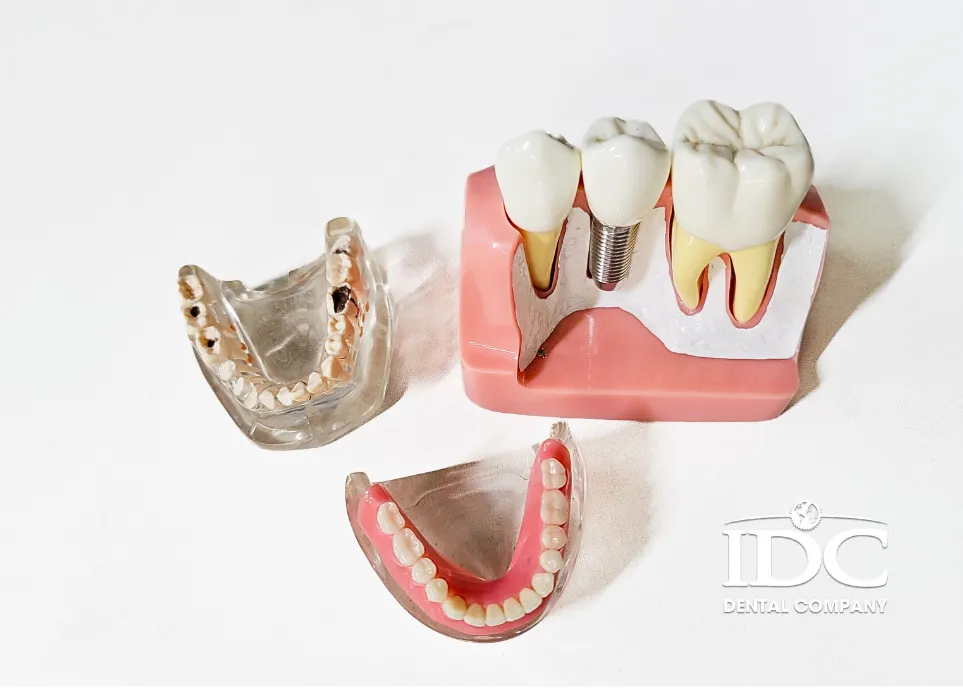
After the implant is placed, your jawbone must grow tightly around it in a process called osseointegration. During the first 1–3 weeks, the implant is extremely sensitive to pressure, temperature changes, and bacterial exposure. Even minor trauma can disturb the blood clot or cause microscopic movement, leading to delayed healing or implant failure.
The Risks of Eating the Wrong Foods Too Early
- Increased bleeding
- Infection around the surgical site
- Stitches are being pulled loose
- Implant instability
- Pain and prolonged swelling
Common Complications Caused by Improper Diet
Patients who ignore dietary restrictions are more likely to experience dry socket–like symptoms, peri-implant inflammation, and even implant loss.
Top 10 Foods to Avoid After Dental Implant Surgery
1. Hard Nuts and Seeds
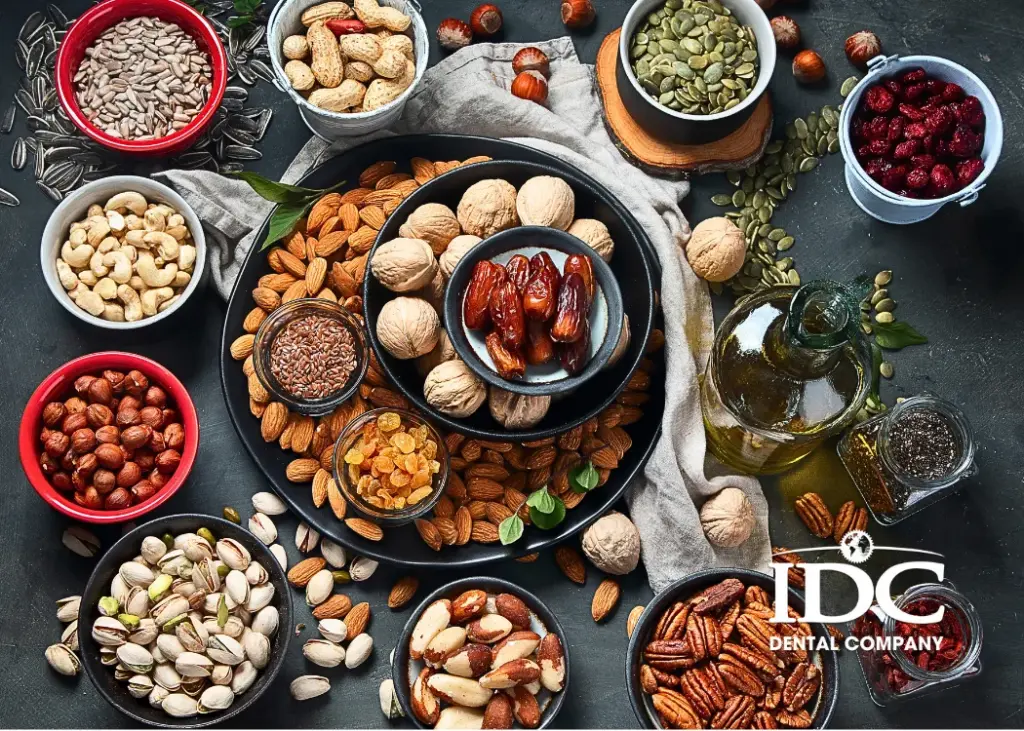
Almonds, peanuts, sunflower seeds, sesame seeds, and granola are extremely dangerous after implant surgery. They can lodge in the surgical site and introduce bacteria, causing infection and inflammation.
Avoid for at least 3–4 weeks.
2. Crunchy Snacks (Chips, Popcorn, Crackers)
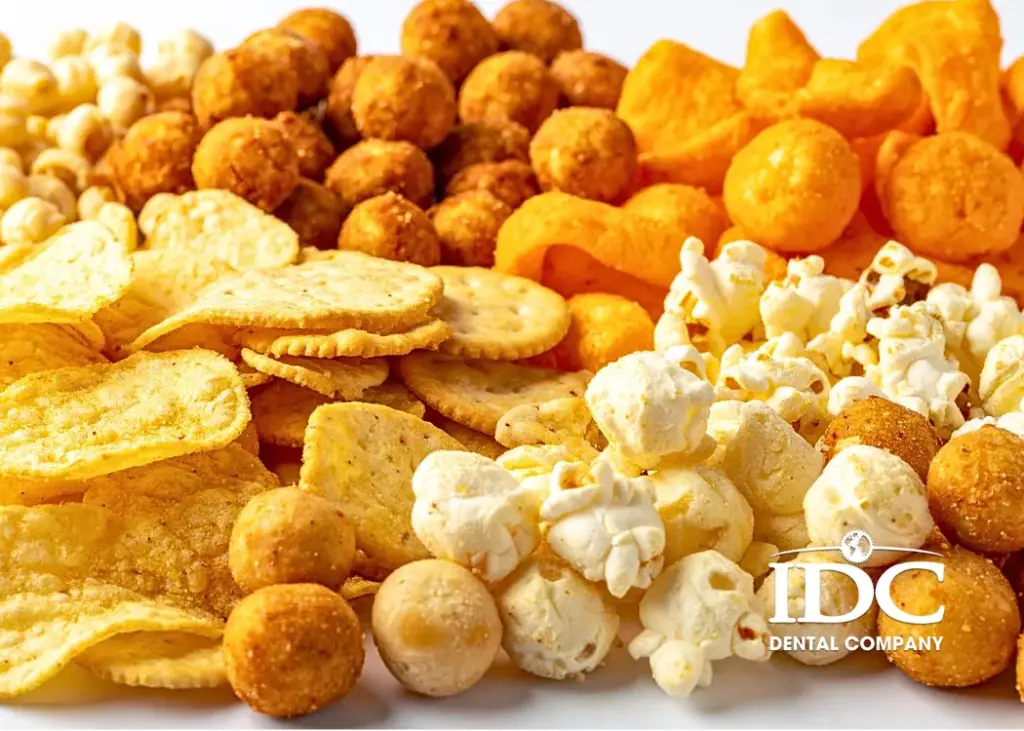
These foods create sharp fragments that can puncture your gums and disturb the healing blood clot. Popcorn kernels are especially notorious for getting stuck deep in surgical wounds.
Avoid for 2–3 weeks.
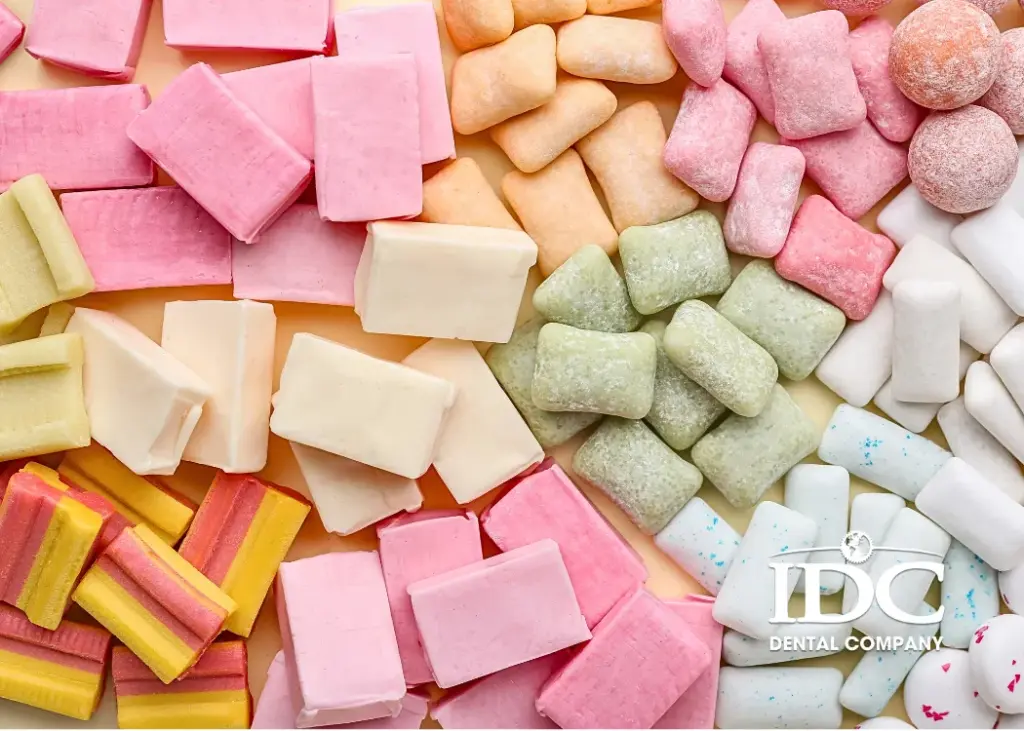
3. Sticky Candy and Chewing Gum
Caramel, gummies, toffee, and chewing gum pull on stitches and apply sideways pressure to the implant, risking movement before bone integration is complete.
Avoid for at least 1 month.
4. Hot and Spicy Foods
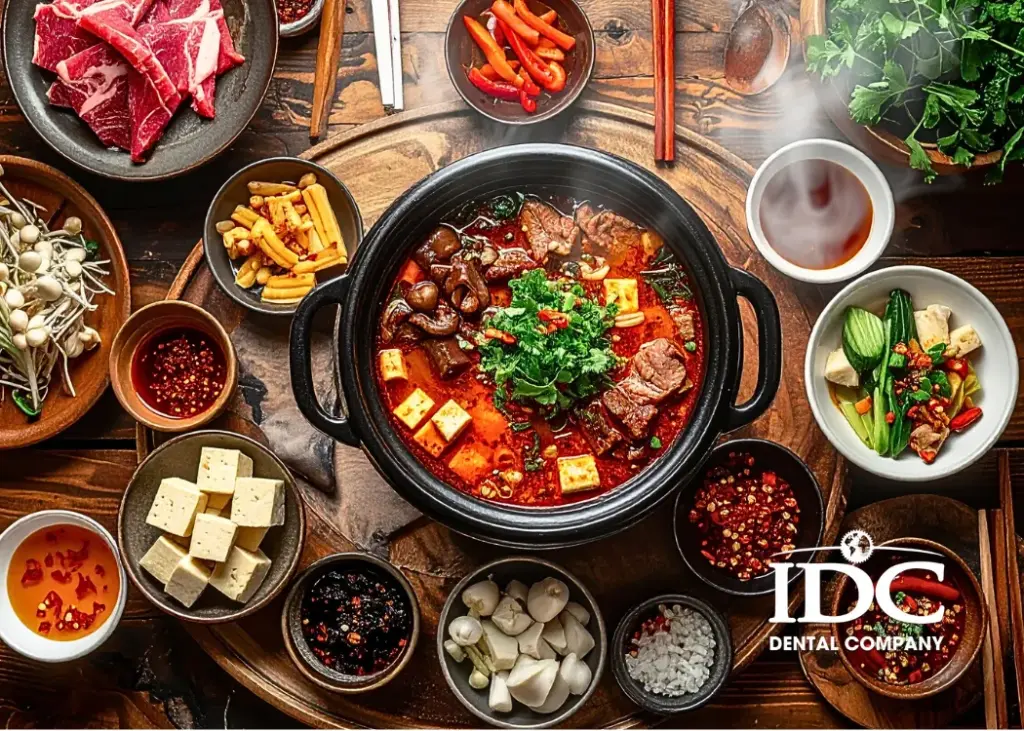
Spicy foods increase blood flow to the gums, causing throbbing pain and potential bleeding. Hot temperature also disrupts clot formation.
Avoid for the first 7–10 days.
5. Acidic Foods (Citrus Fruits, Tomatoes, Vinegar)
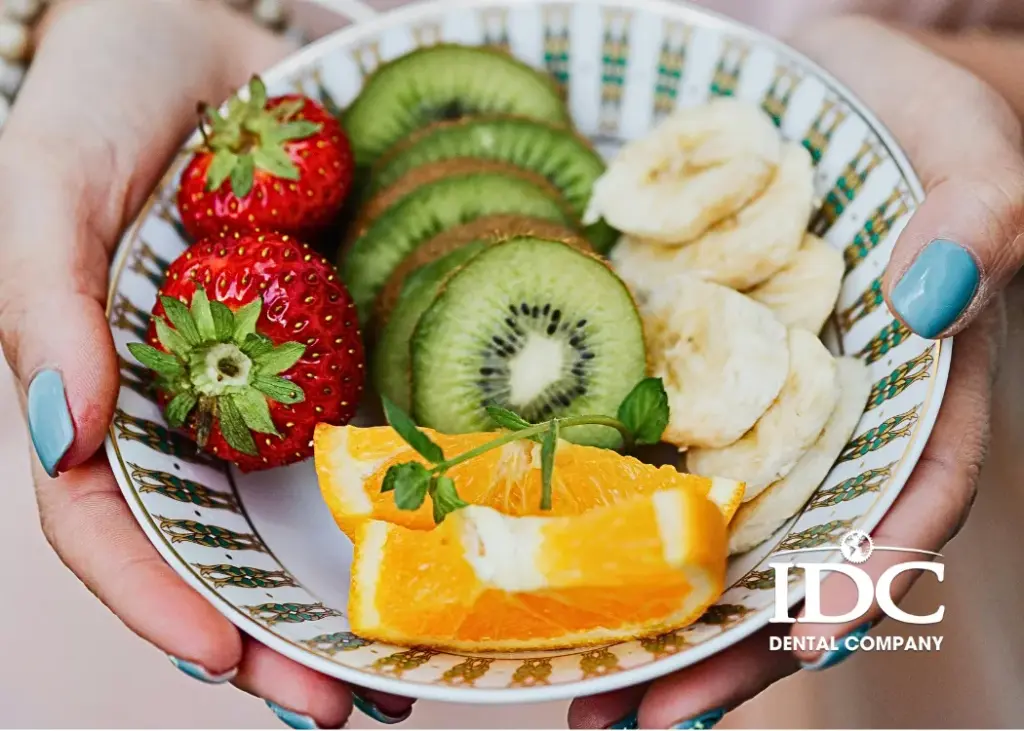
Lemons, oranges, pineapple, tomatoes, vinegar-based dressings, and sour soups irritate gum tissue and slow wound closure.
Avoid for the first 10 days.
6. Tough Meats and Jerky
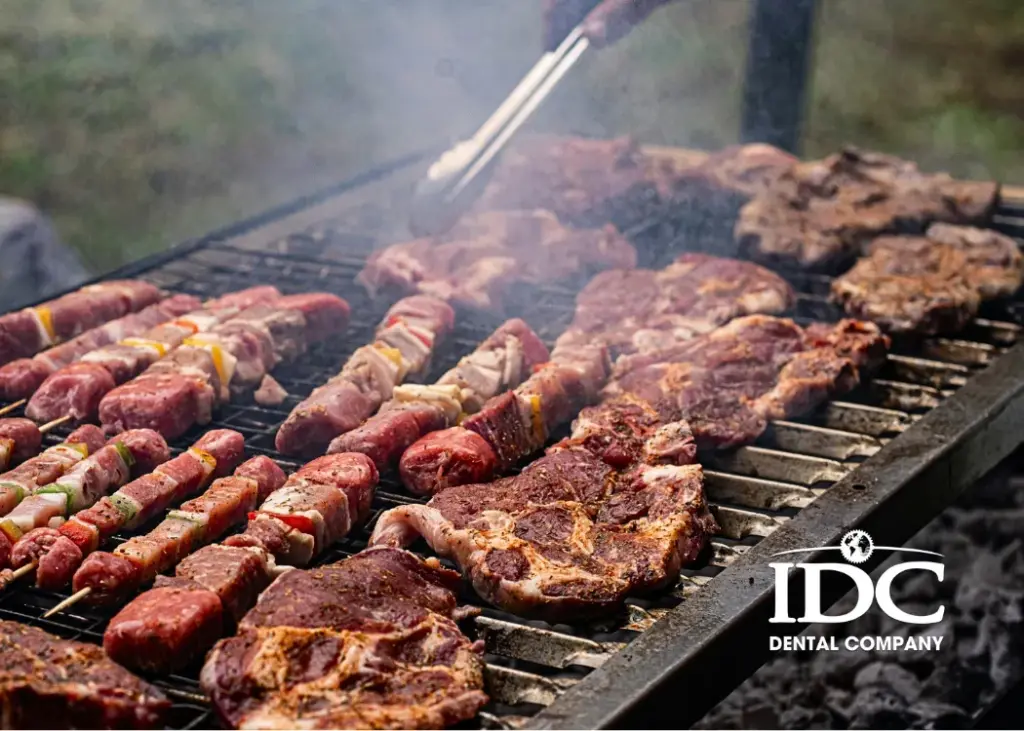
Steak, beef jerky, dried pork, and grilled meats require a heavy chewing force that can destabilize your implant and strain the surrounding bone.
Avoid for: 2–4 weeks.
7. Alcohol and Carbonated Drinks
Alcohol interferes with blood clotting and bone regeneration, while soda creates acidic environments that slow tissue healing.
Avoid for: minimum 7 days, ideally 2 weeks.
8. Coffee and Hot Tea
Hot beverages increase blood pressure at the surgical site and may cause renewed bleeding. Caffeine can also dry your mouth, slowing recovery.
Avoid for: first 72 hours.
9. Sugary Desserts and Chocolate Bars
Sugar feeds harmful bacteria in your mouth, increasing the risk of post-surgical infection.
Avoid for: first 2 weeks.
10. Crusty Bread and Hard Rice Dishes
Baguettes, toasted bread, fried rice, and sticky rice cakes can break apart and irritate your wound.
Avoid for: 2–3 weeks.
How Long Should You Avoid These Foods?
First 24 Hours – Highest Risk Period
Stick strictly to cold liquids only.
First Week – Critical Healing Phase
Soft foods only. Avoid chewing on the implant side completely.
Long-Term Dietary Habits
Even after healing, avoid using implants to crack nuts or chew ice — implants are strong but not indestructible.
What Happens If You Eat the Wrong Foods?
Bleeding and Disrupted Blood Clots
A disturbed clot exposes the bone, causing intense pain and delayed healing.
Infection and Inflammation Risks
Food debris trapped around the implant becomes a breeding ground for bacteria.
Implant Movement or Failure
Chewing pressure may loosen the implant before osseointegration is complete.
Safe Alternatives to Replace Avoided Foods
Soft Snack Options
- Yogurt
- Mashed banana
- Applesauce
Protein-Rich Healing Foods
- Scrambled eggs
- Tofu
- Soft fish
Hydration and Healing Drinks
- Water
- Cold herbal tea
- Almond milk
FAQs About Foods to Avoid After Dental Implant Surgery
How soon can I eat solid foods again?
After 7–10 days, only very soft solids.
Can I drink coffee after implant surgery?
Wait at least 3 days.
When is it safe to eat spicy food?
After 10–14 days.

 WhatsApp