Full-mouth implants are one of the most advanced and reliable solutions for people who have lost most or all of their teeth. They are designed to restore not only your smile but also your ability to eat comfortably, speak clearly, and maintain a healthy facial structure. Unlike removable dentures, full-mouth implants provide a fixed and long-lasting replacement that feels much more like natural teeth.
However, many people postpone treatment, believing they can manage with missing teeth or traditional dentures for a few more years. The problem is that delaying treatment often leads to progressive jawbone loss, shifting teeth, changes in facial appearance, and more complicated dental procedures later on.
Choosing treatment earlier can make a significant difference. Early implant placement helps preserve bone, protect your oral health, and often results in a simpler treatment process with better long-term outcomes.
In this article, we’ll explore why Full-mouth dental implants should be considered sooner rather than later, how the procedure works, and the many benefits of restoring your smile before tooth loss causes irreversible changes.
What Are Full-Mouth Implants?
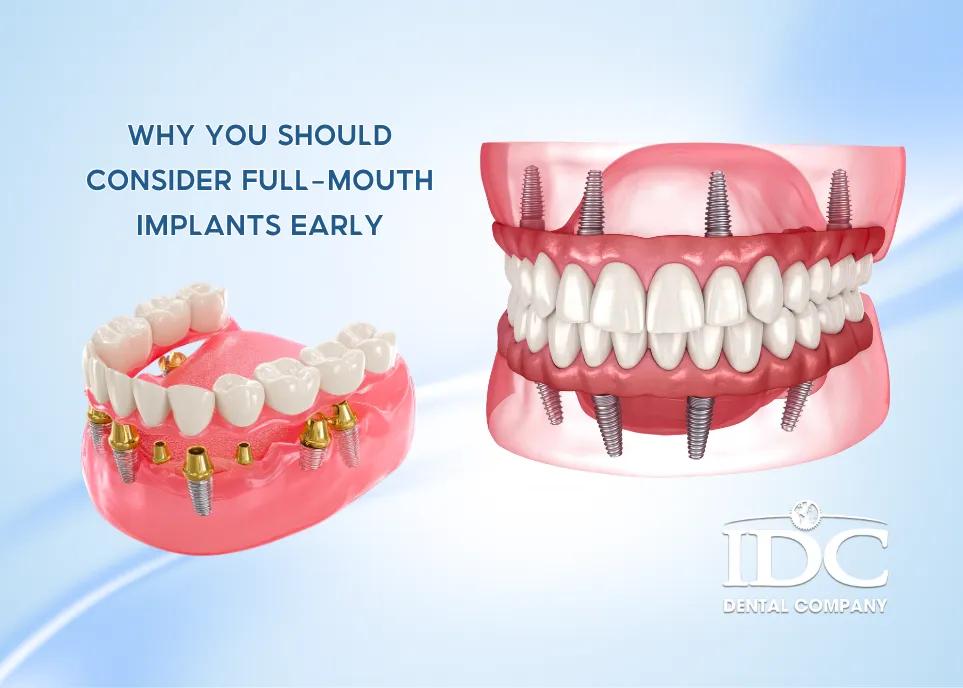
Full-mouth implants are a comprehensive dental restoration that replaces all or most missing teeth in the upper jaw, lower jaw, or both.
Unlike traditional dentures that rest on the gums, full-mouth implants are anchored directly into the jawbone using dental implants. These implants act as artificial tooth roots and support a fixed prosthesis that looks, feels, and functions much like natural teeth.
Depending on the patient’s needs, dentists may recommend:
- All-on-4 dental implants.
- All-on-6 dental implants.
- Implant-supported bridges.
- Full-arch zirconia restorations.
These treatments are designed for patients who:
- Have multiple missing teeth.
- Have severely damaged or failing teeth.
- Suffer from advanced gum disease.
- Wear dentures and want a fixed alternative.
- Experience difficulty chewing or speaking due to tooth loss.
Full-mouth implants are considered one of the most advanced and reliable solutions in modern dentistry because they restore not only the smile but also the underlying bone structure and oral function.
Why Many People Delay Full-Mouth Implant Treatment
Although full-mouth implants offer many advantages, many people postpone treatment for years.
Fear of Surgery
One of the biggest reasons is fear.
Some patients imagine implant surgery to be painful or complicated. In reality, modern implant procedures are performed with local anesthesia and, in many cases, sedation options that help patients remain relaxed and comfortable.
Most people report that the procedure is easier than they expected.
Cost Concerns
Full-mouth implants require a larger initial investment than dentures or temporary solutions.
Because of this, some patients delay treatment hoping to save money.
However, waiting can sometimes increase costs because bone loss, gum disease, and failing teeth may require additional procedures before implants can be placed.
Adapting to Missing Teeth
Another common reason is that people gradually adapt to tooth loss.
They may:
- Chew on one side.
- Avoid certain foods.
- Cover their smile.
- Wear uncomfortable dentures.
Over time, these changes become part of daily life, causing patients to underestimate the impact tooth loss has on their health and well-being.
Why You Should Consider Full-Mouth Implants Early
Prevent Jawbone Loss
One of the most important reasons to seek treatment early is to preserve the jawbone.
When a tooth is lost, the jawbone underneath no longer receives stimulation from chewing forces.
As a result:
- Bone density decreases.
- The jawbone shrinks.
- The facial structure changes.
This process, called bone resorption, begins soon after tooth loss and continues over time.
Dental implants are the only tooth replacement option that stimulates the jawbone similarly to natural tooth roots.
By placing implants early, patients can:
- Preserve bone volume.
- Maintain jaw strength.
- Reduce the risk of severe bone loss.
Preserve Facial Appearance
Many people don’t realize that missing teeth can change their facial appearance.
As bone loss progresses, patients may notice:
- Sunken cheeks.
- Thin lips.
- Wrinkles around the mouth.
- A collapsed facial profile.
- A prematurely aged appearance.
These changes can become more noticeable over the years.
Full-mouth implants support the facial structure and help maintain natural facial contours.
Choosing treatment early allows patients to preserve their appearance and avoid the aging effects associated with tooth loss.
Avoid Complex Bone Grafting Procedures
When bone loss becomes severe, implant placement may require additional procedures such as:
- Bone grafting.
- Sinus lift surgery.
- Soft tissue grafting.
These treatments increase:
- Treatment time.
- Overall cost.
- Recovery period.
Patients who receive implants earlier often have sufficient bone volume, allowing them to avoid or minimize these additional procedures.
This makes treatment simpler and more predictable.
Protect Remaining Teeth
When several teeth are missing, the remaining teeth must compensate.
Over time, this extra pressure can lead to:
- Excessive wear.
- Tooth fractures.
- Shifting teeth.
- Bite problems.
- Increased risk of tooth loss.
The longer this imbalance continues, the greater the damage to the remaining teeth.
Full-mouth implants restore proper bite alignment and distribute chewing forces evenly across the mouth.
This helps protect the natural teeth that remain and preserves overall oral health.
Restore Normal Eating Ability Sooner
Missing teeth can significantly affect nutrition and eating habits.
Many people begin avoiding:
- Steak.
- Nuts.
- Fresh fruits.
- Crunchy vegetables.
- Favorite meals that require chewing.
Some patients even experience digestive issues because they cannot chew food properly.
Full-mouth implants restore nearly normal chewing function.
Patients can enjoy:
- A wider variety of foods.
- Better nutrition.
- More enjoyable meals.
- Greater comfort while eating.
The sooner treatment begins, the sooner patients can return to a healthier lifestyle.
Improve Quality of Life With Early Full-Mouth Implants
Speak More Clearly
Teeth play an important role in speech.
When multiple teeth are missing, people may struggle to pronounce certain words or sounds clearly.
Dentures can also slip during speaking, causing embarrassment.
Because implants are fixed securely in place, they provide stability and help patients speak naturally and confidently.
Increase Self-Confidence
Tooth loss often affects emotional well-being.
Many patients become self-conscious about:
- Smiling in photos.
- Speaking in public.
- Socializing.
- Meeting new people.
Some even avoid social situations entirely.
Full-mouth implants restore a natural-looking smile and help patients regain confidence.
Many people report feeling younger, happier, and more comfortable in social and professional settings after treatment.
Enjoy a Better Lifestyle
Traditional dentures require:
- Adhesives.
- Frequent adjustments.
- Removal for cleaning.
- Ongoing maintenance.
They may also slip unexpectedly.
Full-mouth implants eliminate many of these inconveniences.
Patients enjoy:
- Fixed teeth.
- Greater comfort.
- Improved stability.
- More freedom in everyday life.
Are Full-Mouth Implants Easier When Done Early?
The answer is often yes.
Better Bone Quality
Patients who receive implants soon after tooth loss usually have:
- More bone volume.
- Stronger bone density.
- Better implant stability.
This often leads to:
- Higher success rates.
- Faster healing.
- More predictable outcomes.
Shorter Treatment Time
Early treatment may eliminate the need for:
- Extensive bone grafting.
- Multiple surgeries.
- Complex restorative procedures.
As a result, treatment can be completed more efficiently.
Lower Risk of Complications
When oral health is preserved, implant placement is generally simpler.
There is less risk of:
- Implant failure.
- Infection.
- Surgical complications.
- Additional procedures.
Can Early Full-Mouth Implants Save Money?
Although implants require a significant investment upfront, early treatment can save money over time.
Avoid Additional Procedures
Delaying treatment may increase the need for:
- Bone grafting.
- Sinus lifts.
- Gum surgery.
- Multiple tooth extractions.
Each additional procedure adds to the overall cost.
Reduce Ongoing Dental Expenses
Patients with failing teeth often require:
- Frequent fillings.
- Root canal treatments.
- Crowns.
- Denture repairs.
These repeated expenses can accumulate over the years.
Full-mouth implants offer a durable and long-lasting solution that may reduce future dental costs.
Long-Term Value
Dental implants have an excellent success rate and can last decades.
With proper care:
- Implants may last a lifetime.
- Fixed restorations can last many years.
- Patients enjoy predictable, long-term results.
For many people, implants are not simply an expense—they are an investment in health and quality of life.
What Happens If You Wait Too Long?
Waiting too long for treatment can make the situation more complicated.
Progressive Bone Loss
The jawbone continues to shrink after tooth loss.
Over time:
- Bone volume decreases.
- Implant placement becomes more challenging.
- Additional surgeries may be required.
Facial Changes Become More Noticeable
Bone loss can change facial proportions and create an older appearance.
These changes may become difficult to reverse completely.
More Complex Treatment
Advanced tooth loss often requires:
- More implants.
- Bone grafting.
- Longer healing periods.
- More appointments.
Early intervention is often simpler and more efficient.
The Full-Mouth Implant Procedure
The treatment process typically involves several steps.
Initial Consultation
Your dentist will perform:
- A comprehensive oral examination.
- Digital X-rays.
- A 3D CT scan.
- A personalized treatment plan.
Tooth Extraction
If damaged or failing teeth remain, they may need to be removed before implant placement.
Implant Placement
Several implants are surgically placed into the jawbone.
Common approaches include:
- All-on-4.
- All-on-6.
- Full-arch implant restorations.
Temporary Teeth
Many patients receive temporary teeth immediately after surgery.
This allows them to:
- Smile confidently.
- Eat soft foods.
- Maintain a natural appearance during healing.
Final Restoration
After the implants integrate with the bone, a custom prosthesis is attached.
The final restoration is designed to:
- Look natural.
- Feel comfortable.
- Restore long-term chewing function.



 WhatsApp