
Loose teeth treatment can help save your natural teeth when a permanent tooth becomes loose. Unlike baby teeth, adult teeth should remain firmly supported by healthy gums and jawbone throughout life. If you notice a loose tooth, it may be a sign of gum disease, injury, or another underlying dental problem that requires prompt attention.
The good news is that many loose teeth can be preserved with early diagnosis and appropriate treatment. If you’re looking for loose teeth treatment in Da Nang, this guide explains the common causes of tooth mobility, available treatment options, and how timely care can help protect your natural smile.
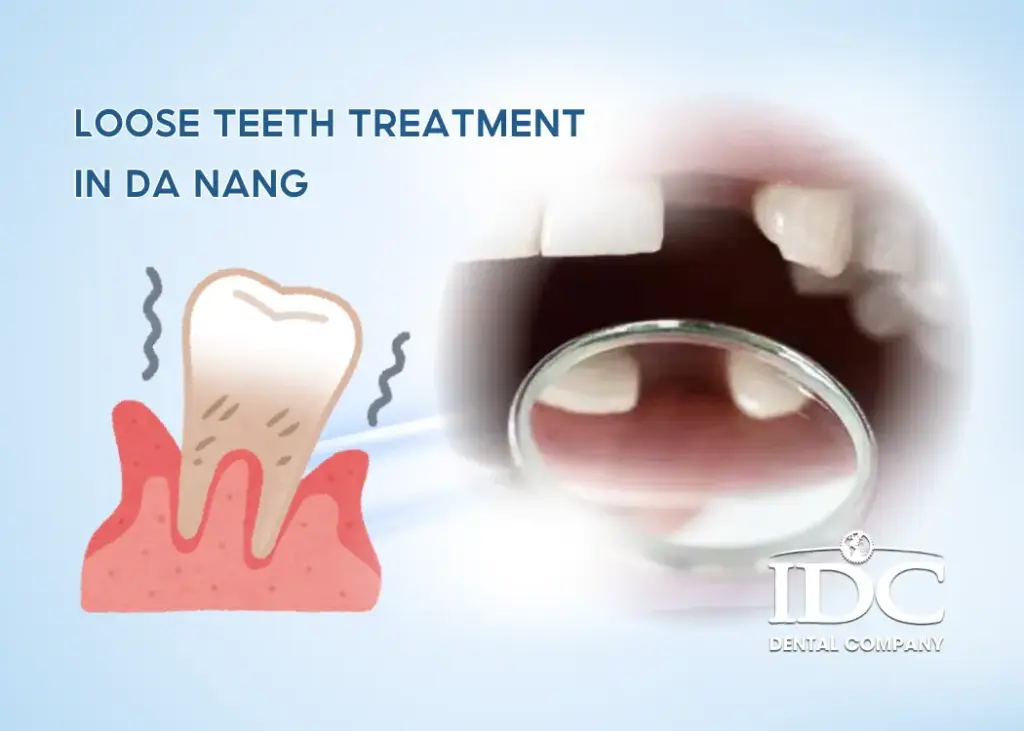
What does it mean when an adult tooth becomes loose?
Permanent teeth are supported by a complex system consisting of the jawbone, gums, and periodontal ligament. Together, these structures hold each tooth securely in place while allowing it to withstand the forces generated during chewing and speaking.
A healthy adult tooth should feel stable. Although there is a tiny amount of natural movement due to the elasticity of the periodontal ligament, this movement is so slight that it is generally impossible to notice without specialized dental instruments.
When a tooth becomes visibly loose or moves while eating, speaking, or touching it with your tongue or fingers, it usually indicates that one or more of its supporting tissues have been damaged.
Normal tooth mobility vs. abnormal tooth mobility
Many people are surprised to learn that all teeth have a very small degree of natural mobility. This flexibility acts like a shock absorber, helping distribute chewing forces evenly across the jaw.
However, abnormal mobility occurs when:
- A tooth shifts noticeably while biting.
- The tooth rocks back and forth when touched.
- Chewing becomes uncomfortable.
- The position of the tooth begins to change.
- You notice gaps developing between teeth.
Abnormal tooth mobility often progresses gradually. Some patients only realize there is a problem after experiencing discomfort while eating or noticing changes in their bite.
How Teeth Stay Firmly Attached
To understand why teeth become loose, it’s helpful to know how they are supported.
The Periodontal Ligament
The periodontal ligament is a network of tiny connective tissue fibers that attaches the tooth root to the surrounding bone. It acts as a cushion, absorbing pressure during chewing while keeping the tooth stable.
Healthy Gum Tissue
Your gums create a protective seal around each tooth, preventing bacteria from reaching the deeper supporting tissues. Healthy gums are firm, pink, and fit snugly around the teeth.
The Jawbone
The alveolar bone surrounds the tooth roots and provides the primary structural support. As long as this bone remains healthy, teeth can remain functional for decades.
When disease, trauma, or excessive force damages any of these supporting structures, tooth stability begins to decrease.
Why You Should Never Ignore a Loose Tooth
Many patients hope a loose tooth will tighten on its own. Unfortunately, this is rarely the case.
Without treatment, the underlying condition often continues to worsen. Bone loss may progress, infection can spread deeper beneath the gums, and the tooth may eventually become impossible to save.
Seeking professional evaluation as soon as you notice tooth mobility greatly improves the likelihood of preserving your natural tooth while avoiding more complex and expensive procedures later.
Common Causes of Loose Teeth
A loose adult tooth is a symptom rather than a disease itself. Identifying the underlying cause is essential because each condition requires a different treatment approach.
Below are the most common reasons adults experience loose teeth.
Advanced Gum Disease (Periodontitis)
The leading cause of loose teeth in adults is periodontitis, an advanced stage of gum disease.
Periodontitis develops when plaque and tartar accumulate around the teeth, allowing harmful bacteria to infect the gums. As the infection progresses, it destroys the periodontal ligament and gradually erodes the surrounding jawbone.
Common signs include:
- Bleeding gums during brushing
- Persistent bad breath
- Gum recession
- Swollen or tender gums
- Deep periodontal pockets
- Loose or shifting teeth
Without treatment, continued bone loss eventually reduces the support needed to keep teeth firmly anchored.
Dental Trauma
An accident can suddenly loosen an otherwise healthy tooth.
Common causes include:
- Sports injuries
- Falls
- Car accidents
- Biting hard objects
- Physical impacts to the face
Depending on the severity, the periodontal ligament may become stretched, bruised, or partially torn. In some cases, the tooth can recover with prompt dental treatment.
Teeth Grinding (Bruxism)
Many people grind or clench their teeth during sleep without realizing it.
Over time, excessive biting forces place enormous stress on the periodontal ligament and supporting bone, which may lead to:
- Tooth mobility
- Tooth wear
- Cracked teeth
- Jaw pain
- Headaches
- Increased sensitivity
A custom-made night guard often helps protect the teeth from further damage.
Bite Problems (Malocclusion)
When the upper and lower teeth do not fit together properly, certain teeth may absorb more chewing force than they are designed to handle.
This uneven pressure can gradually weaken the supporting tissues, increasing tooth mobility over time.
Dentists may recommend bite adjustment or orthodontic treatment to improve force distribution and reduce stress on affected teeth.
Bone Loss Associated with Aging or Systemic Conditions
As people age, natural bone density may decrease. Certain medical conditions can also affect the health of the jawbone.
Examples include:
- Osteoporosis
- Poorly controlled diabetes
- Chronic inflammatory diseases
- Smoking-related bone loss
These factors can accelerate periodontal disease and reduce the bone support surrounding the teeth.
Infection Around the Tooth Root
A severe tooth infection may spread beyond the pulp and into the tissues surrounding the root.
When infection reaches the bone, inflammation can weaken the attachment between the tooth and the jaw, resulting in mobility and discomfort.
Depending on the diagnosis, root canal treatment may be necessary to eliminate the infection while preserving the natural tooth.
Failed Dental Restorations
Old crowns, bridges, or fillings that no longer fit properly can sometimes contribute to localized gum inflammation or bite imbalance.
Over time, this may increase stress on the supporting structures and contribute to tooth mobility if left untreated.
Regular dental examinations help identify these problems before they become more serious.
Symptoms That Indicate You Need Loose Teeth Treatment
Many patients don’t experience severe pain during the early stages of tooth mobility. As a result, they may delay treatment until significant damage has already occurred.
You should schedule a dental examination if you notice any of the following symptoms.
Tooth Movement While Eating
One of the earliest warning signs is feeling that a tooth shifts slightly while chewing.
Even mild movement should be evaluated because healthy permanent teeth should remain stable under normal chewing forces.
Pain When Biting
Discomfort while biting may indicate inflammation around the tooth root or damage to the supporting ligament.
The pain may be mild initially but often worsens as the underlying condition progresses.
Swollen or Bleeding Gums
Bleeding gums are never considered normal.
If your gums bleed regularly while brushing or flossing, especially around a loose tooth, periodontal disease may already be affecting the supporting tissues.
Gum Recession
As gums pull away from the teeth, more of the tooth root becomes exposed.
Gum recession not only affects appearance but also increases sensitivity and reduces the natural protection around the tooth.
Persistent Bad Breath
Chronic bad breath that does not improve with brushing may be caused by bacteria trapped deep beneath the gumline.
This is a common sign of advanced periodontal disease.
Tooth Sensitivity
Loose teeth often become more sensitive to:
- Cold drinks
- Hot beverages
- Sweet foods
- Air exposure
This sensitivity may occur because gum recession exposes the tooth root or because inflammation affects the surrounding tissues.
Changes in Your Bite
Some patients notice that their teeth no longer fit together the way they used to.
If your bite suddenly feels “different,” or certain teeth contact before others, tooth movement may already be occurring.
Recognizing these warning signs early and seeking loose teeth treatment in Da Nang can significantly increase the chances of preserving your natural teeth. In the next section, we’ll explore whether a loose tooth can be saved, how dentists diagnose the condition, and the most effective treatment options available.
Loose Teeth Treatment Options in Da Nang
Treatment depends entirely on the underlying cause of tooth mobility. Rather than simply treating the loose tooth itself, dentists aim to eliminate the condition affecting the supporting tissues.
Below are the most common treatment options.
Scaling and Root Planing (Deep Cleaning)
For patients with early to moderate periodontal disease, deep cleaning is often the first step.
Unlike a routine dental cleaning, scaling and root planing removes plaque, tartar, and bacteria from below the gumline where periodontal disease develops.
Benefits include:
- Reducing bacterial infection
- Decreasing gum inflammation
- Allowing gums to reattach to the tooth
- Slowing bone loss
- Improving tooth stability
Many patients notice healthier gums and reduced mobility after periodontal tissues begin healing.
Periodontal Therapy
If gum disease is more advanced, additional periodontal treatment may be required.
Depending on the severity, treatment may include:
- Periodontal maintenance cleanings
- Local antimicrobial therapy
- Laser-assisted periodontal treatment (when appropriate)
- Periodontal surgery in selected cases
The goal is to stop disease progression and preserve as much supporting bone as possible.
Splinting Loose Teeth
When a tooth has become mobile but still has the potential to heal, splinting may be recommended.
A dental splint connects the loose tooth to neighboring stable teeth using a strong bonding material.
Splinting helps:
- Reduce unwanted movement
- Improve comfort while chewing
- Protect healing periodontal tissues
- Increase stability during recovery
Depending on the situation, splints may be temporary or remain in place for a longer period.
Bite Adjustment (Occlusal Adjustment)
If excessive biting pressure contributes to tooth mobility, your dentist may carefully reshape small areas of the biting surfaces.
This procedure helps:
- Balance chewing forces
- Reduce stress on affected teeth
- Improve comfort
- Prevent further periodontal damage
Even minor bite corrections can significantly reduce excessive force on vulnerable teeth.
Night Guard for Teeth Grinding
Patients who grind or clench their teeth during sleep often place tremendous pressure on already weakened teeth.
A custom-made night guard helps by:
- Protecting teeth from excessive force
- Reducing strain on periodontal ligaments
- Preventing further tooth wear
- Improving long-term stability
Night guards are especially beneficial when bruxism is contributing to tooth mobility.
Root Canal Treatment
If the loose tooth is associated with infection inside the pulp, root canal treatment may be necessary.
During the procedure, the dentist removes infected tissue from inside the tooth, disinfects the canals, and seals them to prevent reinfection.
Saving the natural tooth through root canal therapy is often preferable to extraction whenever possible.
Bone Grafting
Patients with significant bone loss may benefit from bone grafting procedures.
Bone grafts can help:
- Restore lost bone volume
- Improve periodontal support
- Prepare for future implant placement if necessary
- Enhance long-term oral health
Not every patient requires bone grafting, but it can be an important option in advanced periodontal cases.
Tooth Extraction (Only When Necessary)
Dentists always strive to preserve natural teeth whenever possible. However, extraction may become the safest option if:
- Bone loss is extremely advanced.
- The tooth cannot be stabilized.
- A severe fracture extends below the gumline.
- Infection has caused irreversible damage.
When extraction cannot be avoided, your dentist will discuss suitable tooth replacement options, such as:
- Dental implants, which provide a long-lasting solution that closely mimics natural teeth.
- Dental bridges, which replace one or more missing teeth by anchoring to adjacent teeth.
- Removable partial dentures, which may be appropriate for certain patients depending on their oral condition and treatment goals.
Replacing a missing tooth promptly helps restore chewing function, maintain your smile, and reduce the risk of neighboring teeth shifting out of position.
Can a Loose Tooth Be Saved?
One of the first questions patients ask after discovering a loose tooth is, “Can my tooth still be saved?” In many cases, the answer is yes. Modern dentistry focuses on preserving natural teeth whenever possible, and early treatment often allows dentists to stabilize loose teeth before permanent damage occurs.
However, the success of treatment depends on identifying the underlying cause and addressing it promptly. A tooth that is only slightly mobile due to early gum disease may have an excellent prognosis, while a tooth with severe bone loss or extensive trauma may require more complex treatment.
Factors That Determine Whether a Loose Tooth Can Be Saved
Several factors influence the likelihood of preserving a loose permanent tooth.
The Cause of Tooth Mobility
Different causes require different treatment approaches. For example:
- Gum disease may be treated with periodontal therapy.
- Dental trauma may heal with splinting and careful monitoring.
- Bite-related mobility can often improve after bite adjustment.
- Infection may require root canal treatment.
Accurate diagnosis is the key to choosing the most effective treatment.
Severity of Bone Loss
The amount of healthy bone surrounding the tooth plays a major role in treatment success. Teeth that still have sufficient bone support are generally much easier to stabilize than those affected by advanced periodontal disease.
Degree of Tooth Mobility
Dentists evaluate tooth movement using a mobility grading system.
- Mild mobility often responds well to conservative treatment.
- Moderate mobility may require periodontal therapy combined with splinting.
- Severe mobility may indicate significant damage to the supporting tissues and require more advanced treatment.
Presence of Infection
Untreated infections around the gums or tooth root can continue destroying bone and connective tissue. Eliminating infection as early as possible greatly improves the long-term outlook.
How Quickly Treatment Begins
The earlier treatment starts, the greater the chance of preserving your natural tooth. Delaying care allows bacteria, inflammation, or trauma-related damage to progress, making treatment more difficult and increasing the risk of tooth loss.
Diagnosing Loose Teeth at a Dental Clinic
Because loose teeth can result from many different conditions, a comprehensive examination is essential before treatment begins.
At a modern dental clinic in Da Nang, dentists typically perform several diagnostic procedures to determine the exact cause of tooth mobility.
Comprehensive Oral Examination
The first step is a detailed clinical examination.
Your dentist will assess:
- Tooth mobility
- Gum condition
- Signs of inflammation
- Gum recession
- Plaque and tartar accumulation
- Existing dental restorations
- Overall oral health
This examination provides valuable information about the health of the supporting tissues.
Digital Dental X-rays
Digital X-rays allow dentists to evaluate areas that cannot be seen during a visual examination.
They help identify:
- Bone loss
- Tooth root infections
- Hidden decay
- Damage caused by trauma
- Changes around the tooth root
Because digital imaging uses lower radiation than traditional X-rays while producing highly detailed images, it has become a standard diagnostic tool in modern dentistry.
CBCT Imaging (When Necessary)
For more complex cases, your dentist may recommend Cone Beam Computed Tomography (CBCT).
CBCT provides a three-dimensional view of:
- Tooth roots
- Jawbone
- Periodontal structures
- Bone defects
- Hidden fractures
This technology is particularly useful when planning periodontal surgery, bone grafting, or implant treatment if extraction eventually becomes necessary.
Periodontal Examination
Since gum disease is the leading cause of loose teeth in adults, periodontal evaluation is an important part of diagnosis.
Your dentist will measure:
- Gum pocket depth
- Gum attachment loss
- Bleeding around the gums
- Bone support
- Signs of periodontal infection
These measurements help determine the stage and severity of periodontal disease.
Bite Analysis
Sometimes excessive biting forces contribute to tooth mobility.
Your dentist may evaluate:
- Bite alignment
- Chewing patterns
- Uneven pressure
- Teeth grinding damage
Correcting bite problems often reduces stress on loose teeth and improves treatment outcomes.
Mobility Grading
Finally, the dentist assesses the degree of tooth movement using a standardized grading system.
This helps determine:
- Treatment urgency
- Prognosis
- Whether splinting is recommended
- Long-term monitoring needs
Loose teeth treatment options in Da Nang
Treatment depends entirely on the underlying cause of tooth mobility. Rather than simply treating the loose tooth itself, dentists aim to eliminate the condition affecting the supporting tissues.
Below are the most common treatment options.
Scaling and Root Planing (Deep Cleaning)
For patients with early to moderate periodontal disease, deep cleaning is often the first step.
Unlike a routine dental cleaning, scaling and root planing removes plaque, tartar, and bacteria from below the gumline where periodontal disease develops.
Benefits include:
- Reducing bacterial infection
- Decreasing gum inflammation
- Allowing gums to reattach to the tooth
- Slowing bone loss
- Improving tooth stability
Many patients notice healthier gums and reduced mobility after periodontal tissues begin healing.
Periodontal Therapy
If gum disease is more advanced, additional periodontal treatment may be required.
Depending on the severity, treatment may include:
- Periodontal maintenance cleanings
- Local antimicrobial therapy
- Laser-assisted periodontal treatment (when appropriate)
- Periodontal surgery in selected cases
The goal is to stop disease progression and preserve as much supporting bone as possible.
Splinting Loose Teeth
When a tooth has become mobile but still has the potential to heal, splinting may be recommended.
A dental splint connects the loose tooth to neighboring stable teeth using a strong bonding material.
Splinting helps:
- Reduce unwanted movement
- Improve comfort while chewing
- Protect healing periodontal tissues
- Increase stability during recovery
Depending on the situation, splints may be temporary or remain in place for a longer period.
Bite Adjustment (Occlusal Adjustment)
If excessive biting pressure contributes to tooth mobility, your dentist may carefully reshape small areas of the biting surfaces.
This procedure helps:
- Balance chewing forces
- Reduce stress on affected teeth
- Improve comfort
- Prevent further periodontal damage
Even minor bite corrections can significantly reduce excessive force on vulnerable teeth.
Night Guard for Teeth Grinding
Patients who grind or clench their teeth during sleep often place tremendous pressure on already weakened teeth.
A custom-made night guard helps by:
- Protecting teeth from excessive force
- Reducing strain on periodontal ligaments
- Preventing further tooth wear
- Improving long-term stability
Night guards are especially beneficial when bruxism is contributing to tooth mobility.
Root Canal Treatment
If the loose tooth is associated with infection inside the pulp, root canal treatment may be necessary.
During the procedure, the dentist removes infected tissue from inside the tooth, disinfects the canals, and seals them to prevent reinfection.
Saving the natural tooth through root canal therapy is often preferable to extraction whenever possible.
Bone Grafting
Patients with significant bone loss may benefit from bone grafting procedures.
Bone grafts can help:
- Restore lost bone volume
- Improve periodontal support
- Prepare for future implant placement if necessary
- Enhance long-term oral health
Not every patient requires bone grafting, but it can be an important option in advanced periodontal cases.
Tooth Extraction (Only When Necessary)
Dentists always strive to preserve natural teeth whenever possible. However, extraction may become the safest option if:
- Bone loss is extremely advanced.
- The tooth cannot be stabilized.
- A severe fracture extends below the gumline.
- Infection has caused irreversible damage.
When extraction cannot be avoided, your dentist will discuss suitable tooth replacement options, such as:
- Dental implants, which provide a long-lasting solution that closely mimics natural teeth.
- Dental bridges, which replace one or more missing teeth by anchoring to adjacent teeth.
- Removable partial dentures, which may be appropriate for certain patients depending on their oral condition and treatment goals.
Replacing a missing tooth promptly helps restore chewing function, maintain your smile, and reduce the risk of neighboring teeth shifting out of position.
What Happens If You Ignore a Loose Tooth?
Some patients postpone treatment because the loose tooth doesn’t hurt. Unfortunately, pain is not always an early warning sign. In many cases, the underlying disease continues to progress silently.
Ignoring a loose tooth can lead to several serious complications.
Progressive Bone Loss
When periodontal disease remains untreated, bacteria continue destroying the bone that supports the tooth.
As bone loss increases, the tooth becomes increasingly unstable, making it much more difficult—or impossible—to save.
Tooth Loss
A loose tooth rarely tightens on its own.
Without appropriate treatment, the supporting tissues continue deteriorating until the tooth eventually falls out or requires extraction.
Spread of Infection
Bacteria responsible for periodontal disease or tooth root infections can spread to surrounding tissues.
This may result in:
- Gum abscesses
- Bone infections
- Increased inflammation
- Greater damage to neighboring teeth
Early treatment helps stop the infection before it becomes more extensive.
Difficulty Chewing
Loose teeth often make eating uncomfortable.
Many patients begin avoiding certain foods, which can negatively affect nutrition and overall quality of life.
Changes in Your Bite
As loose teeth shift position, your bite may become uneven.
This imbalance can place additional stress on other healthy teeth, increasing the risk of further tooth mobility, excessive wear, and jaw discomfort.
More Complex and Expensive Treatment
Treating early-stage tooth mobility is generally much simpler and less invasive than managing advanced periodontal disease or replacing missing teeth.
Seeking loose teeth treatment in Da Nang as soon as symptoms appear can help preserve your natural teeth, minimize treatment costs, and protect your long-term oral health.
In the next section, we’ll discuss what to expect during recovery, how to prevent loose teeth from recurring, why many international patients choose Da Nang for periodontal care, and answer some of the most frequently asked questions about loose teeth treatment.
Recovery After Loose Teeth Treatment
Recovering from loose teeth treatment in Da Nang depends on the cause of tooth mobility and the type of treatment performed. While some patients experience noticeable improvement within a few weeks, others—particularly those with advanced periodontal disease—may require several months of ongoing care before the teeth become as stable as possible.
The key to successful recovery is following your dentist’s instructions and attending all scheduled follow-up appointments.
Healing Timeline
Every patient heals differently, but a general timeline may look like this:
- First few days: Mild tenderness or sensitivity may occur, especially after deep cleaning or periodontal procedures.
- Within 2–4 weeks: Gum inflammation begins to subside, making the gums healthier and reducing bleeding.
- After 1–3 months: The periodontal tissues continue healing, and many patients notice improved tooth stability.
- Long term: Regular periodontal maintenance helps keep the gums healthy and prevents further bone loss.
It’s important to understand that while treatment can stabilize many loose teeth, bone that has already been lost cannot always regenerate naturally. This is why early intervention is so important.
Foods to Avoid During Recovery
To protect healing tissues, your dentist may recommend avoiding foods that place excessive pressure on the treated teeth.
For the first few days, try to avoid:
- Hard foods such as nuts or ice
- Sticky candies
- Chewy meats
- Crunchy snacks
- Extremely hot foods and beverages if your teeth are sensitive
Instead, choose softer foods like:
- Soup
- Yogurt
- Mashed potatoes
- Scrambled eggs
- Rice
- Soft vegetables
- Smoothies
Gradually return to your normal diet as your dentist advises.
Maintain Excellent Oral Hygiene
Keeping your mouth clean is essential for healing.
Your dentist may recommend:
- Brushing twice daily with a soft-bristled toothbrush
- Cleaning between your teeth with floss or interdental brushes
- Using an antimicrobial mouth rinse if prescribed
- Avoiding aggressive brushing around sensitive areas
Good oral hygiene reduces bacterial buildup and supports healthy gum healing.
Attend Follow-Up Visits
Regular follow-up appointments allow your dentist to monitor healing and detect any problems early.
During these visits, your dentist may:
- Reassess tooth mobility
- Measure periodontal pocket depth
- Remove any remaining plaque or tartar
- Evaluate gum healing
- Adjust your treatment plan if necessary
These visits are especially important for patients being treated for periodontal disease.
Long-Term Periodontal Maintenance
For many patients, periodontal maintenance becomes an important part of protecting their oral health.
Unlike routine dental cleanings, periodontal maintenance focuses on controlling bacteria below the gumline and preventing gum disease from returning.
Depending on your condition, your dentist may recommend maintenance appointments every 3–4 months to help preserve the health of your gums and supporting bone.
How to Prevent Loose Teeth
Although not every case of tooth mobility can be prevented, many of the most common causes are avoidable with good oral care and healthy lifestyle habits.
Brush Properly Twice a Day
Brush your teeth for at least two minutes using fluoride toothpaste.
Proper brushing removes plaque before it hardens into tartar and helps prevent gum disease.
Clean Between Your Teeth Daily
Flossing or using interdental brushes removes plaque from areas your toothbrush cannot reach.
Daily interdental cleaning is one of the most effective ways to reduce the risk of periodontal disease.
Schedule Regular Dental Checkups
Professional examinations allow dentists to detect early signs of gum disease, bite problems, or bone loss before symptoms become severe.
Routine professional cleanings also remove hardened tartar that cannot be eliminated with brushing alone.
Treat Gum Disease Early
Bleeding gums, swelling, or bad breath should never be ignored.
Early treatment of gingivitis can often prevent it from progressing to periodontitis, the leading cause of loose teeth in adults.
Wear a Mouthguard During Sports
If you participate in contact sports or activities with a risk of facial injury, wearing a custom-fitted mouthguard can protect your teeth from trauma.
Use a Night Guard if You Grind Your Teeth
Patients with bruxism often place tremendous pressure on their teeth while sleeping.
A custom-made night guard helps reduce excessive force, protecting both teeth and their supporting structures.
Avoid Smoking
Smoking significantly increases the risk of periodontal disease and slows healing after dental treatment.
Quitting smoking improves gum health and greatly increases the success of periodontal therapy.
Maintain Overall Health
Conditions such as diabetes can affect gum health and increase the risk of periodontal disease.
Maintaining a balanced diet, controlling chronic medical conditions, and living a healthy lifestyle all contribute to stronger teeth and healthier gums.
Why Choose Loose Teeth Treatment in Da Nang?
Da Nang has become one of Vietnam’s leading destinations for high-quality dental care. Both local residents and international patients choose the city for its combination of experienced dental professionals, advanced technology, and affordable treatment costs.
If you’re considering loose teeth treatment in Da Nang, you’ll benefit from a patient-centered approach focused on preserving your natural teeth whenever possible.
Experienced Dental Professionals
Treating loose teeth requires accurate diagnosis and a thorough understanding of periodontal health, bite function, and restorative dentistry.
Experienced dentists develop personalized treatment plans based on each patient’s condition rather than using a one-size-fits-all approach.
Modern Diagnostic Technology
Many modern dental clinics in Da Nang utilize advanced equipment such as:
- Digital X-rays
- CBCT imaging
- Intraoral cameras
- Digital periodontal charting
These technologies allow for precise diagnosis and more effective treatment planning.
Comprehensive Periodontal Care
Because gum disease is the most common cause of loose teeth, comprehensive periodontal care is essential.
Treatment may include:
- Scaling and root planing
- Periodontal maintenance
- Splinting
- Bite adjustment
- Bone grafting when indicated
- Restorative treatment after periodontal stabilization
Personalized Treatment Plans
Every patient has different needs.
Your treatment plan may vary depending on:
- The cause of tooth mobility
- Bone support
- Gum health
- Medical history
- Oral hygiene habits
- Long-term treatment goals
A personalized approach helps achieve the best possible outcome.
English-Speaking Support for International Patients
Da Nang is a popular destination for dental tourism.
Many clinics provide English-speaking staff who assist international patients with:
- Treatment consultations
- Scheduling
- Cost estimates
- Follow-up care
- Travel-friendly treatment planning
This makes the experience more convenient for overseas visitors and expatriates.
Excellent Value for High-Quality Care
Many international patients choose Da Nang because they can receive high-quality dental treatment at significantly lower costs than in countries such as the United States, Canada, Australia, and parts of Europe—without compromising on professional standards or patient care.
Frequently Asked Questions
Can a loose adult tooth become firm again?
Yes. If the underlying cause is treated early, many loose teeth can become more stable. The outcome depends on factors such as bone support, gum health, and the severity of tooth mobility.
Is a loose tooth always caused by gum disease?
No. While periodontitis is the most common cause, loose teeth can also result from dental trauma, teeth grinding, bite problems, infections, or certain systemic conditions.
Is loose teeth treatment painful?
Most procedures are performed using local anesthesia, making treatment comfortable. Some mild soreness or sensitivity may occur afterward, but it is usually temporary and can be managed with your dentist’s recommendations.
How long does treatment take?
Treatment duration varies depending on the cause and severity of the condition. Mild cases may improve within a few weeks, while advanced periodontal disease often requires several months of treatment and maintenance.
Will I need surgery?
Not necessarily. Many patients respond well to non-surgical treatments such as scaling and root planing, splinting, or bite adjustment. Surgery is generally reserved for more advanced cases.
Can deep cleaning stop tooth mobility?
Deep cleaning can reduce inflammation and slow the progression of gum disease. If tooth mobility is caused by periodontal infection and treated early, stability often improves as the gums heal.
Will every loose tooth need to be extracted?
No. Dentists always aim to preserve natural teeth whenever possible. Extraction is usually considered only when the tooth cannot be restored or stabilized.
Can international patients complete treatment during a short stay?
Many periodontal treatments can begin during a single visit, while more complex cases may require follow-up appointments. Your dentist can develop a treatment schedule that fits your travel plans whenever possible.



 WhatsApp