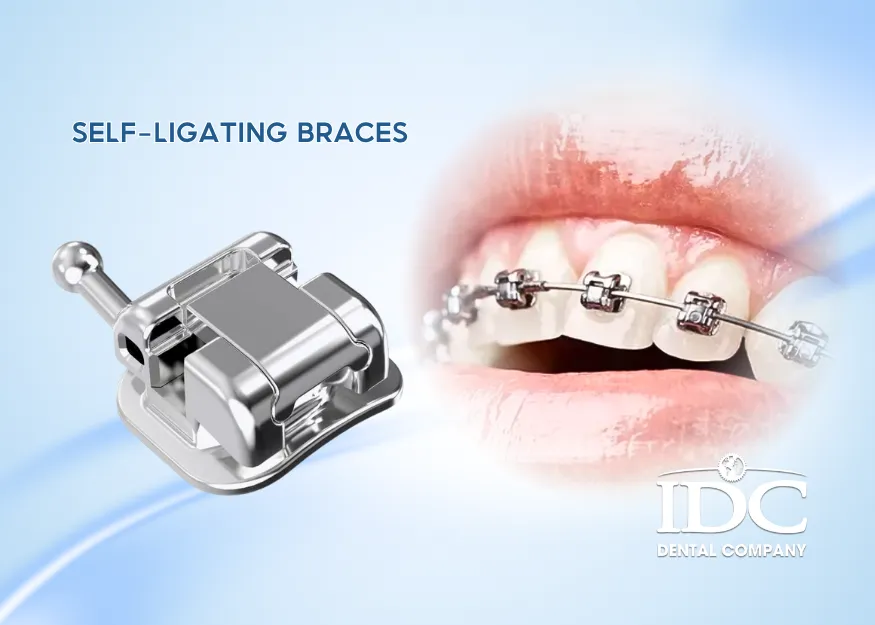
Self-Ligating braces have become an increasingly popular orthodontic treatment for patients seeking a comfortable and efficient way to straighten their teeth. Unlike traditional braces that rely on elastic ties, self-ligating braces use a built-in clip to hold the archwire in place, allowing teeth to move with gentle, continuous force.
This modern bracket system offers several potential benefits, including easier oral hygiene, shorter adjustment appointments, and improved comfort for many patients. Available in both metal and ceramic options, self-ligating braces are suitable for teenagers and adults with a wide range of orthodontic concerns.
In this guide, you’ll learn how self-ligating braces work, their key advantages, treatment costs, and whether they are the right choice for your smile.
What Are Self-Ligating Braces?
Self-ligating braces are a type of fixed orthodontic appliance used to move teeth into proper alignment. Like traditional braces, they include brackets attached to the teeth and an archwire that applies pressure to guide tooth movement.
The key difference lies in how the wire is held in place. Traditional braces use elastic ties or metal ligatures to secure the wire to each bracket. Self-ligating braces, on the other hand, have a built-in mechanism that holds the wire without the need for elastic bands.
This design can reduce friction between the wire and bracket, allowing teeth to move with smoother and more controlled forces.
Because there are no elastic ties, self-ligating brackets may also be easier to clean and may collect less plaque around the brackets.
How Do Self-Ligating Braces Work?
Self-ligating braces work by applying gentle, continuous pressure to the teeth through the archwire. The orthodontist places brackets on the teeth and connects them with a wire. As the wire tries to return to its ideal shape, it gradually moves the teeth into better alignment.
The built-in clip or sliding door keeps the wire inside the bracket while still allowing some movement. This can make tooth movement more efficient in certain cases because the wire is not held as tightly by elastic ties.
There are two main types of self-ligating systems: passive and active. Passive self-ligating brackets allow the wire to slide more freely, which may reduce friction during early tooth movement.
Active self-ligating brackets use a clip that applies more pressure to the wire, which can help with more controlled tooth movement in later stages.
Your orthodontist will decide which system is most appropriate based on your case.
Types of Self-Ligating Braces
Self-ligating braces are available in different materials and designs.
Metal Self-Ligating Braces
Metal self-ligating braces are durable, efficient, and commonly used for a wide range of orthodontic cases. They are similar in appearance to traditional metal braces but do not require elastic ties.
This makes them slightly cleaner in appearance and easier to maintain.
Ceramic Self-Ligating Braces
Ceramic self-ligating braces are designed to be more discreet. The brackets are tooth-colored or clear, making them less noticeable than metal braces.
They are popular among adults and older teenagers who want a more aesthetic option while still benefiting from fixed braces.
However, ceramic brackets may be more expensive and may require more care to avoid staining or damage.
Damon Braces and Other Systems
One of the most well-known self-ligating systems is the Damon System. Damon braces use self-ligating brackets and specific wire technology to help move teeth with light forces.
However, Damon is only one brand. Many other self-ligating systems are also available, and the best choice depends on the orthodontist’s experience and the patient’s needs.
Advantages of Self-Ligating Braces
Self-ligating braces offer several potential advantages compared with traditional braces.
More Comfortable Tooth Movement
Because self-ligating braces may create less friction, some patients experience less pressure during certain stages of treatment. The forces used to move teeth can feel gentler, especially after adjustment appointments.
That said, all orthodontic treatment involves some level of discomfort as teeth move. Mild soreness for a few days after braces are placed or adjusted is normal.
Fewer Adjustment Appointments
Traditional braces often require regular tightening and replacement of elastic ties. With self-ligating braces, the built-in clip system can reduce the need for some adjustment steps. As a result, some patients may need fewer visits or shorter appointments.
This can be especially helpful for busy adults, students, or international patients who prefer a more convenient treatment schedule.
Easier Oral Hygiene
Since self-ligating braces do not use elastic ties, there are fewer places for food particles and plaque to accumulate. This can make brushing and cleaning around the brackets easier.
Good oral hygiene is still essential. Patients must brush carefully, floss daily, and follow their orthodontist’s instructions to prevent tooth decay, gum inflammation, and white spots.
Shorter Chair Time
Appointments may be faster because the orthodontist does not need to remove and replace elastic ligatures at every visit. Opening and closing the bracket clips can be quicker, which helps reduce chair time.
Better Aesthetics with Ceramic Options
For patients concerned about appearance, ceramic self-ligating braces offer a more discreet alternative to metal braces. They are still visible, but less noticeable in daily communication and photos.
Efficient Treatment in Selected Cases
Self-ligating braces may help improve treatment efficiency in certain orthodontic cases, especially mild to moderate crowding. However, they do not guarantee faster results for every patient. Treatment speed depends on many factors, including case complexity, bone response, patient age, and compliance.
Are Self-Ligating Braces Faster Than Traditional Braces?
Many patients ask whether self-ligating braces work faster than traditional braces. The answer is: sometimes, but not always.
Self-ligating braces may reduce friction and make some stages of treatment more efficient. In certain cases, this can contribute to shorter treatment time. However, the difference is not always significant. Scientific research does not universally prove that self-ligating braces are dramatically faster for all patients.
Treatment duration depends more on the overall diagnosis and treatment plan than on bracket type alone. Severe crowding, bite problems, missing teeth, jaw discrepancies, and poor oral hygiene can all extend treatment time.
Patients should have realistic expectations. Self-ligating braces can be a modern and comfortable option, but they are not magic braces that move teeth instantly.
Self-Ligating Braces vs. Traditional Braces
Self-ligating braces and traditional braces are both effective orthodontic treatments. The best choice depends on the patient’s condition and goals.
Traditional braces use elastic ties to hold the wire in place. These ties may create more friction and need to be changed regularly. They also allow patients to choose colored bands, which some younger patients enjoy.
Self-ligating braces use a clip system instead of elastic ties. This may reduce friction, improve hygiene, and shorten appointment time. They may also feel more comfortable for some patients.
In terms of results, both systems can correct crowded teeth, spacing, rotated teeth, overbite, underbite, crossbite, and other orthodontic problems. The orthodontist’s skill and treatment planning often matter more than the bracket system itself.
Self-Ligating Braces vs. Invisalign
Self-ligating braces and Invisalign are very different orthodontic options.
Invisalign uses clear removable aligners instead of brackets and wires. It is more discreet and can be removed for eating, brushing, and flossing. This makes it attractive for adults who want a nearly invisible treatment.
However, Invisalign requires strong patient discipline. Aligners must be worn for 20–22 hours per day. If patients forget to wear them, treatment may be delayed.
Self-ligating braces are fixed to the teeth, so they work continuously and do not depend on daily wear compliance. They may be more suitable for complex tooth movement or patients who do not want to manage removable aligners.
For patients who want convenience, visibility, and flexibility, Invisalign may be preferred. For patients with more complex orthodontic needs or those who want a fixed option, self-ligating braces may be a better choice.
Who Is a Good Candidate for Self-Ligating Braces?
Self-ligating braces can be suitable for many teenagers and adults.
They may be a good option for patients with mild to moderate crowding, spacing, rotated teeth, or bite issues. They are also helpful for patients who want a modern braces system with easier cleaning and potentially fewer adjustment appointments.
Adults who have busy schedules may appreciate the shorter chair time and reduced need for elastic tie changes. Teenagers may benefit from the fixed nature of braces because they do not need to remember to wear aligners.
Patients who care about appearance may choose ceramic self-ligating braces for a less noticeable look.
However, the only way to know if self-ligating braces are right for you is through an orthodontic consultation. The orthodontist will examine your teeth, bite, jaw relationship, facial profile, X-rays, and treatment goals before recommending the best option.
Who May Not Be the Best Candidate?
Self-ligating braces are not always the ideal solution.
Patients with severe skeletal jaw discrepancies may need more advanced treatment, such as orthognathic surgery combined with orthodontics. Some complex cases may require traditional braces, special appliances, temporary anchorage devices, or extraction planning.
In other cases, clear aligners may be a better fit, especially for patients with mild alignment issues who prioritize aesthetics and are highly compliant.
Patients with poor oral hygiene may also need to improve their brushing and flossing habits before starting any fixed braces treatment. Braces can trap food and plaque, increasing the risk of cavities and gum problems if oral care is not maintained.
The Self-Ligating Braces Treatment Process
The treatment process usually begins with an initial consultation. During this visit, the orthodontist evaluates your teeth, bite, smile, jaw relationship, and oral health.
Digital X-rays, photographs, impressions, or intraoral scans may be taken to create a complete diagnosis. Based on these records, the orthodontist designs a personalized treatment plan.
Once treatment begins, brackets are bonded to the teeth and the archwire is placed into the self-ligating clips. You may feel pressure or soreness for the first few days as your teeth begin to move.
Follow-up appointments are scheduled to monitor progress, change wires, and make necessary adjustments. Because self-ligating brackets do not require elastic ties, appointments may be shorter than traditional braces visits.
After the teeth reach their ideal positions, the braces are removed. The final and very important step is wearing retainers. Retainers help maintain the new tooth positions and prevent relapse.
How Long Does Treatment Take?
The average treatment time for self-ligating braces may range from 12 to 24 months, depending on the case. Some mild cases may finish sooner, while complex cases may take longer.
Factors that influence treatment time include:
- Severity of crowding or spacing.
- Bite problems.
- Patient age.
- Bone response.
- Oral hygiene.
- Missed appointments.
- Broken brackets.
- Whether extractions are needed.
Wearing retainers after treatment is essential. Without retainers, teeth can gradually shift back toward their original positions.
How much do self-ligating Braces Cost?
The cost of self-ligating braces varies depending on the country, clinic, orthodontist experience, case complexity, treatment duration, and type of brackets used.
Ceramic self-ligating braces are usually more expensive than metal self-ligating braces because they are more aesthetic and may cost more to manufacture.
Other factors that affect cost include diagnostic records, X-rays, retainers, emergency visits, and whether additional appliances are required.
Patients should ask for a complete cost estimate before starting treatment. A transparent orthodontic plan should explain what is included, how long treatment may take, and whether retainers or follow-up visits are part of the fee.
Caring for Self-Ligating Braces
Good oral hygiene is essential during braces treatment. Even though self-ligating braces may be easier to clean than traditional braces, patients still need to brush carefully around every bracket and along the gumline.
Use a soft-bristled toothbrush or orthodontic toothbrush, fluoride toothpaste, and interdental brushes to clean between brackets. Flossing may require floss threaders, orthodontic floss, or a water flosser.
Patients should avoid hard, sticky, or chewy foods that can damage brackets and wires. Examples include hard candies, chewing gum, caramel, popcorn kernels, ice, and very hard nuts.
If a bracket breaks or a wire becomes loose, contact the clinic instead of trying to fix it yourself.
Common Myths About Self-Ligating Braces
One common myth is that self-ligating braces are completely pain-free. In reality, they may be more comfortable for some patients, but mild soreness is still normal when teeth are moving.
Another myth is that they always work faster than traditional braces. While they may improve efficiency in selected cases, treatment time still depends on the patient’s orthodontic condition.
Some people also believe self-ligating braces eliminate the need for tooth extractions. This is not always true. Extractions depend on crowding, jaw size, facial profile, and treatment goals, not simply the type of braces used.
Finally, self-ligating braces still require maintenance. Patients must attend follow-up appointments, keep their teeth clean, avoid damaging foods, and wear retainers after treatment.
Why Choose IDC Da Nang for Orthodontic Treatment?
IDC Da Nang provides orthodontic care for patients who want a healthier bite, straighter teeth, and a more confident smile. The clinic focuses on accurate diagnosis, personalized treatment planning, and clear communication throughout the orthodontic journey.
With digital diagnosis, modern orthodontic techniques, and experienced dental professionals, patients can receive a treatment plan suited to their needs, whether they are considering self-ligating braces, traditional braces, or other orthodontic options.
For international patients, English-speaking support and transparent consultation are especially important. IDC Da Nang helps patients understand their options, expected timeline, treatment process, and aftercare before beginning orthodontic treatment.
Frequently Asked Questions
Are self-ligating braces worth it?
They can be worth it for patients who want a modern braces system with easier cleaning, shorter appointments, and potentially greater comfort. However, suitability depends on the orthodontic case.
Do self-ligating braces hurt?
They may cause mild soreness, especially after placement or wire changes. However, many patients find them comfortable and manageable.
Are self-ligating braces faster than traditional braces?
They may be faster in some selected cases, but not always. Treatment speed depends on case complexity, treatment planning, and patient cooperation.
Can adults get self-ligating braces?
Yes. Self-ligating braces are suitable for many adults who want fixed orthodontic treatment.
Are ceramic self-ligating braces more expensive?
Usually, yes. Ceramic options tend to cost more because they are more aesthetic and less noticeable.
How often are adjustment appointments needed?
Appointment frequency varies by case, but some patients may need fewer or shorter visits compared with traditional braces.
Can self-ligating braces fix severe crowding?
They can treat many crowding cases, but severe cases require careful diagnosis. Some patients may need extractions or additional orthodontic techniques.
What foods should I avoid?
Avoid hard, sticky, and chewy foods that may break brackets or bend wires.

 WhatsApp