
A dental abscess is a painful infection that develops when bacteria enter a tooth, the surrounding gum tissue, or the bone supporting the teeth. The infection causes a pocket of pus to form and may lead to severe toothache, gum swelling, facial swelling, fever, or difficulty chewing.
A dental abscess should not be ignored, even when the pain temporarily improves. Without professional treatment, the infection may continue to damage the tooth and surrounding tissues. In more serious cases, it can spread to other areas of the face, jaw, neck, or body. Prompt dental care can relieve discomfort, control the infection, and improve the possibility of preserving the affected tooth.
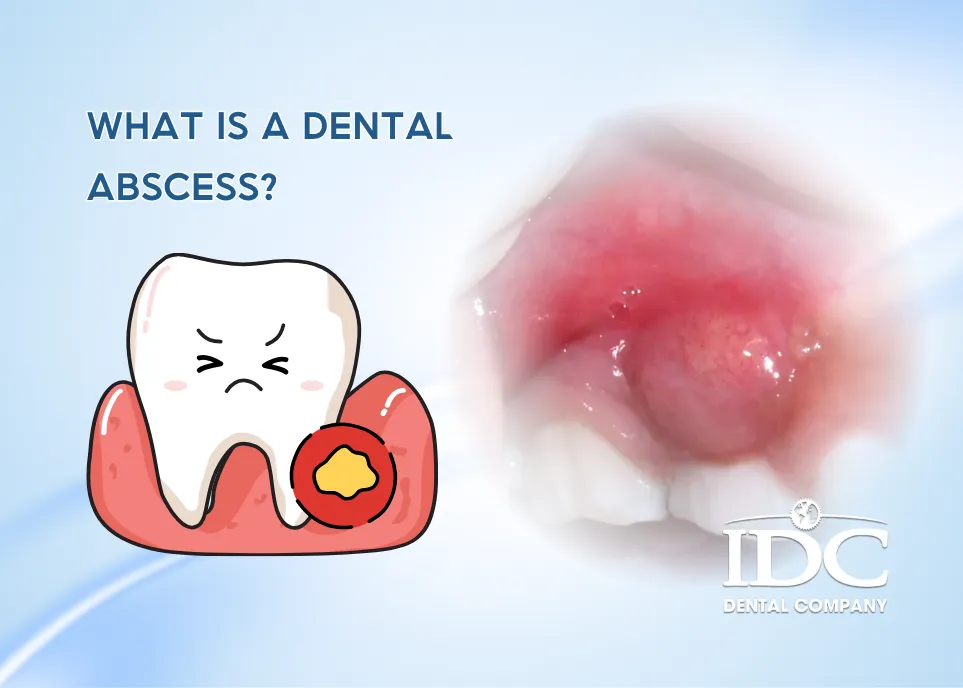
This guide explains what a dental abscess is, why it develops, the warning signs to watch for, and the treatment options a dentist may recommend.
What Is a Dental Abscess?
A dental abscess is a localized collection of pus caused by a bacterial infection. It can develop inside a tooth, near the root of a tooth, or within the gums.
Pus contains bacteria, damaged tissue, white blood cells, and inflammatory fluid. As it builds up in a confined area, pressure increases and may cause throbbing pain, tenderness, and swelling.
A dental abscess is different from an ordinary toothache. Tooth pain can have many causes, including sensitivity, decay, a cracked filling, teeth grinding, or gum irritation. An abscess specifically involves an active infection and usually requires dental treatment to remove the source.
Although an abscess may sometimes drain on its own and temporarily reduce the pain, this does not mean the infection has been cured. The affected tooth or gum still needs to be examined and treated.
How Does a Dental Abscess Develop?
A tooth has several layers. The outer enamel protects the softer dentin underneath, while the center of the tooth contains the dental pulp. The pulp includes nerves, connective tissue, and blood vessels.
When decay, trauma, or a crack allows bacteria to reach the pulp, inflammation and infection may develop. As the infection progresses, bacteria can travel through the root canal system and reach the area around the root tip.
An abscess may also form when bacteria enter deep spaces between the tooth and gum. This is more likely in people with advanced gum disease, deep periodontal pockets, or food trapped beneath the gumline.
The body responds to the infection by sending immune cells to the area. This response contributes to the formation of pus, swelling, pressure, and pain.
Types of Dental Abscess
Dental abscesses are generally classified according to where the infection begins.
Periapical abscess
A periapical abscess forms at the tip of a tooth root. It usually develops when bacteria enter the dental pulp through untreated decay, a crack, a fracture, or previous trauma.
The infection travels through the root canal and reaches the tissue surrounding the root. This type of abscess may cause intense toothache, sensitivity, pain when biting, and swelling near the affected tooth.
Periodontal abscess
A periodontal abscess develops in the gum tissue beside a tooth, often in association with periodontitis.
Advanced gum disease can create deep pockets between the gums and teeth. Bacteria, plaque, and food debris may become trapped in these pockets, leading to infection and pus formation.
A periodontal abscess may cause swollen gums, tenderness, bad breath, a bad taste, tooth mobility, or pain during chewing.
Gingival abscess
A gingival abscess is limited mainly to the gum tissue and does not initially involve the root or supporting bone.
It may occur when a small foreign object, such as a popcorn hull, food fragment, toothbrush bristle, or another irritant, becomes embedded beneath the gum.
The affected area may appear red, raised, sore, and filled with pus.
What Causes a Dental Abscess?
A dental abscess can develop for several reasons. In most cases, bacteria gain access to tissues that would normally be protected.
Untreated tooth decay
Tooth decay is one of the most common causes of a dental abscess. As a cavity becomes deeper, bacteria can pass through the enamel and dentin and reach the pulp.
Once the pulp becomes infected, the infection may spread through the root and form an abscess. Severe decay may also weaken the tooth and make it more likely to crack.
Cracked or fractured teeth
A crack can create a pathway for bacteria to enter the inner structure of a tooth. Some cracks are visible, while others are difficult to detect without a dental examination or imaging.
Cracks may result from biting hard foods, trauma, grinding the teeth, large restorations, or natural weakening over time.
Gum disease
Periodontitis damages the gums, periodontal ligament, and bone supporting the teeth. It can create deep pockets where bacteria accumulate.
If drainage from a periodontal pocket becomes blocked, an abscess may develop. Untreated periodontitis can also lead to bone loss, loose teeth, and eventual tooth loss.
Damaged or leaking dental restorations
Old fillings, crowns, or other restorations may become loose, cracked, or worn. Bacteria may then enter beneath the restoration and cause recurrent decay or infection.
Dental trauma
A tooth may become infected after an injury, even when there is no obvious crack. Trauma can damage the blood supply to the pulp, causing the tissue to die gradually.
The tooth may darken, become sensitive, or develop an abscess months or years after the original injury.
Poor oral hygiene
Inadequate brushing and flossing allow plaque to build up around the teeth and gums. This increases the risk of cavities and gum disease, both of which can contribute to abscess formation.
Dry mouth
Saliva helps wash away food particles, neutralize acids, and control bacteria. Reduced saliva flow can increase the risk of tooth decay.
Dry mouth may be associated with dehydration, medications, medical conditions, smoking, or radiation treatment involving the head and neck.
Reduced immune defenses
People with certain health conditions or weakened immune systems may be more vulnerable to infections. However, anyone can develop a dental abscess when bacteria reach the inner tooth or deep gum tissues.
Common Symptoms of a Dental Abscess
Symptoms vary depending on the location and severity of the infection. Some abscesses cause obvious swelling and intense pain, while others initially produce only mild discomfort.
Common signs include:
- Persistent or severe toothache
- Throbbing pain that may spread to the jaw, ear, temple, or neck
- Pain when biting or chewing
- Sensitivity to hot or cold temperatures
- Red, swollen, or tender gums
- A pimple-like swelling on the gum
- Pus or fluid draining into the mouth
- An unpleasant taste
- Persistent bad breath
- Swelling of the cheek, jaw, or face
- Tender or enlarged lymph nodes
- Fever or general malaise
- Difficulty opening the mouth
If an abscess ruptures, a person may notice a sudden bad taste and a reduction in pressure or pain. However, the source of the infection remains and still requires treatment.
When Is a Dental Abscess an Emergency?
A dental abscess requires prompt dental assessment. Certain symptoms may indicate that the infection is spreading and requires urgent medical attention.
Seek emergency care when swelling is accompanied by:
- Difficulty breathing
- Difficulty swallowing
- Rapidly increasing facial or neck swelling
- Swelling around the eye
- High fever
- Confusion, weakness, or severe illness
- Inability to open the mouth normally
- Significant swelling beneath the jaw or tongue
These symptoms can indicate a spreading infection that may affect the airway or other important structures. Untreated tooth abscesses can occasionally lead to serious or life-threatening complications.
Can a Dental Abscess Go Away on Its Own?
A dental abscess does not normally resolve permanently without treatment.
Pain may decrease if the nerve inside the tooth dies or if the abscess drains. This improvement can be misleading because bacteria may remain inside the root canal, gum pocket, or surrounding bone.
Home care and pain medication may reduce symptoms temporarily, but they cannot remove infected pulp, drain a deep abscess completely, repair a cracked tooth, or eliminate the underlying dental cause.
The sooner the infection is assessed, the greater the possibility of treating it before extensive damage occurs.
How Is a Dental Abscess Diagnosed?
A dentist begins by asking about the symptoms, their duration, and any history of decay, trauma, previous treatment, or gum disease.
Clinical examination
The dentist examines the teeth, gums, face, and surrounding tissues. They may look for decay, cracks, swelling, drainage, gum pockets, loose restorations, or a small opening through which pus is draining.
Percussion and biting tests
The dentist may gently tap the teeth or ask the patient to bite on an instrument. An infected tooth may be particularly tender because inflammation has developed around the root.
Pulp vitality testing
Cold, heat, or electrical testing may be used to assess whether the pulp is healthy, inflamed, or no longer responsive.
Dental X-rays
X-rays can help identify deep decay, bone changes, infection around the root, periodontal bone loss, or other possible causes.
CBCT imaging
Cone-beam computed tomography may be considered in selected or complex cases. It provides three-dimensional information that can help evaluate root anatomy, bone, hidden infection, fractures, or nearby anatomical structures.
Not every patient requires a CBCT scan. The dentist decides whether the additional imaging is clinically necessary.
Effective Treatment for a Dental Abscess
Treatment aims to remove the source of infection, drain pus when necessary, relieve pain, and preserve the natural tooth whenever reasonably possible.
The most suitable approach depends on where the abscess is located, how much damage has occurred, and whether the tooth can be restored.
Draining the abscess
If there is a collection of pus in the gum or soft tissue, the dentist may make a small incision to allow it to drain. The area may then be cleaned with saline.
Drainage helps relieve pressure and reduce swelling. However, it is often only one part of treatment. The underlying source, such as an infected root canal or periodontal pocket, must also be managed.
Root canal treatment
Root canal treatment may be recommended when the infection started inside a tooth that can still be restored.
During treatment, the dentist or endodontist creates an opening in the tooth, removes infected or dead pulp tissue, cleans and disinfects the root canals, and seals the canal system.
The tooth is later restored with a filling or crown, depending on how much healthy structure remains.
Root canal treatment can help preserve the natural tooth and remove the infection from inside it. More than one appointment may be required in some cases.
Tooth extraction
Extraction may be necessary when the tooth is severely damaged, fractured beyond repair, has insufficient supporting bone, or cannot be predictably restored.
Removing the tooth eliminates the main source of infection and provides drainage through the socket.
After healing, the dentist may discuss replacement options such as a dental implant, bridge, or removable denture. Replacement is not always immediate and depends on infection control, bone condition, medical health, and the individual treatment plan.
Periodontal treatment
When the abscess originates from gum disease, treatment may involve drainage, deep cleaning beneath the gumline, scaling and root planing, or periodontal surgery.
The dentist also needs to assess the supporting bone and the long-term prognosis of the affected tooth.
Antibiotics
Antibiotics are not automatically required for every localized dental abscess.
For many otherwise healthy adults with a localized infection, priority is given to definitive dental treatment such as drainage, root canal therapy, or extraction. Antibiotics may be prescribed when there are signs that the infection is spreading, such as fever, malaise, lymph node involvement, facial swelling, or other systemic concerns.
Antibiotics alone generally do not remove infected pulp, repair the tooth, or eliminate the original cause. Unnecessary antibiotic use can also contribute to side effects and antimicrobial resistance.
Patients should take any prescribed medication exactly as directed and inform the dentist about allergies, medical conditions, pregnancy, and other medicines.
Pain management
A dentist may recommend appropriate over-the-counter pain relief based on the patient’s age, health conditions, allergies, and current medications.
Pain medicine can help control symptoms while definitive treatment is arranged, but it does not cure the infection. The American Dental Association identifies non-opioid oral analgesics as first-line options for many cases of acute dental pain.
What Happens If a Dental Abscess Is Left Untreated?
An untreated abscess may continue to damage the tooth and surrounding tissues, even when the pain becomes less noticeable.
Possible complications include:
Loss of the affected tooth
Infection can destroy pulp tissue and supporting bone. As damage progresses, saving the tooth may become more difficult or impossible.
Bone loss
A chronic infection around the root or gum can cause gradual destruction of the jawbone supporting the tooth.
Spread into nearby tissues
Bacteria may spread into the cheek, jaw, floor of the mouth, or neck. This can lead to cellulitis and extensive swelling.
Sinus involvement
The roots of some upper teeth are located close to the maxillary sinus. Infections in these teeth may sometimes affect the sinus.
Sepsis
Sepsis is an uncommon but serious response to infection that can damage organs and become life-threatening. Fever, rapid breathing, confusion, severe weakness, or worsening swelling require urgent assessment.
Can You Treat a Dental Abscess at Home?
A dental abscess requires professional care. Home measures should only be used for temporary symptom relief while arranging a dental appointment.
Helpful temporary measures may include:
- Gently rinsing with warm salt water
- Applying a cold compress outside the face
- Eating soft foods
- Avoiding very hot, cold, sugary, or hard foods
- Chewing on the opposite side
- Maintaining gentle oral hygiene
- Using suitable over-the-counter pain medicine as directed
Do not attempt to squeeze, puncture, or pop an abscess. Doing so may push bacteria deeper into the tissues, cause injury, or delay appropriate treatment.
Do not place aspirin directly on the tooth or gum, as it may irritate or burn the soft tissue.
Do not use leftover antibiotics or medication prescribed to another person.
How to Prevent a Dental Abscess
Not every dental infection is preventable, but good oral care and early treatment significantly reduce the risk.
Brush twice a day
Brush gently with fluoride toothpaste, paying attention to the gumline and all surfaces of the teeth.
Clean between the teeth
Use floss, interdental brushes, or another dentist-recommended method to remove plaque from areas a toothbrush cannot reach.
Attend regular dental examinations
Routine examinations allow cavities, damaged restorations, cracks, and gum disease to be identified before they become severe.
Treat decay early
A small cavity is generally easier to treat than an infection that has reached the pulp.
Manage gum disease
Bleeding, swollen gums, persistent bad breath, gum recession, or loose teeth should be evaluated. Early periodontal care may help prevent deeper infection and tooth loss.
Protect the teeth from trauma
A properly fitted mouthguard may reduce the risk of dental injury during contact sports or other high-risk activities.
Avoid using teeth as tools
Do not use teeth to open packaging, cut materials, crack hard objects, or hold items.
Address damaged fillings and crowns
Loose, cracked, or painful restorations should be checked promptly to reduce the risk of leakage and recurrent decay.
Why Choose IDC Dental for Dental Abscess Treatment?
Dental abscess treatment requires more than temporary pain control. The affected tooth, gums, supporting bone, and extent of infection need to be evaluated before an appropriate plan can be recommended.
At IDC Dental in Da Nang, patients can receive a detailed dental examination and diagnostic imaging when clinically indicated. The treatment plan may include abscess drainage, root canal treatment, extraction, periodontal care, or another suitable approach based on the source and severity of the infection.
IDC Dental also supports local residents, expatriates, tourists, and international patients who need urgent dental care while staying in Da Nang. Clear communication helps patients understand their diagnosis, available options, expected treatment stages, aftercare, and follow-up requirements.
Patients experiencing severe tooth pain, gum swelling, facial swelling, or signs of infection should arrange an examination as soon as possible rather than waiting for the symptoms to disappear.
Frequently Asked Questions
Is a dental abscess contagious?
The abscess itself is not normally considered contagious. However, bacteria associated with tooth decay and gum disease can be transferred through saliva. Sharing toothbrushes and oral hygiene products should be avoided.
Can antibiotics cure a dental abscess?
Antibiotics may help control a spreading infection, but they usually cannot remove the dental source by themselves. Drainage, root canal treatment, extraction, or periodontal treatment may still be necessary.
Will I need a root canal?
A root canal may be recommended when the infection began inside a tooth that can be restored. The dentist must assess the tooth structure, root condition, bone support, and overall prognosis.
Can the infected tooth be saved?
Many abscessed teeth can be preserved with root canal treatment and an appropriate restoration. Severely fractured, extensively decayed, or poorly supported teeth may require extraction.
Is dental abscess treatment painful?
Local anesthesia is commonly used during drainage, root canal treatment, or extraction. Patients may feel pressure or movement, but the aim is to keep the procedure comfortable. Tenderness may continue briefly afterward as the tissues heal.
How long does treatment take?
Emergency drainage or the first stage of treatment may be completed during one visit. Root canal therapy, restoration, periodontal treatment, or follow-up care may require additional appointments.
Can children develop dental abscesses?
Yes. Both primary and permanent teeth can become abscessed. Facial swelling, fever, toothache, reluctance to eat, or a swollen gum in a child should be assessed promptly by a dentist.
How quickly should I see a dentist?
Arrange a dental appointment as soon as possible when there is persistent tooth pain, pus, gum swelling, pain when biting, or facial swelling. Seek emergency medical care for breathing difficulty, swallowing difficulty, rapidly increasing swelling, or severe systemic symptoms.




 WhatsApp