
Why do dentists place temporary fillings after a root canal? This is one of the most common questions patients ask after completing root canal treatment. Many people expect the tooth to receive a permanent restoration immediately, so it can be surprising to leave the dental office with a temporary filling instead.
In reality, temporary fillings are an important part of the treatment process. They help protect the tooth from bacteria, seal the root canal system, and support healing before a permanent filling or dental crown is placed. Without this temporary protection, the treated tooth may be vulnerable to reinfection or damage.
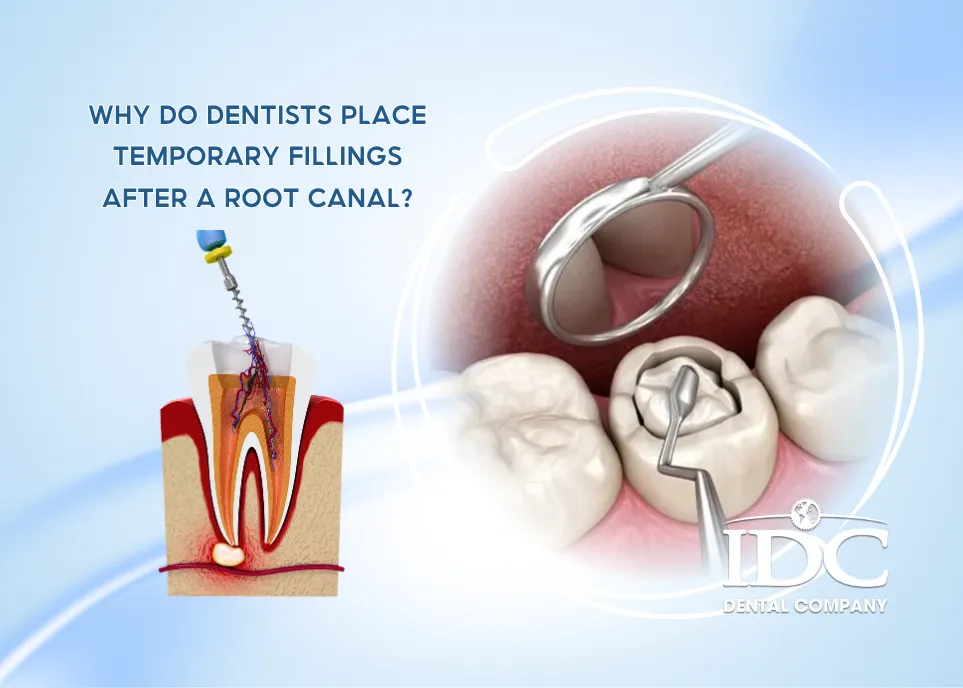
In this article, we’ll explain why dentists place temporary fillings after a root canal, how long they last, and why returning for the final restoration is essential for the long-term success of the treatment.
What Is a Temporary Filling?
A temporary filling is a short-term dental restoration used to seal and protect a tooth between treatment appointments.
After a root canal, the dentist needs to close the access opening created during treatment. Instead of placing a permanent restoration immediately, a temporary filling may be used to protect the tooth until the final restoration is completed.
Temporary fillings are designed to:
- Seal the treated tooth
- Prevent bacterial contamination
- Protect the root canal system
- Maintain tooth function
- Allow monitoring of healing
Unlike permanent restorations, temporary fillings are easier to remove and replace during future appointments.
Why do dentists place temporary fillings after a root canal?
To Seal the Root Canal System
One of the most important reasons for placing a temporary filling is to create a protective seal.
During root canal treatment, the dentist thoroughly cleans and disinfects the inside of the tooth. Once the canals have been cleaned, it is essential to prevent bacteria from re-entering.
The temporary filling acts as a barrier that protects the newly treated canals from:
- Saliva
- Food particles
- Oral bacteria
- External contaminants
Without this seal, the root canal treatment could fail due to reinfection.
To Protect the Tooth Between Appointments
Not all root canal treatments are completed in a single visit.
Some cases require multiple appointments because:
- The infection is severe.
- The tooth has multiple canals.
- Additional disinfection is needed.
- Symptoms need to be monitored.
In these situations, the temporary filling protects the tooth until the next appointment.
This allows the dentist to continue treatment without exposing the tooth to harmful bacteria.
To Prevent Food and Debris from Entering the Tooth
After a root canal, the tooth contains a small access opening that allows the dentist to reach the canal system.
Without a temporary filling, food particles and debris could easily become trapped inside the tooth.
This can lead to:
- Bacterial growth
- Infection recurrence
- Bad taste in the mouth
- Discomfort
The temporary restoration acts like a protective cap that keeps the inside of the tooth clean.
To Allow Monitoring of Healing
In some cases, dentists prefer to observe how the tooth responds after treatment before placing a permanent restoration.
For example, the dentist may want to ensure:
- Pain has resolved
- Infection is healing properly
- No swelling remains
- The tooth is functioning normally
A temporary filling provides flexibility during this healing period.
If additional treatment becomes necessary, the dentist can easily access the tooth again.
To maintain basic tooth function
Although temporary fillings are not as strong as permanent restorations, they still allow patients to use their teeth for everyday activities.
Patients can generally:
- Eat soft foods
- Speak normally
- Maintain daily comfort
This helps improve quality of life while waiting for permanent treatment.
What happens during a root canal before a temporary filling is placed?
Understanding the root canal process helps explain why temporary fillings are necessary.
Removal of Infected Pulp
The dentist first removes the damaged or infected pulp tissue from inside the tooth.
This eliminates the source of infection and pain.
Cleaning and Shaping the Canals
Special instruments are used to clean and shape the root canals.
This step removes:
- Bacteria
- Dead tissue
- Debris
Proper cleaning is essential for treatment success.
Disinfection of the Root Canal System
The canals are thoroughly disinfected using antimicrobial solutions.
The goal is to eliminate as many bacteria as possible before sealing the tooth.
Filling the Root Canals
Once cleaned, the canals are filled with a biocompatible material called gutta-percha.
This seals the internal canal system and prevents future infection.
Placement of the Temporary Filling
Finally, a temporary filling is placed over the access opening.
This protects the root canal treatment until the final restoration is completed.
How long does a temporary filling last after a root canal?
Temporary fillings are not intended for long-term use.
In most cases, they are designed to last:
- A few days
- Several weeks
- Occasionally up to a month or more
The exact lifespan depends on:
- The material used
- The location of the tooth
- Chewing forces
- Oral hygiene habits
Dentists generally recommend returning as scheduled for permanent restoration rather than delaying treatment.
What Happens If a Temporary Filling Falls Out?
Although temporary fillings are designed to stay in place, they can occasionally become loose or fall out.
Common causes include:
- Chewing hard foods
- Sticky candies
- Teeth grinding
- Normal wear over time
If a temporary filling falls out, patients may notice:
- A visible hole in the tooth
- Sensitivity
- Food trapping
- Discomfort
In these situations, it is important to contact a dentist as soon as possible.
The longer the tooth remains unprotected, the greater the risk of bacterial contamination.
Can You Eat Normally with a Temporary Filling?
Patients can usually eat after receiving a temporary filling, but some precautions are necessary.
Foods to Avoid
Avoid:
- Hard nuts
- Ice
- Sticky candies
- Chewing gum
- Tough meats
These foods can dislodge or damage the temporary filling.
Recommended Foods
Choose softer foods such as:
- Yogurt
- Soup
- Eggs
- Pasta
- Rice
- Mashed potatoes
These foods place less stress on the treated tooth.
Chew on the Opposite Side
Whenever possible, chew on the opposite side of your mouth to reduce pressure on the temporary restoration.
Why Is a Permanent Filling or Crown Still Necessary?
Many patients wonder why they need another restoration if the root canal has already been completed.
The answer is simple: temporary fillings are not designed for long-term protection.
Temporary Fillings Are Weaker
Temporary materials are softer and less durable than permanent restorations.
Over time, they can wear down, crack, or leak.
Root Canal-Treated Teeth Become More Fragile
After root canal therapy, the tooth no longer contains living pulp tissue.
As a result, the tooth may become:
- More brittle
- More prone to fractures
- Less resistant to heavy biting forces
Dental Crowns Provide Maximum Protection
For many root canal-treated teeth, especially molars, a dental crown is recommended.
Crowns provide:
- Strength
- Durability
- Fracture resistance
- Long-term protection
This significantly increases the lifespan of the treated tooth.
Temporary Filling vs Permanent Filling After a Root Canal
| Feature | Temporary Filling | Permanent Filling |
|---|---|---|
| Purpose | Short-term protection | Long-term restoration |
| Durability | Limited | High |
| Strength | Moderate | Strong |
| Resistance to wear | Low | High |
| Lifespan | Days to weeks | Years |
| Protection against leakage | Temporary | Long-lasting |
Permanent restorations provide a much better seal and greater protection for the treated tooth.
Risks of Leaving a Temporary Filling for Too Long
Delaying permanent restoration can lead to serious complications.
Bacterial Recontamination
Over time, temporary fillings may develop small gaps.
These gaps allow bacteria to enter the tooth.
Tooth Fracture
Root canal-treated teeth are already weakened.
Without proper protection, they are more likely to crack or fracture.
Loss of the Temporary Restoration
The longer a temporary filling remains in place, the greater the chance it may fall out.
Root Canal Failure
If bacteria re-enter the canal system, reinfection can occur.
This may require:
- Retreatment
- Apicoectomy
- Tooth extraction
Additional Costs
Delaying treatment often results in more complex and expensive procedures later.
How to care for a tooth with a temporary filling
To protect your temporary filling:
Maintain Excellent Oral Hygiene
Brush and floss carefully every day.
Avoid Hard and Sticky Foods
Reduce the risk of filling dislodgement.
Follow Your Dentist’s Instructions
Every case is unique.
Always follow the specific recommendations provided by your dental team.
Attend Follow-Up Appointments
This is the most important step.
Permanent restoration should be completed as soon as recommended.
Frequently Asked Questions
Can a temporary filling be replaced if it falls out?
Yes. Your dentist can place a new temporary filling or proceed with permanent restoration.
Does a temporary filling mean my root canal is incomplete?
Not necessarily. Many completed root canals still receive temporary fillings before the final restoration.
Is mild discomfort normal after a root canal?
Yes. Mild tenderness or sensitivity for a few days is common.
Do all root canal-treated teeth need crowns?
Not always, but many back teeth benefit greatly from crown protection.
How soon should I get my permanent restoration?
Follow your dentist’s recommendation, usually within a few weeks after treatment.



 WhatsApp