Bad breath, also known as halitosis, is a common oral health concern that can affect your confidence, social interactions, and overall quality of life. While occasional bad breath may be caused by certain foods or drinks, persistent mouth odor is often associated with bacteria, plaque buildup, tartar, gum disease, tooth decay, or other oral health problems.
One common question is: Can professional dental cleaning get rid of bad breath?
The answer is yes, professional dental cleaning can significantly improve or even eliminate bad breath when plaque, tartar, food debris, or gum inflammation is the main cause. However, dental cleaning does not automatically cure every case of chronic bad breath. If the odor continues after cleaning, there may be another underlying cause that needs to be diagnosed and treated.
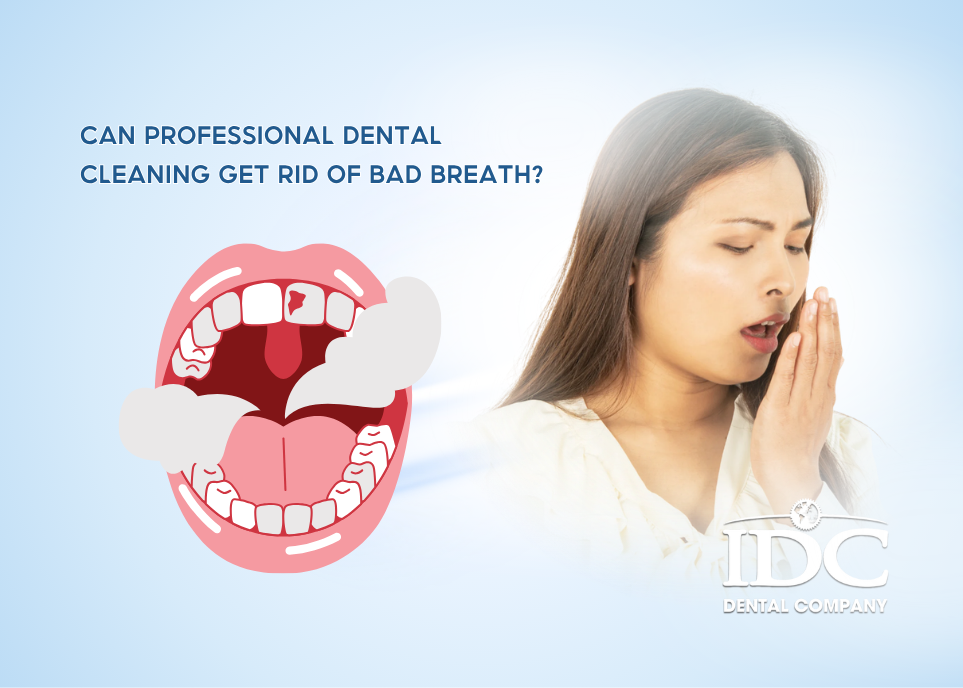
In this article, we explain how professional teeth cleaning can help with bad breath, what causes persistent mouth odor, and when you should see a dentist.
What Causes Bad Breath?
Bad breath occurs when unpleasant odors are produced in the mouth or, less commonly, associated with conditions outside the mouth.
In many cases, the main source is bacteria inside the oral cavity. These bacteria can break down food particles and other substances, producing compounds that have an unpleasant smell.
Common causes of bad breath include:
- Plaque buildup
- Tartar or calculus
- Food particles trapped between teeth
- Bacteria on the tongue
- Gingivitis
- Periodontitis
- Tooth decay
- Infected teeth
- Dry mouth
- Smoking and tobacco use
- Certain foods and beverages
- Poor oral hygiene
If bad breath continues despite regular brushing, it may be a sign that bacteria or dental problems are present in areas that are difficult to clean at home.
Can Professional Dental Cleaning Get Rid of Bad Breath?
Yes, professional dental cleaning can help get rid of bad breath, especially when the odor is caused by plaque, tartar, bacteria, or gum inflammation.
During a professional dental cleaning, a dental hygienist or dentist removes plaque and hardened tartar from the surfaces of the teeth and around the gumline.
These deposits can harbor odor-producing bacteria that regular brushing cannot completely remove.
Professional cleaning can help by:
- Removing hardened tartar
- Removing plaque buildup
- Cleaning around the gumline
- Removing food debris
- Reducing odor-causing bacteria
- Improving gum health
- Helping prevent gum disease
- Making it easier to maintain good oral hygiene at home
For people whose bad breath is primarily caused by poor oral hygiene or gum inflammation, the improvement can be noticeable after professional cleaning.
However, it is important to understand that professional cleaning treats the buildup and inflammation, not every possible cause of bad breath.
If bad breath is caused by an untreated cavity, advanced periodontal disease, dry mouth, or another condition, additional treatment may be necessary.
How does professional dental cleaning help bad Breath?
1. Removes Plaque
Plaque is a sticky film of bacteria that constantly forms on your teeth.
When plaque is not removed properly, bacteria multiply and can contribute to unpleasant mouth odor.
Daily brushing and flossing help control plaque, but some areas can be difficult to clean completely.
Professional cleaning removes plaque from areas that may be missed during regular home care.
2. Removes Tartar
Tartar, also called dental calculus, forms when plaque hardens on the teeth.
Unlike soft plaque, tartar cannot usually be removed effectively with a regular toothbrush.
Tartar can accumulate:
- Along the gumline
- Between teeth
- Behind the lower front teeth
- Around existing dental restorations
Because tartar provides a surface where bacteria can accumulate, it may contribute to persistent bad breath.
Professional scaling is required to safely remove hardened tartar.
3. Reduces Bacteria Around the Gums
Inflamed gums can create an environment where bacteria thrive.
If plaque and tartar remain around the gumline, the gums may become red, swollen, tender, or prone to bleeding.
Professional cleaning helps reduce bacterial buildup and supports healthier gums.
4. Removes Trapped Food and Debris
Food particles can become trapped between teeth, around dental restorations, or near the gumline.
When bacteria break down these particles, unpleasant odors can develop.
Professional cleaning helps remove debris from areas that are difficult to reach with a toothbrush alone.
Can Dental Cleaning Treat Bad Breath Caused by Gum Disease?
Yes, professional cleaning can play an important role in managing gum disease-related bad breath, but the treatment required depends on the severity of the condition.
Gingivitis
Gingivitis is the early stage of gum disease. Common signs include:
- Red gums
- Swollen gums
- Bleeding when brushing
- Bad breath
- Bad taste in the mouth
Professional cleaning combined with good daily oral hygiene can often help control plaque-related gingivitis.
Periodontitis
Periodontitis is a more advanced form of gum disease that affects the tissues supporting the teeth.
Symptoms can include:
- Persistent bad breath
- Bleeding gums
- Gum recession
- Deep periodontal pockets
- Loose teeth
- Pus around the gums
- Bone loss
Routine dental cleaning may not be enough for advanced periodontal disease.
Depending on the condition, a dentist may recommend deep teeth cleaning, scaling and root planing, periodontal treatment, or ongoing periodontal maintenance.
Therefore, if bad breath is caused by periodontal disease, simply getting a routine cleaning may not completely resolve the problem.
What Happens During a Professional Dental Cleaning?
Understanding the cleaning process can help explain why it may improve bad breath.
1. Dental Examination
Before cleaning, the dentist or dental hygienist may examine your teeth and gums.
They may look for:
- Plaque
- Tartar
- Gum inflammation
- Cavities
- Gum pockets
- Signs of periodontal disease
- Other potential causes of bad breath
If necessary, dental X-rays may be recommended to identify problems that cannot be seen during a routine examination.
2. Scaling
Scaling removes plaque and hardened tartar from the tooth surfaces.
Special dental instruments are used to clean areas around the gumline and between the teeth.
This is particularly important because tartar cannot be removed effectively with ordinary brushing.
3. Polishing
After scaling, the teeth may be polished to remove surface stains and make the tooth surfaces smoother.
A smoother surface can make it more difficult for plaque to accumulate quickly.
4. Oral Hygiene Guidance
Your dental professional may also provide personalized recommendations about:
- Brushing technique
- Toothbrush selection
- Fluoride toothpaste
- Flossing
- Interdental brushes
- Tongue cleaning
- Mouthwash
- Cleaning around dental restorations
These daily habits are essential for maintaining fresh breath after your professional cleaning.
Can Dental Cleaning Remove Bad Breath Caused by the Tongue?
Professional dental cleaning primarily focuses on the teeth and gums, but the tongue can also be an important source of bad breath.
The surface of the tongue, particularly toward the back, can collect:
- Bacteria
- Food debris
- Dead cells
- Mucus
These microorganisms can produce unpleasant-smelling compounds.
For this reason, cleaning your tongue should be part of your daily oral hygiene routine.
How to clean your tongue
You can gently clean your tongue using:
- A tongue scraper
- A soft toothbrush
Move gently from the back toward the front without applying excessive pressure.
Cleaning your tongue once a day may help reduce the accumulation of odor-producing bacteria.
Can Dental Cleaning Get Rid of Bad Breath Caused by Cavities?
Professional cleaning can remove plaque and debris around a cavity, but cleaning alone cannot repair tooth decay.
A cavity can trap food particles and bacteria, which may contribute to bad breath.
Other signs of tooth decay may include:
- Tooth sensitivity
- Pain when eating
- Sensitivity to sweets
- Visible holes or dark areas
- Food frequently getting stuck in one tooth
- Toothache
If a cavity is responsible for persistent mouth odor, the dentist may recommend treatment such as a filling.
If decay has reached the dental pulp, the tooth may require root canal treatment.
Therefore, if your bad breath continues after a professional cleaning, your dentist should evaluate your teeth for untreated decay or infection.
What If Bad Breath Does Not Go Away After Dental Cleaning?
If your breath still smells unpleasant after professional cleaning, it does not necessarily mean the cleaning was ineffective.
There may be another underlying cause.
Gum disease
Advanced gum disease can cause persistent odor because bacteria remain inside deep periodontal pockets.
Routine cleaning may not be enough, and periodontal treatment may be required.
Tooth decay
An untreated cavity can continue to harbor bacteria and food debris even after surrounding plaque has been removed.
Tongue bacteria
If the tongue is not cleaned regularly, odor-producing bacteria can continue to accumulate.
Dry mouth
Saliva helps naturally clean the mouth and control bacteria.
When saliva production is reduced, bacteria and food debris can accumulate more easily.
Dry mouth may be associated with:
- Dehydration
- Mouth breathing
- Certain medications
- Smoking
- Some medical conditions
Smoking and tobacco
Tobacco can directly contribute to unpleasant breath and can also increase the risk of gum disease.
Diet
Certain foods can temporarily affect breath, including:
- Garlic
- Onions
- Strong spices
- Alcohol
- Certain beverages
If bad breath persists despite good oral hygiene and professional dental care, further evaluation may be necessary.
How Long Does Bad Breath Last After a Dental Cleaning?
The answer depends on what caused the bad breath.
If plaque, tartar, and mild gum inflammation are the main causes, you may notice fresher breath shortly after the cleaning.
However, gum inflammation may take some time to improve.
If bad breath continues for days or weeks after cleaning, it is worth discussing the issue with your dentist.
Persistent odor may indicate:
- Periodontal disease
- Tooth decay
- Tongue bacteria
- Dry mouth
- An infected tooth
- Another underlying condition
The goal should not simply be to mask the odor but to identify and treat its source.
How to Keep Your Breath Fresh After Professional Dental Cleaning
Professional cleaning is only one part of maintaining fresh breath.
Brush your teeth twice a day
Use a soft-bristled toothbrush and fluoride toothpaste.
Brush gently for approximately two minutes, paying attention to the gumline.
Floss every day
Flossing removes food particles and plaque from between teeth where a toothbrush cannot reach effectively.
Clean your tongue
Use a tongue scraper or soft toothbrush to gently clean the tongue.
Drink enough water
Staying hydrated can help maintain normal saliva flow and reduce dry mouth.
Avoid smoking
Smoking can contribute to bad breath and increase the risk of gum disease.
Limit foods that cause strong odors
Garlic, onions, and certain other foods can temporarily affect breath.
Maintain regular dental visits
Regular dental examinations and professional cleanings can help identify plaque, tartar, cavities, and gum disease before they become more serious.
Professional Dental Cleaning vs. Home Oral Care
Both professional dental cleaning and daily oral hygiene are important.
| Home Oral Care | Professional Dental Cleaning |
|---|---|
| Removes daily plaque | Removes plaque and hardened tartar |
| Brushing | Professional scaling |
| Flossing | Cleans difficult-to-reach areas |
| Tongue cleaning | Checks gum and dental health |
| Prevents daily buildup | Helps control accumulated buildup |
A professional cleaning does not replace daily brushing and flossing, and brushing and flossing cannot completely replace professional dental care.
The two work together to maintain healthy teeth, gums, and fresher breath.
How Often Should You Get a Professional Dental Cleaning?
There is no single cleaning schedule that is ideal for everyone.
Your recommended frequency depends on:
- Amount of plaque and tartar buildup
- Gum health
- History of periodontal disease
- Smoking or tobacco use
- Oral hygiene habits
- Previous dental treatments
- Individual risk factors
Some people may need routine preventive cleanings, while patients with periodontal disease may require more frequent periodontal maintenance.
Your dentist can recommend an appropriate schedule based on your oral health.
Can Professional Teeth Cleaning Prevent Bad Breath?
Yes, professional cleaning can help prevent bad breath, particularly when the odor is related to plaque, tartar, food debris, or gum inflammation.
However, prevention also depends on what you do at home.
A good daily routine should include:
- Brushing twice a day
- Flossing daily
- Cleaning the tongue
- Drinking enough water
- Limiting tobacco use
- Maintaining regular dental checkups
Professional cleaning removes accumulated deposits, while daily oral hygiene helps prevent them from building up again.
When Should You See a Dentist About Bad Breath?
You should consider a dental examination if bad breath:
- Persists for several weeks
- Returns shortly after professional cleaning
- Is accompanied by a persistent bad taste
- Occurs with bleeding gums
- Occurs with swollen gums
- Is accompanied by gum recession
- Occurs with loose teeth
- Is associated with tooth pain
- Occurs with tooth sensitivity
- Is accompanied by pus around the gums
- Occurs despite good oral hygiene
Warning signs that require prompt attention
If bad breath occurs together with facial swelling, severe tooth pain, fever, pus, difficulty swallowing, or difficulty breathing, seek professional care promptly.
These symptoms may indicate a more significant dental infection.
Frequently Asked Questions
Can professional dental cleaning get rid of bad breath?
Yes. Professional cleaning can significantly improve bad breath caused by plaque, tartar, food debris, and mild gum inflammation. However, additional treatment may be needed if the underlying cause is gum disease, tooth decay, dry mouth, or another condition.
Does tartar cause bad breath?
Tartar can contribute to bad breath because its rough surface allows bacteria and plaque to accumulate around the teeth and gums.
Can deep teeth cleaning stop bad breath?
Deep cleaning may help when bad breath is associated with periodontal disease and bacteria located below the gumline. Your dentist will determine whether deep cleaning is appropriate.
Why does my breath still smell after a dental cleaning?
Persistent bad breath may be related to gum disease, cavities, tongue bacteria, dry mouth, smoking, diet, or another underlying cause.
Can cavities cause bad breath?
Yes. Cavities can trap food and bacteria and may contribute to unpleasant mouth odor. Untreated tooth decay may require restorative treatment.
Does brushing remove tartar?
Brushing can help prevent plaque buildup, but once plaque has hardened into tartar, it generally requires professional dental cleaning for effective removal.
Can flossing help bad breath?
Yes. Flossing removes food particles and plaque between teeth, reducing areas where odor-producing bacteria can accumulate.
Is bad breath always caused by poor oral hygiene?
No. Poor oral hygiene is a common cause, but persistent bad breath can also be related to gum disease, cavities, dry mouth, smoking, tongue bacteria, diet, and other conditions.


 WhatsApp