
How long does a root canal take? This is one of the most common questions patients ask when they learn they need root canal therapy. While many people expect the procedure to be lengthy or uncomfortable, modern dental techniques have made root canal treatment faster, safer, and more comfortable than ever before.
In most cases, treatment can be completed in one or two appointments, depending on the tooth being treated, the number of root canals, and the severity of the infection.
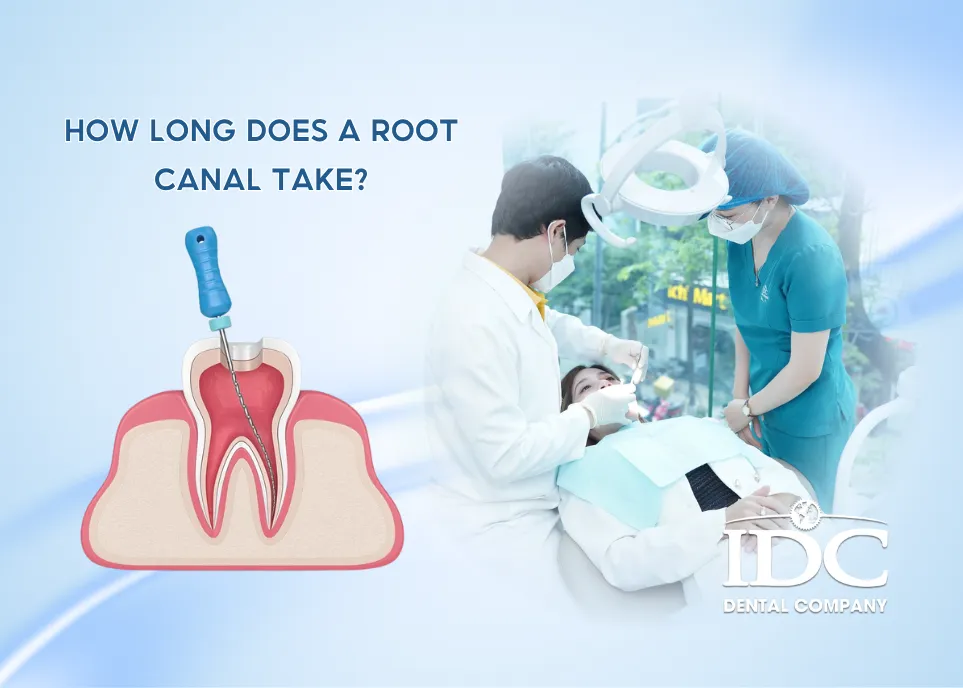
In this guide, you’ll learn what affects treatment time, what to expect during the procedure, and how long recovery typically takes.
When Is Root Canal Therapy Needed?
Root canal therapy may be needed when the pulp inside a tooth is damaged or infected. Common causes include deep cavities, cracked or fractured teeth, dental trauma, large fillings, repeated dental work on the same tooth, or untreated decay.
You may need a root canal if you experience persistent toothache, lingering sensitivity to hot or cold, pain when biting or chewing, swollen gums, tooth discoloration, or a pimple-like bump on the gum near the affected tooth.
In some cases, the infection may not cause strong symptoms at first. That is why regular dental check-ups and X-rays are important. A dentist can detect problems before they become more serious.
How Long Does a Root Canal Take on Average?
The average root canal takes about 60 to 90 minutes per appointment. Simple cases may be completed in less than an hour, while complex molars or infected teeth may take longer.
Front teeth usually take less time because they often have one canal. Premolars may take longer because they can have one or two canals. Molars usually take the longest because they often have three or four canals and more complex anatomy.
In general:
- Front tooth root canal: about 45 to 60 minutes
- Premolar root canal: about 60 to 90 minutes
- Molar root canal: about 90 minutes or longer
These are only general estimates. Your dentist will provide a more accurate timeline after examining your tooth and reviewing your X-rays.
Can a Root Canal Be Completed in One Visit?
Yes, many root canals can be completed in one visit. A single-visit root canal may be possible when the tooth anatomy is straightforward, the infection is not severe, and the dentist can clean, shape, fill, and seal the canals safely in one appointment.
Single-visit treatment is convenient because it reduces the number of appointments and allows the patient to complete the main procedure quickly. It can be especially helpful for busy patients or international visitors who have limited time.
However, not every case is suitable for one visit. The dentist must evaluate the condition of the tooth, the level of infection, and whether the canals can be properly cleaned and sealed during the same appointment.
When Are Multiple Visits Necessary?
Some root canal cases require more than one appointment. Multiple visits may be needed when the infection is severe, there is a large abscess, the canals are narrow or curved, or the tooth has complex anatomy.
In some cases, the dentist may place medication inside the tooth after cleaning the canals. This medication helps reduce bacteria and inflammation before the final filling is placed at a later visit.
Retreatment cases may also take longer. Root canal retreatment is needed when a tooth that previously had a root canal becomes infected again or was not fully healed. These cases are more complex because the dentist must remove old filling material, clean the canals again, and manage any new infection.
Multiple visits do not mean something is wrong. They simply allow the dentist to treat the infection more thoroughly and improve the long-term success of the procedure.
Factors That Affect Root Canal Treatment Time
Several factors can affect how long a root canal takes.
Which Tooth Is Being Treated?
The location of the tooth is one of the biggest factors. Front teeth are usually simpler and faster to treat. Molars are more complex because they are larger, harder to access, and have multiple canals.
Number of Root Canals
Each tooth contains one or more root canals. The more canals a tooth has, the more time the dentist needs to clean, shape, disinfect, and fill them.
Severity of Infection
A tooth with mild inflammation may be treated faster than a tooth with severe infection or abscess. More serious infections may require additional cleaning, medication, or follow-up visits.
Tooth Anatomy
Some teeth have curved, narrow, or hidden canals. These anatomical variations can make treatment more detailed and time-consuming.
Previous Root Canal Treatment
If the tooth has already had a root canal and needs retreatment, the appointment may take longer because old materials must be removed before the canals can be cleaned again.
Dental Technology Used
Modern dental technology can improve treatment efficiency. Digital X-rays, CBCT 3D imaging, electronic apex locators, and rotary endodontic instruments help dentists diagnose, measure, and clean canals more accurately.
How Long Does a Root Canal Take for Different Teeth?
Treatment time often varies depending on the tooth type.
Front Teeth
Front teeth usually have one root and one canal. Because they are easier to access and simpler in structure, treatment may take about 45 to 60 minutes. These cases are often completed in a single visit.
Premolars
Premolars are located between the front teeth and molars. They may have one or two canals. A premolar root canal often takes about 60 to 90 minutes, depending on the tooth’s anatomy and infection level.
Molars
Molars are the back teeth used for grinding food. They usually have multiple roots and three or four canals. Because of their complexity, molar root canals often take 90 minutes or longer. Some cases may require more than one appointment.
What Happens During a Root Canal Appointment?
Knowing the steps of the procedure can help you understand why treatment time varies.
Step 1: Examination and X-rays
The dentist examines the tooth and takes digital X-rays to evaluate the roots, canals, infection, and surrounding bone. This step helps determine the treatment plan.
Step 2: Local Anesthesia
The area around the tooth is numbed with local anesthesia. This makes the procedure comfortable and helps reduce pain during treatment.
Step 3: Accessing the Tooth
The dentist creates a small opening in the tooth to reach the infected pulp chamber and root canals.
Step 4: Cleaning and Shaping the Canals
The infected pulp is removed. The canals are carefully cleaned, shaped, and disinfected. This is one of the most important and time-consuming parts of the procedure.
Step 5: Filling the Root Canals
After the canals are clean and dry, they are filled with a special biocompatible material to seal the space and prevent reinfection.
Step 6: Temporary or Permanent Restoration
The tooth is sealed with a temporary or permanent filling. In many cases, a crown is recommended later to protect the tooth from fracture.
Does a Dental Crown Require Another Appointment?
A dental crown may require a separate appointment after root canal therapy. This is especially common for molars and premolars because these teeth handle strong chewing forces.
After a root canal, the tooth may become weaker if a large amount of structure was lost due to decay or previous fillings. A crown covers and protects the tooth, restoring strength, shape, and function.
The crown process may involve taking digital scans or impressions, preparing the tooth, placing a temporary crown, and then fitting the final crown. Depending on the clinic and technology used, this may take one or more visits.
Not every root canal-treated tooth needs a crown. Front teeth with enough remaining structure may only need a permanent filling. Your dentist will recommend the best option based on your case.
How Long Does Recovery Take After a Root Canal?
Recovery after a root canal is usually quick. Most patients can return to work, school, or normal daily activities the same day or the next day.
It is normal to feel mild soreness or tenderness for a few days, especially when biting. This discomfort is usually caused by inflammation around the tooth and should gradually improve.
You can usually eat after the numbness wears off, but it is best to avoid chewing on the treated tooth until it has been fully restored. Soft foods are recommended for the first day or two.
If you experience severe pain, swelling, fever, or discomfort that does not improve, contact your dentist for follow-up care.
How to Speed Up Recovery After Root Canal Therapy
To support healing after a root canal, follow your dentist’s instructions carefully. Take prescribed medication if recommended. Avoid chewing hard foods on the treated tooth until the final restoration is completed.
Brush and floss gently to keep the area clean. Good oral hygiene helps prevent new decay and supports long-term success.
Eat soft foods such as soup, yogurt, eggs, pasta, mashed potatoes, rice porridge, and smoothies during the first few days. Avoid hard, sticky, or crunchy foods until your dentist confirms that the tooth is fully restored.
What Happens If You Delay Root Canal Therapy?
Delaying root canal therapy can make the problem worse. A small infection may spread deeper into the tooth, jawbone, or surrounding tissues. Pain may increase, swelling may develop, and the tooth may eventually become impossible to save.
If the tooth must be extracted, you may need a dental implant, bridge, or denture to replace it. These treatments can take more time and cost more than saving the natural tooth with a root canal.
Early treatment usually means a simpler procedure, faster recovery, and a better chance of preserving your natural tooth.
Modern Technology Makes Root Canal Therapy Faster
Modern dental technology helps make root canal therapy more efficient and predictable. Digital X-rays provide clear images with lower radiation exposure than traditional film X-rays. CBCT 3D imaging can help dentists view complex root anatomy in detail.
Rotary endodontic instruments allow canals to be cleaned and shaped more efficiently than traditional manual files. Electronic apex locators help measure canal length accurately. Advanced irrigation systems help disinfect the canals more thoroughly.
These tools can reduce treatment time, improve accuracy, and make the experience more comfortable for patients.
Why Choose IDC Danang Dental Clinic for Root Canal Therapy?
If you need root canal therapy in Da Nang, choosing the right clinic is important for comfort, safety, and long-term success. IDC Danang Dental provides comprehensive dental care for both local and international patients, including root canal therapy and restorative treatment.
The clinic focuses on accurate diagnosis, gentle treatment, and personalized care. With digital imaging, modern equipment, and experienced dental professionals, IDC Danang helps patients receive effective treatment in a comfortable environment.
For international patients and expats, the English-speaking dental team can explain the procedure, expected treatment time, recovery instructions, and restoration options clearly. This makes it easier to understand your dental condition and feel confident before starting treatment.
IDC Danang Dental Clinic also provides restorative options such as fillings and dental crowns after root canal therapy, helping protect the treated tooth and restore natural function.
Frequently Asked Questions
How long does a root canal usually take?
Most root canals take about 60 to 90 minutes per appointment, depending on the tooth and case complexity.
Can a root canal be completed in one appointment?
Yes. Many simple cases can be completed in one visit. More complex infections or molars may require two or more appointments.
Why do molars take longer than front teeth?
Molars usually have more roots and canals, making them more complex to clean and fill.
Will I need a dental crown afterward?
Many back teeth need crowns after root canal therapy to prevent fracture and restore chewing strength. Front teeth may sometimes only need a filling.
Can I return to work after a root canal?
Most patients can return to normal activities the same day or the next day.
Is a root canal painful?
Modern root canal therapy is usually comfortable with local anesthesia. The treatment is designed to relieve infection-related pain.
How long should I wait before eating?
Wait until the numbness wears off before eating. Choose soft foods and avoid chewing on the treated tooth until it is fully restored.
What if I need retreatment?
Root canal retreatment usually takes longer than a first-time root canal because old materials must be removed and the canals need to be cleaned again.



 WhatsApp