
Pus around a tooth is often a sign of an infection involving the tooth, gums, or surrounding tissues. You may notice a small pimple-like bump on the gum, swelling near a tooth, pus draining along the gum line, a bad taste in your mouth, or pain when biting and chewing. In some cases, however, a dental infection can produce little or no pain.
One common misconception is that the problem has resolved once the pus drains or the tooth stops hurting. While drainage can temporarily reduce pressure and discomfort, the source of the infection may still remain inside the tooth or surrounding gum tissues.
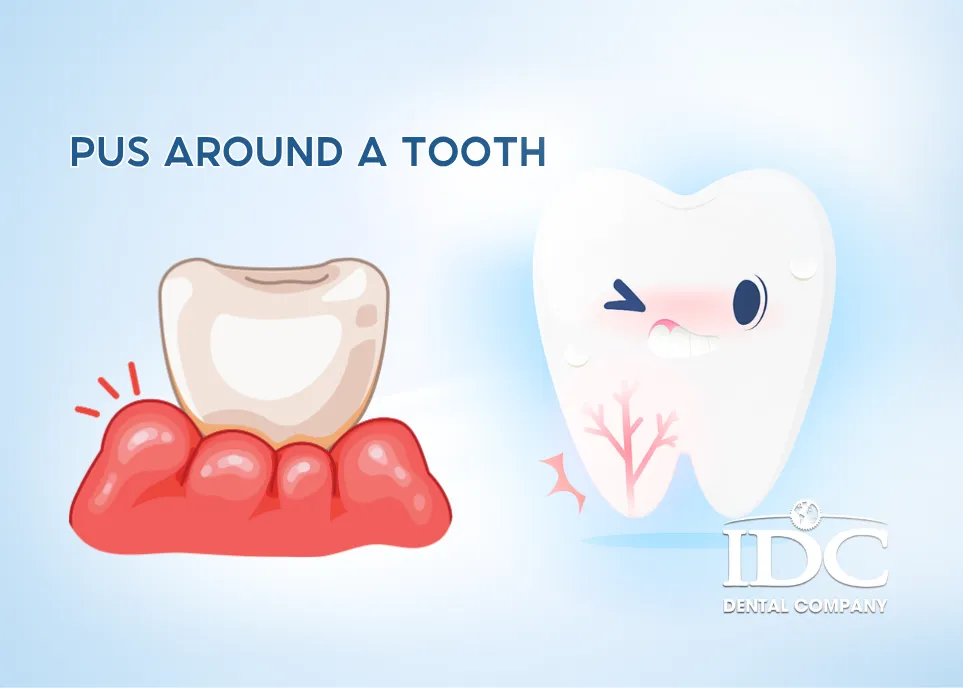
So, what causes pus around a tooth, and how is it treated? This guide explains the common causes, warning signs, treatment options, and when you should see a dentist or seek urgent medical attention.
What Does Pus Around a Tooth Mean?
Pus is a fluid produced as part of the body’s response to infection. It can contain white blood cells, bacteria, damaged tissue, and inflammatory fluid.
In the mouth, pus may develop when bacteria infect the dental pulp, the tissues around the root of a tooth, or the gums and supporting structures.
Depending on the source of the infection, pus may appear:
- Along the gum line
- Near the root of a tooth
- Inside a periodontal pocket
- Around a partially erupted wisdom tooth
- As a small white or yellow bump on the gum
- As drainage through a small opening in the gum
Pus around a tooth is often associated with a dental abscess, although different types of dental infections can produce similar symptoms. A dentist needs to examine the affected area to determine where the infection started and how it should be treated.
What Causes Pus Around a Tooth?
Several dental conditions can lead to pus around a tooth. Identifying the underlying cause is important because treatment for an infected dental pulp may be different from treatment for a periodontal infection.
1. Untreated Tooth Decay
Deep tooth decay is a common cause of dental infection.
A cavity begins when acids produced by oral bacteria damage the tooth structure. If decay continues through the enamel and dentin, bacteria can eventually reach the dental pulp, which contains nerves, blood vessels, and connective tissue.
The condition may progress as follows:
Tooth decay → pulp inflammation or infection → pulp necrosis → infection around the root → dental abscess
Once bacteria reach the root canal system, the infection may extend through the tip of the root into the surrounding tissues and bone.
At this stage, a patient may experience severe toothache, tenderness when biting, swelling, or a pus-filled bump on the gum.
2. Infected or Necrotic Dental Pulp
A tooth does not necessarily need a large visible cavity to develop a pulp infection.
Deep restorations, cracks, trauma, or other damage can affect the dental pulp. If the pulp becomes severely inflamed or loses its blood supply, the tissue may eventually become necrotic.
Bacteria can then multiply inside the root canal system and cause inflammation or infection around the root.
Interestingly, the tooth may become less painful after the pulp dies. This does not necessarily mean that the condition is improving.
3. Gum Disease and Periodontal Abscess
Pus can also originate from the gums rather than from inside the tooth.
Periodontitis can create deep pockets between the teeth and gums. These spaces may trap plaque, calculus, food debris, and bacteria.
If a periodontal pocket becomes infected and drainage is blocked, a periodontal abscess may form.
Possible symptoms include:
- Localized gum swelling
- Red or tender gums
- Pus around the gum line
- Pain when chewing
- Persistent bad breath
- An unpleasant taste
- Tooth mobility in advanced cases
A periodontal abscess requires a different treatment approach from an infection originating inside the dental pulp.
4. Cracked or Broken Tooth
A crack can provide a pathway for bacteria to enter deeper areas of the tooth.
Some cracks are obvious, while others are difficult to see. A patient may initially experience sharp pain when biting or sensitivity to temperature. If bacteria eventually reach the pulp, infection and abscess formation may follow.
The treatment depends on the location and depth of the crack and whether the tooth can be predictably restored.
5. Dental Trauma
A tooth that has been hit or injured may develop pulp problems even when there is no visible fracture.
Trauma can damage the blood vessels supplying the pulp. In some cases, the pulp becomes necrotic months or even years after the original injury.
If bacteria enter the root canal system, an infection may eventually develop around the root.
Therefore, a history of dental trauma can be important when a dentist is investigating unexplained swelling or pus near a tooth.
6. Wisdom Tooth Infection
Partially erupted wisdom teeth can be difficult to clean.
When part of the tooth remains covered by gum tissue, bacteria and food debris may accumulate underneath the gum flap. This can cause inflammation and infection around the wisdom tooth, known as pericoronitis.
Symptoms may include:
- Pain behind the last molar
- Swollen gum tissue
- Bad taste
- Bad breath
- Pus around the wisdom tooth
- Difficulty opening the mouth in more severe cases
A dentist can determine whether the area requires cleaning, additional treatment, or evaluation for wisdom tooth removal.
7. Recurrent Infection After Previous Dental Treatment
Occasionally, a tooth that has previously undergone root canal treatment or another restoration can develop a new or recurrent infection.
Possible contributing factors vary and may include a complex root canal anatomy, new tooth decay, cracks, or problems affecting the restoration.
A dental examination and imaging are often needed to identify the cause.
What Are the Symptoms of a Tooth Infection With Pus?
Symptoms vary considerably depending on the source and severity of the infection.
Common signs include:
- Persistent or throbbing toothache
- Pain when biting or chewing
- Red or swollen gums
- A pimple-like bump on the gum
- Pus draining around a tooth
- An unpleasant or salty taste
- Persistent bad breath
- Sensitivity to hot or cold
- Tenderness around the affected tooth
- Tooth mobility in some periodontal cases
- Swelling of the jaw or face
If the infection begins to spread, symptoms may become more significant and include fever, swollen lymph nodes, general discomfort, increasing facial swelling, or difficulty opening the mouth.
Can Pus Around a Tooth Go Away on Its Own?
A dental infection should not be expected to resolve on its own simply because the pus drains or the pain disappears.
This is especially important because dental abscesses can sometimes appear to improve without treatment.
Why Can a Dental Abscess Suddenly Stop Hurting?
An abscess creates pressure as pus accumulates in the tissues. If the abscess begins draining through the gum, that pressure decreases.
As a result, pain may improve quickly.
Another possibility is that the dental pulp has become necrotic. Once the nerve tissue inside the tooth is no longer functioning normally, the original toothache may decrease.
Neither situation necessarily means that the infection has been eliminated.
What If the Abscess Bursts?
If a dental abscess drains spontaneously, you may suddenly notice a bad or unusual taste in your mouth and experience less pressure around the tooth.
Although this can provide temporary relief, bacteria may still remain within the root canal system, periodontal pocket, or surrounding tissues.
The affected tooth should still be evaluated by a dentist.
Pus Around a Tooth but No Pain: Should You Be Concerned?
Yes, a painless pus-filled bump on the gum still warrants dental evaluation.
One possible explanation is a draining sinus tract. This is a small pathway that allows fluid from an infection around the root to drain through the gum.
Because the pus has somewhere to escape, pressure may not build up enough to cause significant pain.
Another possibility is that the pulp inside the affected tooth has become necrotic.
Therefore, the absence of pain does not rule out a dental infection.
If you repeatedly notice a small bump appearing and disappearing in the same area of your gum, have it examined even if the tooth feels normal.
What Should You Do If You See Pus Around a Tooth?
The most important step is to arrange a dental examination so the source of the infection can be identified.
Dental Examination
The dentist may evaluate:
- Cavities and existing restorations
- Pulp health
- Gum condition
- Periodontal pocket depth
- Tooth mobility
- Cracks or fractures
- Previous dental treatment
- Wisdom teeth
- Swelling and drainage
Tests may also be performed to determine whether the dental pulp is still responsive.
Dental X-Rays
Dental X-rays may be recommended to evaluate structures that cannot be fully assessed by looking inside the mouth.
They may help identify:
- Changes around the root tip
- Bone loss around a tooth
- Deep tooth decay
- Problems involving supporting bone
- Other potential sources of infection
The exact diagnostic approach depends on the individual situation.
Should You Pop a Gum Abscess?
No. You should not intentionally squeeze, puncture, or pop a dental abscess at home.
A visible bump on the gum may look similar to a skin pimple, but the underlying problem can extend much deeper.
Popping the bump does not remove bacteria from an infected root canal or periodontal pocket. Using needles or other objects may also injure the gum and introduce additional bacteria.
Even if the abscess drains naturally, you should still arrange a dental evaluation.
What Can You Do at Home Until You See a Dentist?
Home care cannot eliminate the source of most dental abscesses, but several measures may help keep the area more comfortable while waiting for professional care.
You can:
- Continue gentle brushing and oral hygiene
- Rinse gently with warm salt water
- Avoid chewing on the affected side
- Avoid very hot or cold foods if they trigger sensitivity
- Use appropriate over-the-counter pain medication according to the label and your individual health circumstances
You should avoid:
- Popping or puncturing the abscess
- Putting aspirin directly against the gum
- Taking leftover antibiotics
- Delaying dental care because the pain has temporarily disappeared
These measures are for temporary symptom management rather than treatment of the infection itself.
How Is Pus Around a Tooth Treated?
Treatment depends on the source of the infection, severity of the condition, and whether the affected tooth can be preserved.
Drainage of the Abscess
When appropriate, a dentist may drain accumulated pus to reduce pressure and help control the local infection.
However, drainage alone may not solve the underlying problem. The source of the infection still needs to be addressed.
Root Canal Treatment
If the infection originates from an infected or necrotic pulp and the tooth can be restored, root canal treatment may be recommended.
The general process involves:
- Accessing the root canal system
- Removing infected or necrotic pulp tissue
- Cleaning and shaping the canals
- Disinfecting the root canal system
- Filling and sealing the canals
- Restoring the tooth appropriately
The goal is to eliminate infection from inside the tooth while preserving the natural tooth whenever possible.
Periodontal Treatment
If the pus originates from a periodontal infection, treatment focuses on the gum tissues and supporting structures.
Depending on the condition, treatment may include cleaning the periodontal pocket, removing plaque and calculus below the gum line, debriding root surfaces, and providing additional periodontal care when necessary.
Tooth Extraction
An abscessed tooth does not automatically need to be extracted.
Extraction may be considered when the tooth is severely damaged, has certain deep fractures, has lost substantial supporting tissue, or cannot be predictably restored.
When preservation is possible, the dentist may discuss treatment options for saving the natural tooth.
Wisdom Tooth Treatment
If the infection is associated with a partially erupted wisdom tooth, treatment may include cleaning the area and controlling the acute inflammation or infection.
The dentist can then evaluate whether wisdom tooth removal is appropriate based on its position, symptoms, and likelihood of future problems.
Do You Need Antibiotics for a Dental Abscess?
Not every dental abscess requires antibiotics.
For many localized dental infections, addressing the source through dental treatment is the key step. Antibiotics alone may not eliminate bacteria located inside a necrotic root canal system.
Antibiotics may be considered when there are signs of spreading infection or systemic involvement, such as fever, malaise, or progressive swelling.
Patients should not self-prescribe antibiotics or use medication left over from a previous illness.
Taking antibiotics without treating the underlying dental problem can also delay appropriate care.
When Should You See a Dentist?
Arrange a dental evaluation if you notice:
- Pus around a tooth
- A white or yellow bump on the gum
- Recurrent swelling in the same area
- Persistent toothache
- Pain when biting
- Swollen or tender gums
- Unexplained drainage
- A persistent bad taste associated with one area
- A tooth that was painful but suddenly stopped hurting while swelling or drainage remains
Early evaluation may provide more treatment options and help prevent further damage to the tooth and surrounding tissues.
When Is a Tooth Infection an Emergency?
Some dental infections can spread beyond the immediate area around the tooth.
Seek urgent medical attention if you develop:
- Rapidly increasing facial swelling
- Significant jaw swelling
- Swelling extending toward the eye or neck
- Fever accompanied by worsening infection
- Increasing difficulty opening your mouth
- Difficulty swallowing
- Difficulty breathing
- Rapidly worsening symptoms
Difficulty breathing, difficulty swallowing, or rapidly spreading swelling should be treated as an urgent medical problem.
Do not wait for a routine dental appointment if these symptoms occur.
How Long Does a Tooth Abscess Take to Heal?
There is no single healing timeline for every dental abscess.
Recovery depends on factors such as:
- The cause of the infection
- Its severity and extent
- The treatment required
- The condition of the affected tooth
- The surrounding gum and bone health
- Individual healing factors
It is also important to distinguish between symptom relief and elimination of the infection.
Pain and swelling may improve relatively quickly after drainage or treatment, but the underlying tissues still require time to heal. Follow-up may be necessary to confirm that treatment is progressing as expected.
How Can You Prevent Tooth and Gum Infections?
Good oral hygiene and early dental care can reduce the risk of many conditions that eventually lead to abscess formation.
Helpful preventive measures include:
- Brush your teeth twice a day with fluoride toothpaste
- Clean between your teeth daily
- Limit frequent consumption of sugary foods and drinks
- Treat cavities before they become deep
- Have cracked or damaged teeth evaluated
- Seek dental care after significant tooth trauma
- Manage gum disease
- Attend regular dental examinations based on your dentist’s recommendations
Most importantly, do not ignore persistent tooth pain, gum swelling, or recurring bumps on the gums.
Frequently Asked Questions About Pus Around a Tooth
Is pus around a tooth always a sign of infection?
Pus commonly develops as part of the body’s response to infection. Because several dental conditions can cause pus, a professional examination is needed to identify its exact source.
Can a tooth abscess heal on its own?
You should not assume an abscess has healed because it drains or stops hurting. The source of the infection may still remain inside the tooth or surrounding tissues.
Why do I have a pus-filled bump on my gum?
A pimple-like bump may be associated with a dental abscess or a sinus tract draining an infection from around a tooth root. Other gum conditions can sometimes appear similar, so diagnosis is important.
Why is there pus around my tooth but no pain?
A chronic infection may drain through the gum, preventing pressure from building. A tooth with necrotic pulp may also cause little pain despite infection around its root.
Can I squeeze pus out of my gum?
You should not intentionally squeeze or puncture the area. Doing so does not treat the underlying infection.
Does an abscessed tooth always need a root canal?
No. Treatment depends on the source and condition of the tooth. Root canal treatment may be recommended for an infected pulp when the tooth can be preserved.
Does an abscessed tooth always need to be extracted?
No. Many infected teeth can potentially be treated and preserved. Extraction may be necessary when the tooth cannot be predictably restored.
Do I always need antibiotics for a tooth abscess?
No. Antibiotics are not automatically required for every localized dental abscess. A dentist or physician determines whether they are appropriate based on the clinical situation.
Can a dead tooth still become infected?
Yes. A tooth with necrotic pulp can contain bacteria within its root canal system and develop infection in the tissues around the root.
Can a tooth infection cause facial swelling?
Yes. Dental infections can sometimes spread into surrounding tissues and cause facial or jaw swelling. Rapidly increasing swelling, especially when accompanied by difficulty swallowing or breathing, requires urgent medical attention.



 WhatsApp