
Malocclusion occurs when your upper and lower teeth do not align properly when you close your mouth or bite down. You may notice that your upper teeth overlap your lower teeth too much, your lower teeth extend beyond your upper teeth, or your teeth appear crowded, crooked, or unevenly spaced.
Although mild malocclusion may not cause noticeable discomfort, more severe cases can affect your ability to chew comfortably, maintain good oral hygiene, and protect your teeth from excessive wear. Some people may also experience jaw discomfort or other bite-related problems.
So, what causes malocclusion, and when should you consider treatment? Understanding the different types, causes, symptoms, and treatment options for malocclusion can help you recognize potential problems early and determine whether a dental examination or orthodontic consultation is right for you.
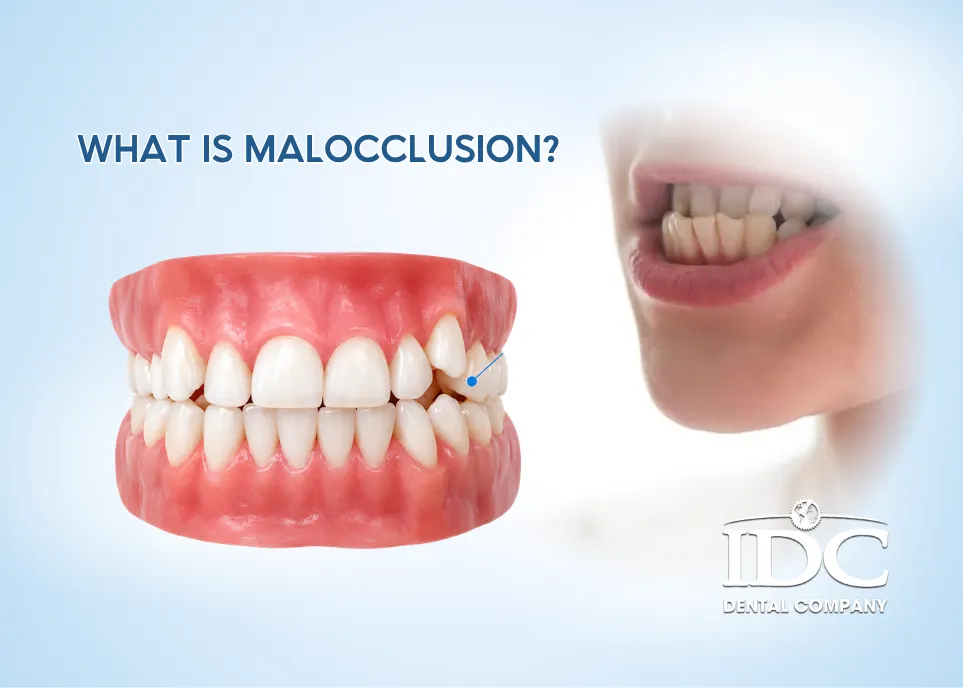
What Is Malocclusion?
Malocclusion refers to an improper alignment or relationship between the upper and lower teeth when the mouth is closed. In a healthy bite, the upper and lower teeth fit together in a relatively balanced way, allowing you to chew comfortably and efficiently.
Malocclusion can occur because of differences in tooth position, tooth size, jaw development, or a combination of these factors. It can range from a minor alignment issue to a more complex problem involving the relationship between the upper and lower jaws.
Malocclusion is not necessarily a disease, and not every case requires treatment. Some people have mild bite irregularities that cause no functional problems. However, significant malocclusion may affect oral health or everyday activities such as eating and speaking.
Normal Bite vs. Malocclusion
In a typical bite, the upper front teeth slightly overlap the lower front teeth, while the back teeth fit together in a coordinated pattern. The teeth should meet in a way that distributes biting forces relatively evenly.
With malocclusion, the teeth may not fit together properly. For example, the upper front teeth may extend too far forward, the lower teeth may sit in front of the upper teeth, or certain teeth may not touch their opposing teeth at all.
The appearance and severity of malocclusion can vary significantly from one person to another. A dental examination is often necessary to determine whether a bite difference is simply a cosmetic concern or may have functional implications.
Types of Malocclusion
There are several different types of malocclusion. Understanding the type of bite problem can help explain why a particular treatment may be recommended.
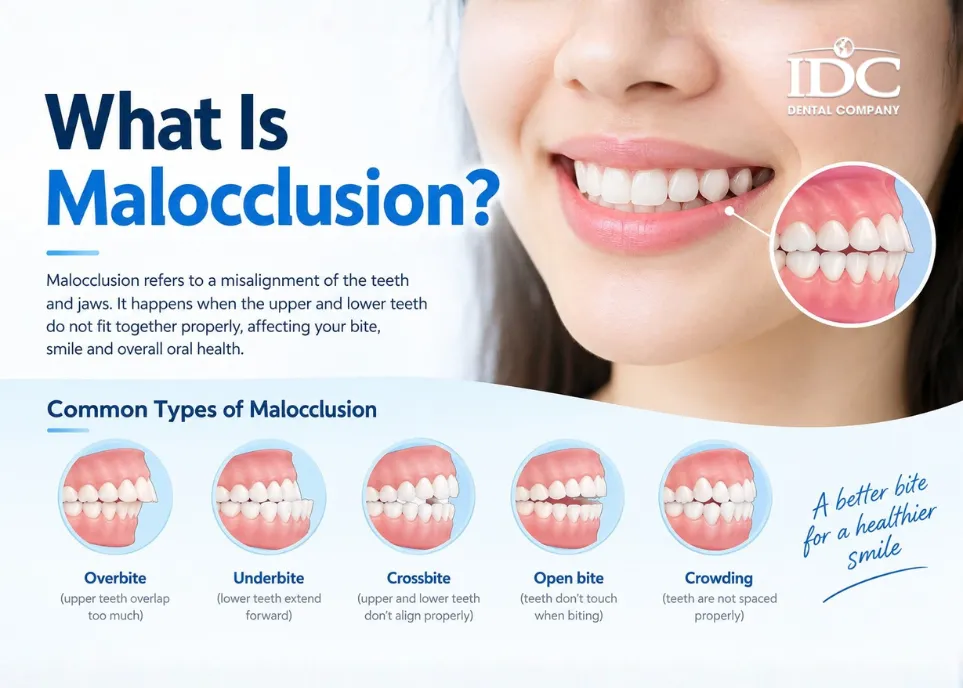
1. Overbite
An overbite occurs when the upper front teeth vertically overlap the lower front teeth more than expected. A certain amount of overlap is normal, but a deep overbite may cause excessive contact between the upper and lower teeth or contribute to tooth wear.
2. Underbite
An underbite occurs when the lower front teeth extend in front of the upper front teeth when the mouth is closed. In some cases, an underbite is primarily related to tooth position, while in others it may be associated with differences in jaw growth.
More significant underbites may affect chewing, facial balance, and the way the teeth function together.
3. Crossbite
A crossbite occurs when one or more upper teeth bite inside the lower teeth rather than outside them.
Crossbites can occur in the front or back of the mouth. Depending on the cause and severity, they may contribute to uneven tooth wear or affect jaw development, particularly in growing children.
4. Open Bite
An open bite occurs when certain upper and lower teeth do not make contact when the mouth is closed.
An open bite can affect the front or back teeth and may sometimes be associated with prolonged thumb sucking, tongue thrusting, or skeletal development.
5. Crowded Teeth
Dental crowding occurs when there is insufficient space for teeth to align properly. Teeth may overlap, rotate, or become displaced.
Crowded teeth can make brushing and flossing more difficult, which may increase the risk of plaque accumulation, tooth decay, and gum problems.
6. Spacing and Gaps
Spacing occurs when there are noticeable gaps between teeth. Some spacing is normal, but larger or multiple spaces can result from missing teeth, tooth-size differences, abnormal tooth eruption, or other factors.
What Causes Malocclusion?
Malocclusion can have many different causes. In some patients, several factors contribute to the development of an abnormal bite.
Genetics and Jaw Development
Genetics can play an important role in the development of malocclusion. The size and shape of the jaws, tooth size, facial structure, and patterns of dental development can all be influenced by inherited characteristics.
For example, a person may have relatively large teeth and a smaller jaw, resulting in dental crowding. Differences in upper and lower jaw growth can also contribute to an underbite or overbite.
Childhood Habits
Certain habits during childhood may influence the development of the teeth and jaws. These can include:
- Prolonged thumb or finger sucking
- Extended pacifier use
- Tongue thrusting
- Certain patterns of mouth breathing
The impact of these habits depends on their duration, frequency, and the individual child’s development.
Premature Loss of Baby Teeth
Baby teeth help maintain space for permanent teeth. If a primary tooth is lost too early because of decay, trauma, or another dental problem, neighboring teeth may shift into the available space.
This can reduce the space available for permanent teeth and contribute to crowding or abnormal tooth eruption.
Missing or Extra Teeth
Missing teeth can cause neighboring teeth to move, potentially changing the bite. Extra teeth can also interfere with normal tooth eruption and alignment.
Dental Trauma
Injuries to the teeth or jaws can sometimes change tooth position or affect normal dental development. Children who experience dental trauma may benefit from regular monitoring as their permanent teeth develop.
Tooth Decay and Gum Disease
Untreated cavities, advanced gum disease, and tooth loss can change the position of teeth and affect the bite.
This is one reason maintaining good oral health is important even when a person does not currently have an obvious orthodontic problem.
What Are the Symptoms of Malocclusion?
Some people with malocclusion have no noticeable symptoms. Others may experience functional or cosmetic concerns.
Common signs and symptoms may include:
- Crooked or crowded teeth
- Upper and lower teeth that do not meet properly
- Difficulty biting or chewing
- Frequent cheek or tongue biting
- Uneven tooth wear
- Difficulty cleaning between teeth
- Food becoming trapped between teeth
- Jaw discomfort or fatigue
- Changes in facial appearance
- Certain speech difficulties
- Difficulty closing the mouth comfortably
Having one of these symptoms does not necessarily mean you have a serious malocclusion. A professional examination is needed to determine the underlying cause.
Is Malocclusion Dangerous?
One of the most common questions patients ask is: Is malocclusion dangerous?
The answer depends on the severity and type of malocclusion. Mild malocclusion is not necessarily dangerous and may not require treatment. However, more significant bite problems can sometimes contribute to oral health or functional concerns.
Oral Health Problems
Crowded or overlapping teeth may be more difficult to clean effectively. When plaque remains around the teeth and gums, the risk of tooth decay and gum disease may increase.
An abnormal bite may also create areas where food becomes trapped, making daily oral hygiene more challenging.
Uneven Tooth Wear
When the teeth do not meet evenly, some teeth may experience greater biting forces than others. Over time, this may contribute to uneven wear or damage in certain situations.
Difficulty Chewing
A significant malocclusion may interfere with the ability to bite and chew efficiently. Patients may notice that certain foods are difficult to break down or that they naturally favor one side of the mouth.
Jaw Discomfort
Some people with bite problems experience jaw muscle fatigue, discomfort, or other symptoms around the jaw joint. However, malocclusion is not the only possible cause of jaw or TMJ-related symptoms.
If you experience persistent jaw pain, clicking, locking, or difficulty opening your mouth, a dental professional should evaluate the symptoms rather than assuming malocclusion is the cause.
How Is Malocclusion Diagnosed?
A dentist or orthodontist can evaluate malocclusion through a combination of clinical examination and diagnostic records.
During an examination, the dental professional may assess:
- Tooth position
- Upper and lower jaw relationship
- Bite alignment
- Tooth wear
- Gum and bone health
- Facial symmetry
- Jaw movement
- Overall oral health
Dental X-rays may be used to examine tooth roots, developing teeth, impacted teeth, and the underlying jaw structures.
In some cases, digital intraoral scanning can create a 3D model of the teeth. These digital records can help with treatment planning and allow the dental team to evaluate tooth alignment and bite relationships in greater detail.
Malocclusion Treatment Options
Treatment depends on the type and severity of malocclusion, the patient’s age, oral health, and whether the problem is primarily dental or skeletal.
Traditional Braces
Traditional braces use brackets and wires to gradually move teeth into more appropriate positions. They remain an effective treatment option for many types of malocclusion.
Braces may be recommended for crowded teeth, spacing, overbite, underbite, crossbite, and other alignment problems.
Clear Aligners
Clear aligners are removable orthodontic trays designed to gradually move teeth.
They are a discreet option for many patients and may be suitable for certain cases of crowding, spacing, and bite problems. However, clear aligners are not appropriate for every type or severity of malocclusion.
An orthodontic evaluation is necessary to determine whether clear aligners are a suitable option.
Orthodontic Appliances
Depending on the patient’s age and condition, additional orthodontic appliances may be recommended. These can include expanders, functional appliances, retainers, and space maintainers.
For children, early intervention can sometimes help guide dental development and address certain developing bite problems.
Tooth Extraction
In selected cases of severe crowding, removing one or more teeth may be considered to create enough space for proper alignment.
Extraction is not necessary for everyone with crowded teeth. The decision should be based on a comprehensive evaluation of the teeth, jaws, facial structure, and treatment goals.
Orthognathic Surgery
For severe skeletal malocclusion caused by significant differences in jaw position or growth, orthodontic treatment alone may not fully correct the problem.
In these cases, orthognathic surgery, also known as corrective jaw surgery, may be considered. Treatment often involves coordination between an orthodontist and an oral and maxillofacial surgeon.
Can Malocclusion Be Treated Without Braces?
Some people wonder whether malocclusion can be corrected without traditional braces.
Depending on the condition, clear aligners may provide an alternative to conventional braces for certain patients. However, the appropriate treatment depends on the specific type of bite problem.
Cosmetic dental procedures such as veneers or crowns may change the appearance of teeth, but they do not necessarily correct the underlying relationship between the teeth and jaws.
For significant skeletal problems, orthodontic treatment or corrective jaw surgery may be required.
Therefore, the best treatment cannot be determined by appearance alone. A professional assessment is important before choosing an orthodontic solution.
Malocclusion Treatment for Children and Adults
Malocclusion can be treated at different ages.
For children, monitoring dental development can help identify potential problems early. An orthodontic evaluation may be recommended when there are concerns about jaw growth, tooth eruption, crowding, or bite development.
For teenagers, orthodontic treatment is common once most permanent teeth have erupted.
Adults can also successfully undergo orthodontic treatment. However, adult treatment planning may need to consider existing crowns, bridges, dental implants, gum health, bone levels, and previous dental work.
Age alone does not determine whether malocclusion can be treated.
How Long Does Malocclusion Treatment Take?
The treatment time varies from patient to patient.
Factors that can influence treatment duration include:
- Severity of the malocclusion
- Type of orthodontic treatment
- Patient’s age
- Tooth movement required
- Jaw relationship
- Presence of missing or impacted teeth
- Patient compliance
- Need for additional procedures
Some mild cases may require relatively short treatment, while more complex malocclusions can take significantly longer.
A dentist or orthodontist can provide a more personalized estimate after examining the patient’s teeth and bite.
What Happens If Malocclusion Is Left Untreated?
Not every case of malocclusion needs to be corrected. However, significant untreated malocclusion may contribute to problems such as difficulty maintaining oral hygiene, uneven tooth wear, chewing difficulties, or tooth damage.
In some cases, the position of the teeth can change over time, particularly when other dental problems such as tooth loss or gum disease occur.
This does not mean that every person with crooked teeth needs orthodontic treatment. The decision should be based on oral health, function, severity, and individual goals.
How Can Malocclusion Be Prevented?
Not all types of malocclusion can be prevented because genetics and natural jaw development play an important role.
However, several habits can support healthy dental development:
- Maintain good oral hygiene.
- Schedule regular dental checkups.
- Treat cavities promptly.
- Protect teeth during sports and activities.
- Monitor children’s dental development.
- Address prolonged thumb sucking or pacifier use when appropriate.
- Maintain healthy baby teeth until they naturally fall out whenever possible.
Early dental care can help identify developing bite problems before they become more complicated.
When Should You See an Orthodontist?
Consider scheduling an orthodontic evaluation if you or your child has:
- Significant crowding or crooked teeth
- An overbite or underbite
- A crossbite or open bite
- Difficulty chewing
- Frequent cheek or tongue biting
- Uneven tooth wear
- Difficulty cleaning between teeth
- Jaw discomfort
- Concerns about facial or jaw development
An orthodontic evaluation does not automatically mean that you need braces. It simply provides an opportunity to understand your bite and determine whether treatment may be beneficial.
Frequently Asked Questions About Malocclusion
Is malocclusion a disease?
Malocclusion is generally considered a dental or orthodontic condition involving the alignment of the teeth and/or jaws. It is not necessarily a disease, and mild cases may not require treatment.
Is malocclusion dangerous?
Mild malocclusion is often not dangerous. However, more severe cases may affect chewing, oral hygiene, tooth wear, or jaw comfort and may benefit from treatment.
Can malocclusion damage teeth?
Certain types of malocclusion can place uneven forces on teeth, potentially contributing to excessive wear or damage. Proper evaluation can help determine whether treatment is appropriate.
Can malocclusion cause jaw pain?
Malocclusion may be associated with jaw discomfort in some patients, but jaw pain can have many causes. A dental professional should evaluate persistent symptoms.
Can Invisalign fix malocclusion?
Clear aligners such as Invisalign can correct many types of tooth alignment and certain bite problems. However, they are not suitable for every case, particularly some severe skeletal discrepancies.
What happens if malocclusion is left untreated?
Some mild cases may remain stable without causing significant problems. More severe cases can potentially contribute to oral hygiene difficulties, uneven tooth wear, chewing problems, or other dental concerns.
At what age should malocclusion be treated?
There is no single ideal age for every patient. Children may benefit from early evaluation when bite or jaw development concerns are present, while teenagers and adults can also receive orthodontic treatment.



 WhatsApp