
Palatal expansion is an orthodontic treatment designed to widen the upper jaw (maxilla) when it is too narrow to accommodate the teeth properly or create a balanced bite. This treatment is commonly recommended for children and teenagers who have a narrow palate, crowded teeth, or a posterior crossbite.
By gradually increasing the width of the upper jaw, palatal expansion can create additional space for permanent teeth and improve the relationship between the upper and lower dental arches.
Although palatal expansion is most effective during childhood and adolescence, certain techniques also make it possible for adults to undergo treatment.
Understanding how palatal expansion works, when it is necessary, and what patients can expect can help you make informed decisions about orthodontic care.
1. What Is Palatal Expansion?
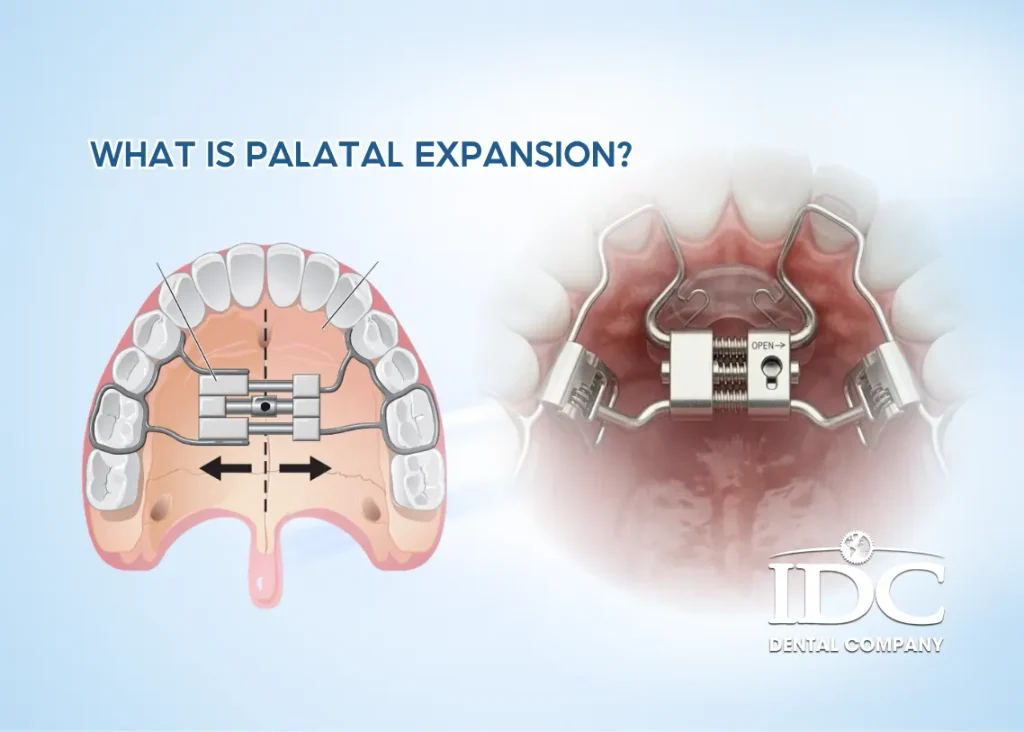
Palatal expansion, also known as maxillary expansion, is an orthodontic procedure that widens the upper jaw to correct a narrow dental arch or skeletal discrepancy.
The treatment uses a specialized appliance called a palate expander to apply controlled pressure to the upper jaw over time.
The upper jaw consists of two bones connected along the midpalatal suture, which runs through the center of the roof of the mouth. In growing children, this suture is relatively responsive to orthodontic forces.
When an expander applies gentle pressure, the two halves of the upper jaw can gradually move apart, allowing new bone to form in the space between them.
Palatal expansion can help address several orthodontic concerns, including:
- A narrow upper jaw or constricted dental arch.
- Posterior crossbite, where the upper back teeth bite inside the lower teeth.
- Dental crowding caused partly by insufficient upper arch width.
- Limited space for erupting permanent teeth.
- Certain transverse discrepancies between the upper and lower jaws.
It is important to understand that palatal expansion is different from simply moving individual teeth.
While braces primarily reposition teeth, skeletal palatal expansion aims to increase the width of the upper jaw when a genuine transverse deficiency is present.
2. When Is Palatal Expansion Necessary?
Not everyone with crowded teeth or an uneven bite needs palatal expansion.
An orthodontist may recommend this treatment when an examination identifies a narrow upper jaw or a discrepancy in the width of the upper and lower dental arches.
Narrow Upper Jaw (Maxillary Constriction)
A narrow upper jaw occurs when the maxilla does not develop to an adequate width. This condition can affect the shape of the upper dental arch and the way the upper teeth fit together with the lower teeth.
Patients with maxillary constriction may experience crowded teeth, a high or narrow palate, or an imbalance in their bite. In growing children, early orthodontic evaluation can help identify whether the problem is skeletal or primarily related to tooth positioning.
Palatal expansion may be recommended to improve upper jaw width and create a more suitable foundation for permanent teeth.
Posterior Crossbite
A posterior crossbite is one of the most common reasons for recommending palatal expansion. It occurs when one or more upper back teeth bite inside the corresponding lower teeth instead of slightly outside them.
This problem may affect one side or both sides of the mouth. In some children, a narrow upper jaw causes the lower jaw to shift to one side when closing the mouth.
If left untreated, certain crossbites may contribute to uneven tooth wear, functional difficulties, or an unfavorable bite relationship. Palatal expansion can help widen the upper arch and improve the alignment between the upper and lower teeth.
Dental Crowding and Insufficient Space
Dental crowding happens when there is not enough room in the dental arch for all the teeth to align properly. It can cause teeth to overlap, rotate, or erupt in unusual positions.
When crowding is associated with a narrow upper jaw, palatal expansion may create additional space for permanent teeth.
However, expansion is not automatically the best solution for every crowded smile. The orthodontist must evaluate the available space, tooth positions, jaw structure, and overall treatment goals before recommending it.
Impacted or Erupting Permanent Teeth
In some children, limited upper jaw width may contribute to difficulties with the eruption or positioning of permanent teeth. Expanding the upper dental arch may help create a more favorable environment for certain teeth to emerge.
However, palatal expansion does not guarantee that an impacted tooth will erupt normally. Additional orthodontic procedures may be necessary depending on the tooth’s position and development.
Jaw Development and Bite Problems
The upper and lower jaws need to develop in a balanced relationship to support proper chewing and comfortable biting. When the upper jaw is too narrow, the dental arches may not fit together correctly.
Palatal expansion can address certain transverse jaw discrepancies, particularly when treatment is performed during the patient’s growth period. It is not a universal solution for all bite problems, such as every overbite, underbite, or open bite.
3. Who Needs Palatal Expansion?
Palatal expansion may be suitable for children, teenagers, and adults. However, age and skeletal maturity play important roles in determining which treatment approach is appropriate.
Palatal Expansion in Children
Children are often ideal candidates for traditional palatal expansion because their jaws are still developing. The midpalatal suture has not fully matured, making skeletal expansion more predictable in many cases.
An orthodontist may recommend early evaluation if a child has:
- A narrow upper dental arch.
- A posterior crossbite.
- Significant crowding associated with a narrow maxilla.
- Abnormal upper jaw development.
- Limited space for permanent teeth.
Early treatment can help address certain skeletal problems before growth is complete. Nevertheless, the appropriate timing depends on the child’s individual dental development rather than age alone.
Palatal Expansion in Teenagers
Teenagers may still benefit from palatal expansion, although the response to treatment can vary as the midpalatal suture becomes more mature.
An orthodontist will assess skeletal development, jaw width, tooth positions, and the severity of the problem before selecting an appliance. Some teenagers can undergo conventional expansion, while others may benefit from alternative techniques.
Palatal Expansion in Adults
Adults can also receive palatal expansion, but treatment is generally more challenging because the midpalatal suture becomes more resistant as skeletal maturity increases.
Traditional tooth-supported expanders may produce more dental tipping rather than the desired skeletal widening in skeletally mature patients.
Depending on the patient’s condition, an orthodontist may consider:
- MARPE (Miniscrew-Assisted Rapid Palatal Expansion): Uses small temporary anchorage devices placed in the palate to deliver expansion forces more directly to the bone.
- SARPE (Surgically Assisted Rapid Palatal Expansion): Combines an expansion appliance with a surgical procedure to facilitate widening of the upper jaw.
Not every adult needs surgery. The most appropriate approach depends on skeletal anatomy, the degree of maxillary constriction, bone characteristics, and individual treatment goals.
4. What Are the Different Types of Palatal Expanders?
Several types of palatal expanders are available. The orthodontist selects the appliance based on the patient’s age, jaw development, and clinical needs.
Rapid Palatal Expander (RPE)
A rapid palatal expander is a fixed orthodontic appliance commonly used in children and selected growing adolescents. It is attached to the upper teeth and contains a central expansion screw.
Turning the screw according to the orthodontist’s instructions gradually increases the appliance’s width, applying pressure to the upper jaw.
RPE is commonly used to correct narrow maxillary arches and posterior crossbites when skeletal expansion is appropriate.
Removable Palatal Expander
A removable expander is an orthodontic appliance that patients can take out for cleaning and eating when instructed. It is generally used for selected cases involving mild dental arch expansion.
Successful treatment depends heavily on wearing the appliance as prescribed. Removable expanders may not provide the same skeletal effects as fixed expansion appliances.
Slow Palatal Expander
Slow palatal expansion gradually increases the width of the upper dental arch using controlled forces over a longer period.
This approach may be considered in certain orthodontic situations where gradual expansion is preferred. The treatment can involve fixed or removable appliances, depending on the clinical plan.
Miniscrew-Assisted Rapid Palatal Expansion (MARPE)
MARPE is a technique that uses temporary miniscrews placed in the palate to provide additional skeletal anchorage.
Unlike conventional expanders that rely mainly on the teeth for support, MARPE transfers more of the expansion force to the palatal bone. It may be considered for selected adolescents and adults who have completed or are approaching skeletal maturity.
Surgically Assisted Rapid Palatal Expansion (SARPE)
SARPE is a treatment option for patients with significant maxillary constriction who are unlikely to achieve sufficient skeletal expansion with conventional orthodontic appliances alone.
The procedure involves a surgical intervention to facilitate upper jaw widening, followed by activation of an expansion appliance.
An orthodontist and oral and maxillofacial surgeon work together to determine whether this approach is necessary.
5. What Are the Benefits of Palatal Expansion?
When properly indicated, palatal expansion can provide several functional and orthodontic benefits.
Creates more space for teeth: Widening a narrow upper jaw can increase the available space within the dental arch, potentially helping address certain types of crowding.
Corrects posterior crossbite: Expansion can improve the transverse relationship between the upper and lower dental arches, helping establish a more balanced bite.
Supports proper jaw development: In growing patients, early intervention may help address certain skeletal discrepancies before facial growth is complete.
May improve nasal airflow in selected patients: Because the floor of the nasal cavity is anatomically related to the palate, maxillary expansion may affect nasal dimensions. Some patients experience improvements in nasal airflow, although results vary. Palatal expansion should not be considered a guaranteed treatment for nasal obstruction or sleep apnea.
Provides a better foundation for orthodontic treatment: By addressing insufficient upper jaw width, palatal expansion may make subsequent treatment with braces or clear aligners more effective in selected cases.
6. What Is the Palatal Expansion Procedure Like?
The treatment process generally involves several stages, from the initial orthodontic examination to the retention phase.
Step 1: Initial Consultation and Examination
The orthodontist evaluates the patient’s teeth, bite relationship, jaw width, and overall oral health.
Dental X-rays, CBCT scans, or digital impressions may be used when clinically indicated to assess the underlying structures and develop an appropriate treatment plan.
Step 2: Choosing the Right Palatal Expander
Based on the examination, the orthodontist determines whether expansion is necessary and selects the most suitable appliance.
Important considerations include age, skeletal maturity, severity of maxillary constriction, and whether the goal is primarily dental or skeletal expansion.
Step 3: Appliance Placement
For fixed expanders, the appliance is fitted and secured to the upper teeth or supported by the palate, depending on its design.
Patients may initially notice pressure, increased saliva production, or slight difficulty speaking. These sensations usually improve as they adjust to the appliance.
Step 4: Active Expansion Phase
The expansion screw is activated according to the orthodontist’s specific instructions. Each activation gradually widens the appliance and applies controlled forces to the upper jaw.
Patients should never increase the activation frequency or turn the screw beyond the prescribed schedule.
Step 5: Retention and Stabilization Phase
Once the desired expansion is achieved, the appliance is usually kept in place for a stabilization period.
This allows new bone to form and mature in the expanded area, helping maintain the results. Afterward, the orthodontist may recommend braces or another orthodontic treatment to refine tooth alignment.
7. How Long Does Palatal Expansion Take?
The duration of palatal expansion varies depending on the patient’s age, skeletal maturity, appliance type, and treatment objectives.
The active expansion phase with a rapid palatal expander may take several weeks. However, the appliance often needs to remain in place for several additional months to allow the expanded area to stabilize.
Slow expansion generally takes longer during the active phase, while adult treatment with MARPE or SARPE may involve additional stages and recovery considerations.
Factors that influence treatment duration include:
- The severity of upper jaw constriction.
- The patient’s age and bone development.
- The type of expansion appliance.
- Individual biological response.
- Compliance with the orthodontist’s instructions.
Regular follow-up appointments are essential to monitor progress and make adjustments when necessary.
8. Is Palatal Expansion Painful?
Most patients experience pressure rather than severe pain during palatal expansion. Some temporary discomfort is common, particularly after activating the expansion screw.
Common side effects may include:
- Pressure around the upper teeth and palate.
- Mild soreness when chewing.
- Increased saliva production.
- Temporary speech changes.
- Difficulty eating certain foods.
- A temporary gap between the upper front teeth.
The gap between the front teeth is a common sign of separation during successful skeletal expansion in many patients. It may gradually close during subsequent orthodontic treatment.
To manage discomfort, patients can choose soft foods, maintain good oral hygiene, and follow their orthodontist’s instructions. Severe or persistent pain, significant swelling, or appliance problems should be evaluated by the dental professional.
9. What Happens If Palatal Expansion Is Not Performed When Needed?
When a significant transverse jaw discrepancy is left untreated, certain orthodontic problems may continue or become more difficult to manage.
For example, a posterior crossbite may contribute to an uneven bite or functional jaw shifting. Dental crowding associated with a narrow upper jaw may also complicate future orthodontic alignment.
In growing children, delaying appropriate treatment may reduce the opportunity to use growth-related skeletal expansion techniques.
However, this does not mean every narrow palate requires treatment. Some conditions can be managed with other orthodontic approaches, while others may not require intervention. An individual examination is necessary to determine the best option.
10. Palatal Expansion vs. Braces: What Is the Difference?
Although both palatal expansion and braces are orthodontic treatments, they serve different purposes.
Palatal expansion focuses on increasing the width of the upper jaw or dental arch to correct transverse discrepancies. Braces, on the other hand, move individual teeth into better positions to correct crowding, spacing, rotations, and various bite problems.
Some patients need both treatments. In these cases, palatal expansion may be performed first to create a more appropriate arch width, followed by braces to align the teeth and refine the bite.
The treatment sequence depends on the patient’s specific orthodontic condition.
11. Frequently Asked Questions About Palatal Expansion
At What Age Should a Child Get a Palate Expander?
There is no single ideal age for every child. Traditional palatal expansion is often performed during childhood or early adolescence while the upper jaw is still developing. An orthodontic evaluation can help determine the most appropriate timing.
Can Adults Get Palatal Expansion?
Yes. Adults may be candidates for MARPE or SARPE, depending on skeletal maturity and the severity of maxillary constriction. Traditional expansion may be less predictable after the midpalatal suture has matured.
Does Palatal Expansion Change Your Face Shape?
Palatal expansion can influence certain aspects of facial and dental development, particularly in growing patients. However, noticeable facial changes are not guaranteed and depend on individual anatomy and treatment response.
Does a Palate Expander Create a Gap Between Front Teeth?
A temporary gap between the upper front teeth may develop during rapid skeletal expansion. This is a common occurrence and can usually be addressed during subsequent orthodontic treatment.
Can Palatal Expansion Fix an Overbite?
Palatal expansion is not a primary treatment for every overbite. It may help when a narrow upper jaw contributes to the bite problem, but additional orthodontic treatment may be required.
How Long Do You Have to Wear a Palate Expander?
The active expansion phase may take several weeks, while the stabilization phase can last several additional months. The exact duration depends on the appliance and the patient’s response.
Is Palatal Expansion Permanent?
The skeletal changes can be maintained after successful stabilization, but some relapse may occur. Proper retention and follow-up are important for long-term stability.

 WhatsApp