
Tartar buildup may seem like a minor dental problem, but leaving it untreated can lead to serious oral health issues over time. Tartar, also known as dental calculus, is hardened plaque that sticks firmly to the teeth and cannot be removed by brushing or flossing at home. Once tartar forms, it requires professional dental cleaning to remove it safely and effectively.
Many people ignore tartar because it may not cause pain in the beginning. However, untreated tartar can irritate the gums, trap bacteria, cause bad breath, increase the risk of cavities, and eventually lead to gum disease, bone loss, and tooth loss.
Understanding the dangers of untreated tartar buildup can help you take preventive care more seriously and protect your teeth and gums before problems become more complicated.
What Is Tartar Buildup?
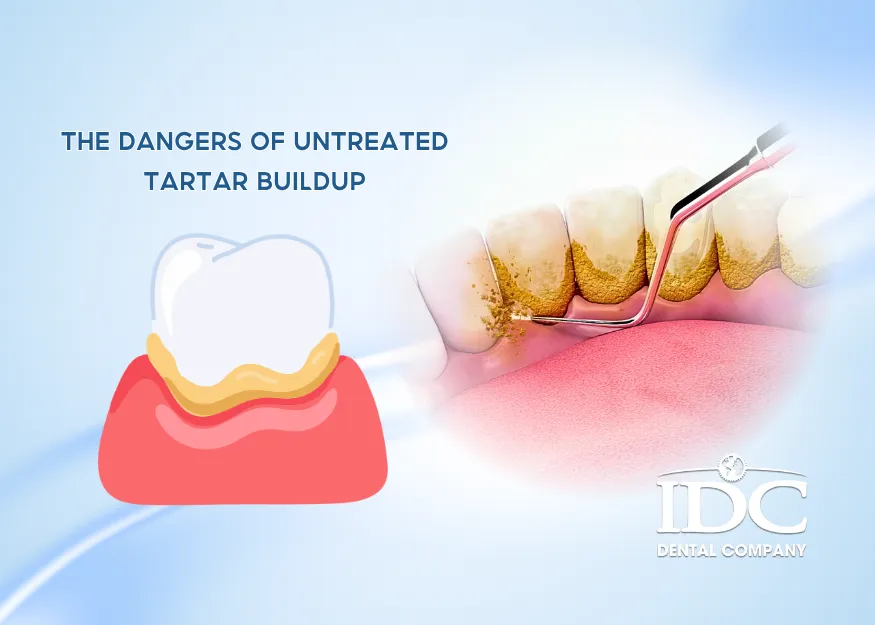
Tartar buildup occurs when dental plaque hardens on the surface of the teeth. Plaque is a soft, sticky film of bacteria that forms every day after eating and drinking. If plaque is not removed properly through brushing and flossing, it can harden into tartar.
Tartar often appears as yellow, brown, or dark deposits near the gumline, between the teeth, or behind the lower front teeth. It can make the tooth surface feel rough and may contribute to staining and bad breath.
Unlike plaque, tartar cannot be removed with a toothbrush. Once it hardens, only a dentist or dental hygienist can remove it using professional scaling instruments.
Plaque vs Tartar: What Is the Difference?
Plaque and tartar are closely related, but they are not the same.
Plaque is soft and can usually be removed with good daily oral hygiene. Brushing twice a day and flossing daily help control plaque before it causes damage.
Tartar is hardened plaque. Once plaque absorbs minerals from saliva, it becomes calcified and firmly attaches to the teeth. At this stage, it becomes much harder and more difficult to remove.
The longer tartar remains on the teeth, the more bacteria it can trap, increasing the risk of gum inflammation and tooth decay.
What Causes Tartar Buildup?
Tartar buildup is usually caused by poor plaque control. If plaque is not removed regularly, it can harden within a short period.
Common causes include poor brushing habits, not flossing, brushing too quickly, missing areas near the gumline, and eating a diet high in sugar or refined carbohydrates.
Smoking and tobacco use can also increase tartar formation and staining. Dry mouth is another risk factor because saliva helps wash away food particles and bacteria. When saliva flow is reduced, plaque and tartar may build up more easily.
People with crowded teeth, braces, bridges, crowns, or other dental restorations may also find it more difficult to clean certain areas properly, making tartar buildup more likely.
Early Signs of Tartar Buildup
Tartar buildup may not always cause pain at first. However, there are several signs to watch for.
You may notice yellow or brown deposits on your teeth, especially near the gumline. Your teeth may feel rough when you run your tongue over them. Your gums may bleed when brushing or flossing.
Other signs include red or swollen gums, gum sensitivity, persistent bad breath, or visible staining. If tartar continues to accumulate, the gums may begin to pull away from the teeth, creating spaces where more bacteria can collect.
The Dangers of Untreated Tartar Buildup
Untreated tartar buildup can create a chain reaction of dental problems. What starts as a simple buildup of hardened plaque can eventually affect the gums, teeth, bone, and overall oral health.
Gum Inflammation
One of the first effects of tartar is gum irritation. Tartar forms along the gumline and creates a rough surface where bacteria can collect. These bacteria release toxins that irritate the gum tissue.
As a result, the gums may become red, swollen, tender, or bleed easily. This early inflammation is a warning sign that the gums are reacting to bacterial buildup.
Gingivitis
Gingivitis is the earliest stage of gum disease. It is usually caused by plaque and tartar buildup around the gumline.
Common symptoms include bleeding gums, bad breath, swelling, and gum redness. At this stage, gum disease is often reversible with professional cleaning and better oral hygiene.
However, if gingivitis is ignored, it can progress into a more serious condition called periodontitis.
Periodontitis
Periodontitis is advanced gum disease. It occurs when bacteria spread deeper below the gumline and begin damaging the tissues and bone that support the teeth.
As the gums pull away from the teeth, pockets form between the teeth and gums. These pockets trap more bacteria and become harder to clean.
Without treatment, periodontitis can lead to gum recession, bone loss, loose teeth, and eventually tooth loss.
Gum Recession
Untreated tartar can contribute to gum recession. This happens when the gum tissue gradually pulls away from the teeth, exposing more of the tooth surface or even the tooth root.
Gum recession can make teeth look longer and may cause sensitivity, especially when eating or drinking something hot, cold, or sweet. Exposed roots are also more vulnerable to decay because they are not protected by enamel in the same way as the crown of the tooth.
Tooth Decay
Tartar buildup can increase the risk of cavities. The bacteria in plaque and tartar produce acids that weaken tooth enamel. Over time, this acid attack can lead to tooth decay.
Tartar near the gumline or between teeth can make cleaning more difficult, allowing bacteria to remain in place longer. This creates a higher risk of cavities in areas that are harder to see and clean.
Persistent Bad Breath
Bad breath is another common consequence of untreated tartar buildup. Tartar traps bacteria and food particles, creating an environment where unpleasant odors can develop.
If bad breath does not improve with brushing, mouthwash, or tongue cleaning, tartar buildup or gum disease may be one of the causes.
Professional dental scaling can help remove the bacterial deposits contributing to persistent bad breath.
Tooth Mobility
When tartar-related gum disease becomes more advanced, it can damage the bone and ligaments that support the teeth. As support weakens, teeth may begin to feel loose.
Tooth mobility is a serious warning sign. It may indicate that gum disease has progressed beyond the early stage and requires professional periodontal treatment.
Tooth Loss
One of the most serious dangers of untreated tartar buildup is tooth loss. When gum disease destroys the supporting bone around the teeth, the teeth may no longer have a stable foundation.
This can lead to loose teeth, shifting teeth, difficulty chewing, and eventually the need for extraction.
The good news is that regular dental scaling and early gum treatment can help prevent many cases of tooth loss.
Bone Loss Around Teeth
Healthy bone is essential for keeping teeth stable. When tartar buildup causes advanced gum disease, bacteria can trigger inflammation that damages the bone around the teeth.
Bone loss is often not visible in the early stages and may only be detected through dental X-rays. Once bone loss occurs, it can be difficult to fully reverse, which is why prevention and early treatment are so important.
Increased Dental Treatment Costs
Ignoring tartar buildup may seem harmless at first, but it can lead to more expensive dental problems later.
Routine dental scaling is much simpler and more affordable than treating advanced gum disease, cavities, root infections, tooth mobility, or tooth loss.
Preventive care helps reduce the risk of needing more complex treatments such as deep cleaning, gum therapy, fillings, crowns, root canal treatment, dental bridges, dentures, or dental implants.
How Untreated Tartar Affects Your Gums
Tartar affects the gums by creating a constant source of bacterial irritation. When tartar sits along or below the gumline, the gums become inflamed.
Over time, the gum tissue may pull away from the teeth, forming periodontal pockets. These pockets allow more bacteria to accumulate below the gumline, where regular brushing cannot reach.
This cycle can continue unless the tartar is professionally removed and the gum infection is treated.
How Untreated Tartar Affects Your Teeth
Tartar can damage teeth in several ways. It makes the tooth surface rough, allowing more plaque to attach. It can also contribute to stains, cavities, sensitivity, and enamel weakening.
Although tartar itself does not directly “eat” the tooth, the bacteria trapped around it can produce acids that damage enamel and increase the risk of decay.
Tartar can also form between teeth, making flossing less effective and increasing the risk of hidden cavities.
Can Tartar Buildup Affect Overall Health?
Oral health is closely connected to general health. While tartar buildup mainly affects the teeth and gums, the bacteria and inflammation associated with gum disease may also influence overall wellness.
Poor gum health has been associated with higher levels of inflammation in the body. People with conditions such as diabetes may be more vulnerable to gum problems and may need more frequent dental care.
Maintaining clean teeth and healthy gums is not only important for your smile but also for your overall health and comfort.
Who Is at Higher Risk of Tartar Buildup?
Some people are more likely to develop tartar than others. Smokers often experience more tartar buildup and staining. Patients with diabetes, dry mouth, or gum disease may also be at higher risk.
People with braces, crowded teeth, dental bridges, crowns, or implants may find certain areas harder to clean. Older adults may also develop tartar more easily due to changes in saliva, gum health, or manual brushing ability.
If you are at higher risk, your dentist may recommend professional cleanings more often than every six months.
How Is Tartar Buildup Removed?
Tartar is removed through professional dental scaling. During scaling, a dentist or dental hygienist uses special instruments to remove hardened deposits from the teeth and around the gumline.
An ultrasonic scaler may be used to break apart tartar with gentle vibrations and water spray. Hand instruments may also be used to carefully clean specific areas.
After scaling, the teeth are often polished to smooth the surface and remove surface stains. In cases of gum disease, deeper cleaning such as scaling and root planing may be required.
Is Tartar Removal Painful?
For most patients, tartar removal is not painful. You may feel pressure, vibration, or mild sensitivity during the procedure.
If there is heavy tartar buildup or gum inflammation, cleaning may feel slightly uncomfortable. Patients with sensitive teeth may experience temporary sensitivity after scaling.
In deeper gum treatment cases, local anesthesia may be used to make the procedure more comfortable.
How Often Should Tartar Be Removed?
Most patients should have dental scaling every six months. This helps prevent tartar from building up and allows the dentist to check for early signs of gum disease or tooth decay.
However, patients with gum disease, heavy tartar buildup, smoking habits, diabetes, dry mouth, or braces may need cleanings every three to four months.
Your dentist will recommend the best schedule based on your oral health condition.
How to Prevent Tartar Buildup
The best way to prevent tartar is to control plaque every day. Brush your teeth at least twice daily using fluoride toothpaste. Pay special attention to the gumline, back teeth, and areas behind the lower front teeth.
Floss once a day to clean between the teeth. You may also use interdental brushes or a water flosser if recommended by your dentist.
Limiting sugary foods and drinks can reduce plaque formation. Drinking water helps rinse away food particles. Avoiding smoking also reduces tartar buildup and staining.
Most importantly, schedule regular dental checkups and professional cleanings.
Common Myths About Tartar
Can I Remove Tartar at Home?
No. Tartar cannot be safely removed at home once it has hardened. Trying to scrape tartar by yourself can damage the gums or enamel. Professional dental scaling is the safest option.
Does Tartar Removal Damage Enamel?
No. When performed by a qualified dental professional, scaling does not damage healthy enamel. It removes deposits from the tooth surface.
Does Scaling Make Teeth Loose?
Scaling does not make healthy teeth loose. If teeth feel loose after tartar removal, it may be because gum disease has already damaged the supporting bone. The tartar may have been masking the problem.
Is Tartar Only a Cosmetic Problem?
No. Tartar may affect appearance, but it is much more than a cosmetic issue. It can lead to gum disease, tooth decay, bad breath, bone loss, and tooth loss if untreated.
Frequently Asked Questions
What happens if tartar is not removed?
If tartar is not removed, it can irritate the gums, trap bacteria, cause bad breath, increase the risk of cavities, and lead to gum disease.
Can tartar cause tooth loss?
Yes. Tartar can contribute to gum disease, which may damage the bone and tissues supporting the teeth. In advanced cases, this can lead to tooth loss.
How long does it take for plaque to become tartar?
Plaque can begin to harden into tartar within a short period if it is not removed properly. This is why daily brushing and flossing are important.
Can tartar cause bad breath?
Yes. Tartar traps bacteria and food debris, which can contribute to persistent bad breath.
Can tartar be removed naturally?
No. Once tartar has hardened, it cannot be removed naturally or with home remedies. Professional dental scaling is required.
How do I know if I have tartar?
You may notice yellow or brown deposits, rough tooth surfaces, bleeding gums, or bad breath. A dentist can confirm tartar buildup during an oral examination.
When should you see a dentist?
You should see a dentist if you notice visible tartar, bleeding gums, swollen gums, persistent bad breath, gum recession, tooth sensitivity, or loose teeth.
You should also schedule routine dental cleaning if it has been six months or longer since your last visit.
Early treatment is always easier, more comfortable, and more affordable than waiting until the problem becomes serious.

 WhatsApp