
How long does periodontitis treatment take? The answer depends on the severity of the disease, the amount of bone loss, your overall health, and how well you follow your dentist’s treatment plan.
Unlike gingivitis, periodontitis damages the gums and supporting bone around the teeth, making early treatment essential to prevent tooth loss. While many patients notice healthier gums within a few weeks, successful treatment often requires ongoing professional care and good oral hygiene.
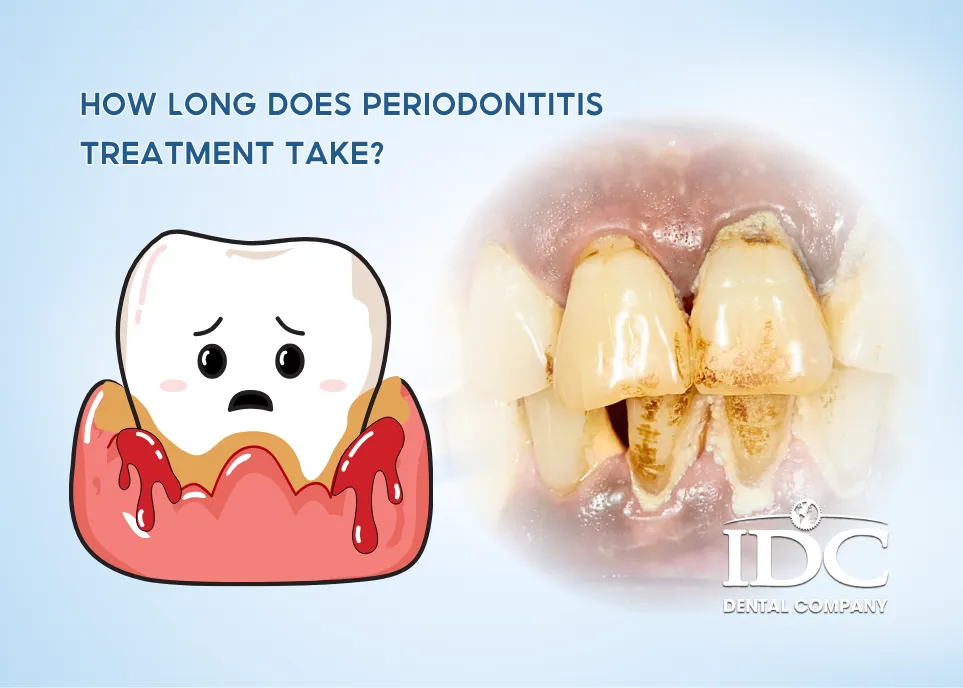
This guide explains the typical treatment timeline, factors that affect recovery, and what you can expect during each stage of periodontitis treatment.
What Is Periodontitis?
Periodontitis is the advanced stage of gum disease that develops when gingivitis is left untreated. It occurs when bacteria accumulate beneath the gumline, causing chronic inflammation that gradually destroys the gums, periodontal ligament, and alveolar bone supporting the teeth.
As the infection progresses, periodontal pockets form between the teeth and gums, allowing bacteria to spread even deeper below the surface. Over time, this can lead to gum recession, loose teeth, difficulty chewing, and tooth loss if appropriate treatment is not provided.
Unlike gingivitis, the damage caused by periodontitis cannot be completely reversed. However, with early diagnosis and appropriate periodontal treatment, the disease can usually be controlled, helping patients preserve their natural teeth for many years.
How long does periodontitis treatment usually take?
There is no single answer that applies to every patient because treatment duration varies according to the severity of the disease.
In general:
- Mild periodontitis may require several weeks of treatment and healing.
- Moderate periodontitis often takes one to three months before significant improvement is observed.
- Severe periodontitis may require several months of active treatment followed by lifelong periodontal maintenance.
Although professional treatment may be completed within a relatively short period, periodontal maintenance continues throughout life to prevent the disease from returning.
Mild Periodontitis
Patients with mild periodontitis usually have shallow periodontal pockets and minimal bone loss.
Treatment typically includes:
- Comprehensive dental examination
- Digital X-rays
- Scaling and root planing
- Improved home oral hygiene
- Follow-up evaluation
Many patients notice reduced bleeding and healthier gums within two to four weeks after deep cleaning.
Moderate Periodontitis
Moderate periodontitis usually involves deeper pockets and more noticeable bone loss.
Treatment may require:
- Multiple deep cleaning appointments
- Local antimicrobial therapy when indicated
- Several follow-up visits
- Re-evaluation after healing
Healing generally takes several weeks, while complete stabilization of the gums may require one to three months depending on individual healing capacity.
Severe Periodontitis
Advanced periodontitis often requires more comprehensive treatment.
Patients may need:
- Extensive scaling and root planing
- Periodontal surgery
- Bone grafting
- Regenerative procedures
- Long-term maintenance care
Because the disease has already caused significant tissue destruction, treatment may extend over several months.
What Factors Affect the Length of Periodontitis Treatment?
Every patient heals differently. Several important factors influence how long treatment will take.
Severity of Gum Disease
This is the most important factor.
Patients diagnosed early often respond more quickly because less damage has occurred.
In contrast, advanced periodontitis usually requires additional procedures and longer healing times.
Number of Teeth Affected
Treating one or two localized areas generally takes less time than treating generalized periodontitis affecting the entire mouth.
Patients with widespread disease often require multiple appointments to complete scaling and root planing safely and comfortably.
Periodontal Pocket Depth
The deeper the periodontal pockets, the more bacteria accumulate beneath the gums.
Deep pockets are also more difficult to clean and monitor, often requiring longer treatment and additional maintenance visits.
Bone Loss
Bone loss significantly influences both treatment complexity and recovery time.
Patients with advanced bone destruction may require regenerative procedures before long-term stability can be achieved.
Overall Health
General health plays an important role in healing.
Patients with uncontrolled diabetes, immune disorders, or other chronic conditions may experience slower tissue repair compared with healthy individuals.
Maintaining good control of systemic conditions often improves periodontal treatment outcomes.
Smoking
Smoking remains one of the strongest risk factors for periodontal disease.
Nicotine reduces blood circulation to the gums, delays healing, and decreases the body’s ability to fight infection.
Patients who stop smoking during treatment generally experience better healing and improved long-term results.
Oral Hygiene
Professional treatment alone cannot eliminate periodontitis permanently.
Patients who brush properly twice daily, clean between their teeth, and attend regular maintenance visits usually recover faster than those with poor oral hygiene habits.
Patient Compliance
Following your dentist’s instructions is essential.
Patients who attend scheduled appointments, complete recommended treatments, and maintain excellent home care often achieve more predictable and lasting outcomes.
Step-by-Step Periodontitis Treatment Timeline
Understanding each stage of treatment helps patients know what to expect.
Step 1: Comprehensive Examination
Treatment begins with a detailed periodontal evaluation.
At IDC Dental Da Nang, the dentist carefully examines:
- Gum inflammation
- Bleeding
- Gum recession
- Tooth mobility
- Plaque accumulation
- Periodontal pocket depth
Digital X-rays or CT imaging may also be recommended to assess bone loss around the teeth.
After reviewing all findings, the dentist develops a personalized treatment plan based on your specific condition.
Step 2: Scaling and Root Planing
Scaling and root planing, commonly known as deep cleaning, is considered the foundation of periodontitis treatment.
During this procedure, the dentist removes plaque, tartar, and bacterial deposits from beneath the gumline while smoothing the tooth roots to encourage healthy gum reattachment.
Depending on the number of teeth involved, treatment may be completed in one appointment or divided into multiple visits.
Many patients experience only mild discomfort, and modern techniques help make the procedure as comfortable as possible.
Step 3: Healing Phase
After deep cleaning, the gums begin their healing process.
During the first few days, mild tenderness and sensitivity are common.
Over the following weeks, inflammation gradually decreases, bleeding becomes less frequent, and the gums begin to tighten around the teeth.
Patients who maintain excellent oral hygiene usually notice significant improvement within several weeks.
The next stage of treatment is to evaluate how well the gums have responded and determine whether additional periodontal therapy is necessary.
Step 4: Re-evaluation After Initial Treatment
Approximately 4 to 8 weeks after scaling and root planing, your dentist will schedule a follow-up visit to evaluate how your gums have responded to treatment.
During this appointment, several important factors are assessed, including:
- Periodontal pocket depth
- Gum inflammation
- Bleeding during probing
- Plaque control
- Tooth mobility
- Overall healing progress
Many patients experience significant improvements after the initial phase of treatment. Periodontal pockets often become shallower, gum bleeding decreases, and the tissues appear healthier.
If the gums have responded well, your dentist may recommend moving to the maintenance phase. However, if deep pockets or active inflammation remain, additional treatment may be necessary.
Step 5: Additional Treatment (If Needed)
Not every patient requires further procedures after deep cleaning. However, individuals with moderate to severe periodontitis may benefit from additional periodontal therapy.
Antibiotic Therapy
In some cases, your dentist may recommend local or systemic antibiotics to help reduce bacterial infection inside deep periodontal pockets.
Antibiotics are generally used alongside mechanical cleaning rather than as a standalone treatment.
Laser Periodontal Therapy
Some dental clinics use laser technology to remove infected tissue and reduce bacteria beneath the gums.
Laser treatment may help improve patient comfort and support healing in selected cases, although it is not necessary for every patient.
Periodontal Surgery
When periodontal pockets remain too deep to clean effectively, surgery may be recommended.
Common procedures include:
- Flap surgery
- Pocket reduction surgery
- Soft tissue grafting
- Guided tissue regeneration
These procedures aim to reduce pocket depth, improve access for cleaning, and preserve as much natural tooth support as possible.
Bone Grafting
If significant bone loss has occurred, bone grafting may be recommended to help regenerate supporting bone around the affected teeth.
Healing after bone grafting generally requires several months before complete maturation occurs.
How long does scaling and root planing take?
Scaling and root planing is the first and most important step in treating periodontitis.
Treatment time depends on the number of teeth affected and the severity of the disease.
Generally:
- One quadrant may take 45–90 minutes.
- Half of the mouth may require one appointment.
- Full-mouth treatment is often completed over two to four visits.
After treatment, patients can usually return to normal daily activities immediately, although mild sensitivity may last for several days.
How long does it take for gums to heal?
Healing occurs gradually rather than overnight.
During the first few days
Patients may experience:
- Mild gum tenderness
- Temporary tooth sensitivity
- Slight bleeding while brushing
These symptoms typically improve quickly.
Within two weeks
Inflammation usually decreases noticeably.
Many patients report:
- Less bleeding
- Fresher breath
- Healthier-looking gums
- Reduced swelling
After one month
The gums continue tightening around the teeth.
Many periodontal pockets become shallower as healing progresses.
After three months
For patients with good oral hygiene and successful treatment, the gums are generally much healthier than before treatment.
However, continued maintenance remains essential because periodontitis is a chronic disease that can recur if plaque accumulates again.
Can periodontitis be treated faster?
Although healing follows the body’s natural biological process, patients can improve treatment outcomes by following their dentist’s recommendations.
Helpful habits include:
Maintain excellent oral hygiene
Brush twice daily using proper brushing techniques.
Clean between your teeth every day with floss or interdental brushes.
Stop smoking
Smoking slows healing and greatly increases the risk of recurrent periodontal disease.
Quitting smoking is one of the most effective ways to improve treatment success.
Control medical conditions
Patients with diabetes should maintain good blood sugar control to support healthier gums and faster healing.
Keep every follow-up appointment
Periodontal maintenance visits allow your dentist to monitor healing, remove new plaque and tartar, and detect any recurrence early.
Follow home care instructions
Using prescribed mouthwash, taking medications as directed, and maintaining good oral hygiene all contribute to a smoother recovery.
What happens if you delay periodontitis treatment?
Many patients postpone treatment because they are not experiencing pain.
Unfortunately, periodontitis often progresses silently.
Without treatment, the disease may lead to:
- Continued bone loss
- Gum recession
- Loose teeth
- Chronic infection
- Tooth loss
- More complicated and expensive treatment
Early intervention is almost always simpler, less invasive, and more predictable than treating advanced disease.
Can periodontitis return after treatment?
Yes.
Although periodontal treatment can successfully control infection, periodontitis is considered a chronic condition.
If plaque is allowed to build up again, inflammation may return and the disease can become active once more.
Regular maintenance appointments combined with excellent home care are the best ways to reduce the risk of recurrence.
Periodontal maintenance: A lifelong commitment
Successful periodontal treatment does not end after deep cleaning.
Patients diagnosed with periodontitis usually require ongoing periodontal maintenance every three to four months, depending on their individual risk factors.
During these visits, your dentist or dental hygienist will:
- Remove plaque and tartar
- Monitor periodontal pocket depth
- Evaluate gum health
- Reinforce oral hygiene techniques
- Detect early signs of recurrence
These maintenance visits play a crucial role in preserving healthy gums and protecting your natural teeth.
Frequently asked questions
Can periodontitis be treated in one visit?
Most patients require multiple appointments depending on the severity of the disease and the number of teeth affected.
Is periodontitis treatment painful?
Modern periodontal treatment is generally well tolerated. Local anesthesia is commonly used during scaling and root planing to maximize patient comfort.
Will my gums grow back?
Treatment can reduce inflammation and allow the gums to heal. However, gum tissue and bone that have already been lost usually do not regenerate completely without specialized periodontal procedures.
Can I get dental implants after periodontitis?
Yes. Once periodontal disease has been successfully controlled and the gums are healthy, many patients become suitable candidates for dental implant treatment.
Why choose IDC Danang Dental for periodontitis treatment?
At IDC Danang Dental, periodontal care focuses on preserving your natural teeth whenever possible through early diagnosis, evidence-based treatment, and personalized care.
Patients benefit from:
- Experienced dentists in periodontal diagnosis and treatment.
- Comprehensive examinations using modern digital imaging technology.
- Thorough scaling and root planing performed with patient comfort in mind.
- Personalized treatment plans tailored to each individual’s condition.
- English-speaking dentists and staff who make communication easy for international patients.
- Ongoing periodontal maintenance and long-term follow-up care.
Whether you are experiencing bleeding gums, persistent bad breath, gum recession, or loose teeth, our team is committed to helping you restore healthier gums and maintain your smile.



 WhatsApp