
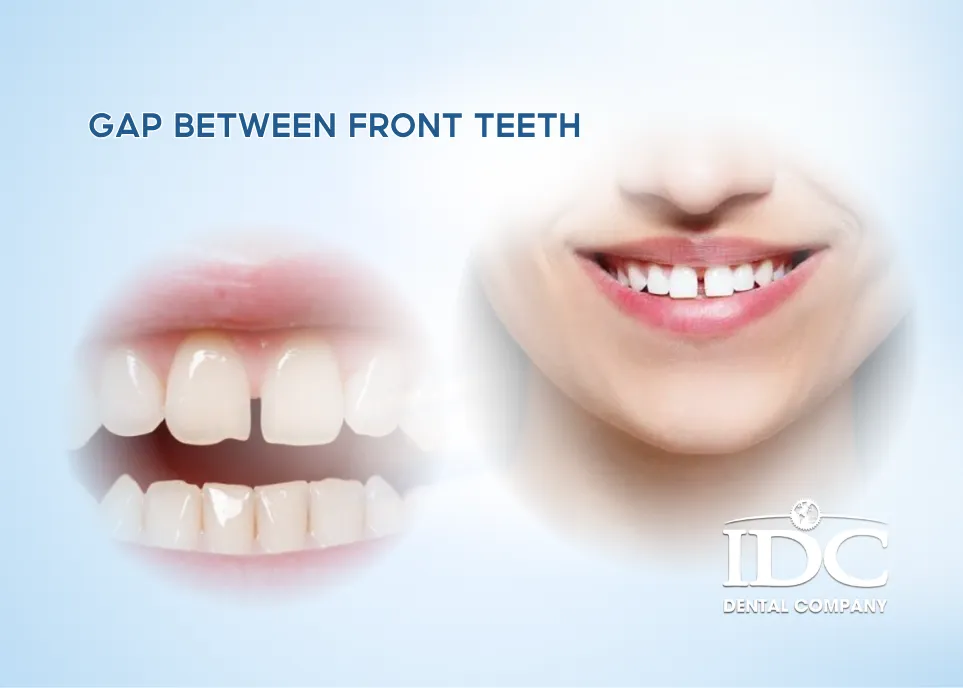
A gap between front teeth, also known as a diastema, is a space that appears between two teeth, most commonly the upper central incisors. For some people, this gap is simply a natural feature of their smile and does not cause any oral health problems. For others, it may be related to tooth size, jaw development, oral habits, gum disease, or the position of the teeth.
Whether a front tooth gap needs treatment depends on its cause, size, the condition of the surrounding teeth and gums, and the patient’s cosmetic goals. Small gaps may sometimes be improved quickly with composite bonding or porcelain veneers, while larger spaces or gaps associated with bite problems may require orthodontic treatment.
Understanding why the gap has developed is therefore an important first step. This guide explains the common causes of a gap between front teeth, when treatment may be recommended, and the most effective options available for closing the space.
What Is a Gap Between Front Teeth?
A space between two teeth is medically known as a diastema. Although gaps can occur anywhere in the mouth, they are particularly noticeable when they develop between the two upper front teeth.
A front teeth gap may be present from childhood or develop later in life. In children, spacing can sometimes be part of normal dental development and may change as permanent teeth erupt.
In adults, a stable gap that has existed for many years is often mainly a cosmetic concern. However, a new gap or one that gradually becomes wider should be evaluated by a dentist because it may indicate tooth movement, gum disease, bone loss, or changes in the bite.
Not every diastema needs to be closed. Treatment is generally considered when the gap affects appearance, function, oral health, or the patient’s confidence in their smile.
What Causes a Gap Between Front Teeth?
There is no single cause of front tooth spacing. Determining the underlying reason helps the dentist recommend an appropriate treatment rather than simply covering the visible gap.
1. Genetics and Tooth Size
One of the most common causes is a mismatch between the size of the teeth and the size of the jaw.
If the jaw is relatively wide while the teeth are small, there may not be enough tooth structure to fill the dental arch completely. Spaces can consequently develop between several teeth, including the front incisors.
Tooth and jaw characteristics can also run in families, which explains why diastema may appear in multiple family members.
2. Small or Abnormally Shaped Teeth
Some people naturally have smaller teeth, particularly the upper lateral incisors next to the two central front teeth.
A condition known as peg lateral teeth occurs when these lateral incisors are unusually small or cone-shaped. The resulting imbalance in tooth proportions can create visible spaces around the front teeth.
In these cases, treatment may involve not only closing the central gap but also improving the size and proportions of the surrounding teeth.
3. Missing Teeth
Congenitally missing teeth can also contribute to spacing.
When one or more permanent teeth fail to develop, the remaining teeth may have excess room within the dental arch. Over time, they can shift into these spaces and create gaps elsewhere.
Treatment may therefore require a combination of orthodontics and restorative dentistry rather than simply closing one visible space.
4. Large or Low-Attaching Labial Frenum
The labial frenum is the small band of tissue connecting the inside of the upper lip to the gum.
In some people, this tissue is unusually thick or attaches low between the two upper central incisors. It may contribute to maintaining a space between these teeth.
A dentist or orthodontist needs to evaluate whether the frenum is actually contributing to the diastema. Not every patient with a front tooth gap requires treatment of the frenum.
5. Tongue Thrusting
Normally, the tongue should rest in a position that does not continuously push against the front teeth.
Some people have a habit known as tongue thrust, where the tongue repeatedly presses forward against or between the front teeth during swallowing or at rest.
Over time, this pressure can contribute to tooth movement, spacing, or changes in the bite.
If tongue thrusting is contributing to the problem, simply closing the gap may not provide a stable long-term result unless the underlying habit is also addressed.
6. Thumb Sucking During Childhood
Persistent thumb or finger sucking can affect the development of the teeth and jaws.
When the habit continues for an extended period, pressure can push the upper front teeth forward and influence the bite. This may result in protruding teeth, an open bite, or spacing between the front teeth.
The severity depends on factors such as how frequently and how long the habit occurs.
7. Gum Disease and Bone Loss
A gap between front teeth that develops or becomes wider during adulthood deserves particular attention.
Periodontal disease can damage the gums, periodontal ligaments, and bone supporting the teeth. As supporting structures deteriorate, teeth may become mobile and gradually shift away from their original positions.
Warning signs may include:
- Bleeding or swollen gums
- Gum recession
- Persistent bad breath
- Loose teeth
- Changes in the bite
- Increasing spaces between teeth
In this situation, cosmetic treatment alone is not sufficient. The periodontal condition should be controlled before considering bonding, veneers, or orthodontics.
8. Tooth Movement After Tooth Loss
Missing teeth elsewhere in the mouth can gradually affect the position of neighboring and opposing teeth.
Teeth may tilt, rotate, or migrate into available spaces. These movements can alter the bite and eventually contribute to spacing in other parts of the dental arch.
This is another reason why the cause of adult-onset spacing should be properly diagnosed.
Is a Gap Between Front Teeth a Serious Problem?
Not necessarily.
For many people, a diastema is simply a natural variation in tooth arrangement. If the teeth and gums are healthy and the bite is stable, there may be no medical reason to close the gap.
Some people even consider their front tooth gap an attractive or distinctive feature.
However, dental evaluation becomes more important when the gap is associated with:
- Progressive tooth movement
- Gum inflammation
- Loose teeth
- Bone loss
- Significant bite problems
- Difficulty cleaning certain areas
- Speech concerns
- Unwanted cosmetic appearance
The important question is therefore not simply, “Is there a gap?” but rather, “Why is the gap there?”
When Should You See a Dentist About a Front Tooth Gap?
Consider scheduling a dental examination if you notice that the space is becoming larger, particularly if this change occurs during adulthood.
You should also seek evaluation if the gap occurs together with bleeding gums, gum recession, loose teeth, discomfort when biting, or other changes in tooth position.
Even when the concern is entirely cosmetic, a dental examination is recommended before treatment. The dentist can determine whether the teeth are suitable for bonding or veneers or whether orthodontic treatment would produce a healthier and more predictable result.
Effective Treatment Options for a Gap Between Front Teeth
Modern dentistry provides several ways to close or reduce a front tooth gap. The appropriate choice depends on the size and cause of the gap, tooth proportions, bite, gum health, and desired result.
1. Composite Bonding
Composite bonding is often one of the simplest options for treating a small gap between healthy front teeth.
A tooth-colored composite resin is applied to the sides and surfaces of the teeth. The dentist carefully shapes the material to increase the width of the teeth and reduce or completely close the space.
Advantages of Composite Bonding
Composite bonding can offer several benefits:
- Usually minimally invasive
- Often requires little or no enamel removal
- Can frequently be completed in one appointment
- Tooth color and shape can be adjusted
- Generally more affordable than porcelain veneers
- Composite can usually be repaired if it chips
Bonding can work particularly well when the gap is small and the existing teeth are slightly narrow.
Limitations of Composite Bonding
Composite resin is not as resistant to staining and wear as porcelain. Over time, it may become discolored, worn, rough, or chipped.
Large gaps can also create a cosmetic problem. Adding too much material to two teeth may make them appear unnaturally wide.
For this reason, the dentist needs to evaluate overall tooth proportions rather than simply filling the empty space.
2. Porcelain Veneers
Porcelain veneers are thin ceramic restorations placed over the visible surfaces of teeth.
They can be particularly useful when a patient wants to close a gap while simultaneously improving other cosmetic concerns, such as:
- Small teeth
- Uneven tooth shape
- Tooth discoloration
- Minor chips
- Uneven proportions
- Multiple small spaces
Instead of simply filling the gap, veneers allow the dentist to redesign the proportions of the visible front teeth.
Advantages of Porcelain Veneers
High-quality ceramic can closely reproduce the translucency and appearance of natural enamel.
Veneers also tend to resist staining better than composite resin and can provide a durable cosmetic result when properly planned and maintained.
Are Veneers Right for Every Gap?
No.
Veneers change the visible shape of the teeth but do not actually move teeth into a different position.
If the diastema is caused by significant tooth positioning or a bite problem, orthodontic treatment may be more appropriate.
Some veneer procedures also require enamel preparation. The amount varies depending on tooth position, restoration design, and the individual case.
3. Clear Aligners
Clear aligners can gradually move teeth toward each other to close spaces without increasing the physical width of the teeth.
This may be advantageous when the primary issue is tooth position rather than tooth size.
Clear aligners may be considered for:
- Multiple gaps
- Moderate spacing
- Mild tooth rotation
- Certain bite problems
- Patients who prefer a less visible orthodontic appliance
Treatment length varies considerably depending on the complexity of tooth movement and patient compliance.
After treatment, patients usually need to wear a retainer as instructed to help maintain the new tooth positions.
4. Traditional Braces
Traditional braces remain an effective option for closing dental spaces, particularly when the gap is part of a more complex orthodontic problem.
Braces may be recommended when there are:
- Large gaps
- Multiple spaces
- Significant crowding elsewhere
- Rotated teeth
- Protruding front teeth
- More complicated bite abnormalities
Unlike bonding or veneers, braces physically reposition the natural teeth.
Treatment generally takes longer than cosmetic restorative procedures, but it can address the overall alignment and bite rather than only changing the appearance of the front teeth.
5. Frenectomy
If an abnormal labial frenum contributes to persistent spacing, a procedure called a frenectomy may sometimes be recommended.
During this procedure, the problematic frenum tissue is modified or removed.
However, frenectomy is not automatically necessary for everyone with a diastema. The timing of the procedure is also important, particularly when orthodontic treatment is involved.
A dentist or orthodontist should determine whether the frenum is genuinely contributing to the spacing and how treatment should be coordinated.
6. Periodontal Treatment
When gum disease is responsible for tooth movement, periodontal health must be addressed first.
Depending on the severity of the condition, treatment may involve professional cleaning, scaling and root planing, periodontal therapy, improved home care, and ongoing maintenance.
Only after the periodontal condition has been stabilized should the dental team evaluate whether the remaining gaps should be treated cosmetically or orthodontically.
Attempting to move or restore unstable teeth without controlling periodontal disease could compromise the long-term result.
Composite Bonding vs. Veneers vs. Orthodontics
Patients often want to know which treatment is “best,” but there is no universal answer.
Composite bonding is often suitable for a small gap when tooth position and bite are already acceptable. It provides a relatively fast and conservative cosmetic solution.
Porcelain veneers may be considered when the patient wants to close the gap while also changing tooth shape, size, color, or overall smile proportions.
Clear aligners or braces may be more appropriate when the gap is primarily caused by tooth position, multiple spaces, protrusion, or bite problems.
In some cases, the best result comes from combining treatments. For example, orthodontics may first reposition the teeth, followed by minimal bonding or veneers to improve tooth proportions.
Can You Close a Front Tooth Gap Without Braces?
Yes, depending on the case.
Small gaps can often be treated without orthodontics using composite bonding or porcelain veneers.
However, closing a large space by simply making the teeth wider may create unnatural tooth proportions. If the teeth need to be physically repositioned, orthodontic treatment may provide a more balanced solution.
A cosmetic consultation should therefore include an assessment of tooth width, tooth length, gum position, and overall smile symmetry.
Should Dental Crowns Be Used to Close a Front Tooth Gap?
Dental crowns can alter tooth shape and size, but they are generally more extensive restorations than bonding or veneers because a crown covers most or all of the visible tooth structure.
For otherwise healthy front teeth with a simple cosmetic gap, more conservative options may be available.
Crowns may be more appropriate when the affected teeth already have substantial structural problems, such as:
- Large existing restorations
- Significant fractures
- Extensive decay
- Previous root canal treatment
- Severely weakened tooth structure
The goal should be to choose treatment based on the condition of the teeth rather than automatically using crowns to close the space.
How Long Does Front Tooth Gap Treatment Take?
Treatment time depends heavily on the selected method.
Composite bonding can often be completed in a single appointment.
Porcelain veneers typically require multiple stages, including examination, treatment planning, tooth preparation when required, fabrication, and final placement.
Orthodontic treatment usually requires several months or longer. The exact duration depends on the size of the gap, number of teeth requiring movement, bite complexity, and treatment goals.
Faster treatment is not necessarily better. The priority should be achieving a stable result while preserving healthy tooth structure whenever possible.
Can a Front Tooth Gap Come Back After Treatment?
Yes. Recurrence is possible, particularly after orthodontic treatment.
Teeth naturally have a tendency to shift over time. Factors such as tongue thrusting, periodontal problems, an abnormal frenum, or failure to wear retainers can increase the likelihood that a space will reopen.
Following orthodontic treatment, wearing retainers according to the orthodontist’s instructions is therefore an important part of maintaining the result.
Bonding and veneers do not rely on orthodontic tooth movement, but they still require ongoing dental care because restorations can wear, chip, or need replacement over time.
How Is a Gap Between Front Teeth Evaluated?
Before recommending treatment, the dentist will typically assess more than just the visible space.
The examination may include:
- Gap size: determining how much space needs to be closed.
- Tooth proportions: assessing whether the teeth are naturally narrow or correctly proportioned.
- Tooth position: identifying rotation, protrusion, or other alignment issues.
- Gum health: checking for gingivitis, periodontal disease, or recession.
- Labial frenum: determining whether its position contributes to the diastema.
- Bite: evaluating how the upper and lower teeth contact each other.
- Supporting bone: assessing periodontal support when necessary.
The dentist can then discuss the advantages, limitations, expected treatment time, and maintenance requirements of each appropriate option.
How Much Does It Cost to Close a Gap Between Front Teeth?
The cost varies considerably because closing a front tooth gap can range from a relatively simple bonding procedure to comprehensive orthodontic treatment.
Factors affecting cost include:
- Size of the gap
- Number of teeth involved
- Selected treatment
- Type of restorative material
- Complexity of orthodontic movement
- Existing dental conditions
- Need for periodontal treatment
- Number of appointments required
For this reason, an accurate treatment cost generally requires an examination and individualized treatment plan.
Frequently Asked Questions About Gap Between Front Teeth
Can a gap between front teeth close naturally?
In children, spacing may change as permanent teeth continue to erupt and the dental arch develops. In adults, an established gap is less likely to disappear spontaneously. A dentist can determine whether treatment is necessary.
Is a front teeth gap genetic?
Genetics can contribute to diastema by influencing tooth size, jaw size, tooth development, and certain anatomical characteristics.
Can a front tooth gap be closed in one day?
Some small gaps may be treated with composite bonding in a single appointment. Whether this is appropriate depends on the gap size, tooth proportions, bite, and oral health.
Is dental bonding good for gap teeth?
Bonding can be an effective conservative treatment for small to moderate cosmetic spaces when the teeth are otherwise appropriately positioned.
Can veneers close gaps between teeth?
Yes. Veneers can change tooth width and shape to reduce spaces while also improving other cosmetic characteristics. They are not necessarily appropriate when significant orthodontic movement is required.
Can clear aligners fix a gap between front teeth?
Clear aligners can close many types of dental spacing by gradually moving the teeth. Suitability depends on the patient’s alignment, bite, and overall orthodontic needs.
Does closing a gap require shaving the teeth?
Not always. Orthodontic treatment does not close a gap by adding restorations to the teeth, and composite bonding often requires minimal or no tooth reduction. Veneers may require some enamel preparation depending on the case.
Why is the gap between my front teeth getting bigger?
Progressively increasing spacing in an adult can be related to tooth movement, gum disease, bone loss, tongue habits, or changes in the bite. A dental examination is recommended to identify the cause.
Will my teeth become spaced again after braces?
They can if retention is inadequate or other contributing factors remain. Wearing a retainer according to your orthodontist’s instructions helps maintain tooth position.



 WhatsApp