
Baby tooth extraction necessary is a concern many parents have when their child develops severe decay, dental pain, infection, or problems with normal tooth eruption. Although baby teeth eventually fall out, they are important for chewing, speech development, maintaining space, and guiding permanent teeth into the correct position.
In most cases, dentists aim to keep primary teeth until they naturally become loose. However, extraction may be recommended when a tooth is severely damaged, infected, cannot be restored, or interferes with the eruption of a permanent tooth.
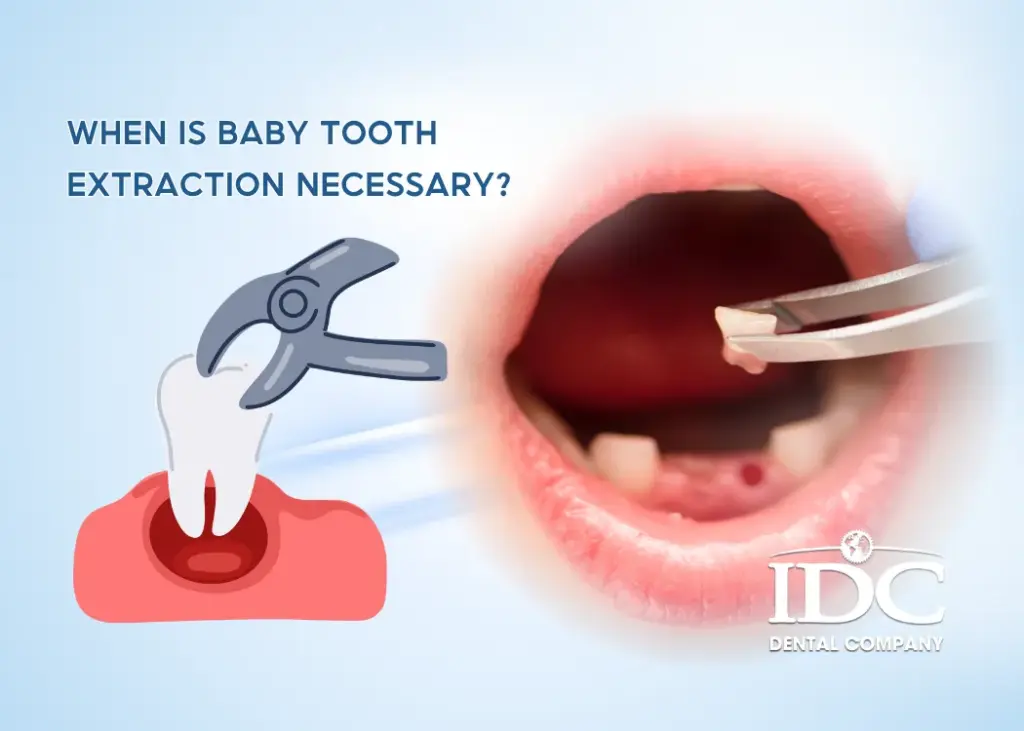
This guide explains when baby tooth extraction may be needed, what treatment alternatives are available, and what parents should expect before, during, and after the procedure.
What Is Baby Tooth Extraction?
Baby tooth extraction is a dental procedure in which a dentist removes a primary, or deciduous, tooth from a child’s mouth.
Normally, baby teeth become loose and fall out naturally as the permanent teeth develop underneath them. Most children begin losing their primary teeth at around age six, although the exact timing varies from child to child.
In some situations, however, a baby tooth may need to be removed before it naturally falls out.
Dentists usually recommend extraction only when keeping the tooth may cause more problems than removing it. Whenever possible, treatments such as fillings, pediatric crowns, or pulp therapy may be considered first.
Why Are Baby Teeth Important?
A common misconception is that cavities or other problems affecting baby teeth do not need much attention because these teeth will eventually fall out. In reality, healthy primary teeth serve several important functions.
Helping Children Chew Properly
Baby teeth allow children to bite and chew a variety of foods comfortably. A severely decayed or painful tooth can make eating difficult and may cause a child to avoid chewing on one side of the mouth.
Supporting Speech Development
Teeth, particularly the front teeth, help children produce certain sounds. Healthy teeth contribute to normal speech development during early childhood.
Maintaining Space for Permanent Teeth
One of the most important functions of baby teeth is maintaining space for permanent teeth.
Each primary tooth acts as a natural space holder. If a tooth is lost too early, neighboring teeth may gradually move into the empty space. This can reduce the amount of room available when the permanent tooth is ready to erupt.
Guiding Permanent Teeth
The roots and positions of baby teeth help guide developing permanent teeth into their appropriate locations.
This is why dentists do not normally recommend extracting a healthy baby tooth simply because it will eventually fall out.
When Is Baby Tooth Extraction Necessary?
There are several situations in which removing a primary tooth may be recommended.
1. Severe Tooth Decay That Cannot Be Restored
Tooth decay is one of the most common dental problems in children.
Small or moderate cavities can often be treated with fillings or pediatric crowns. However, if decay has destroyed a significant amount of tooth structure, restoring the tooth may no longer be practical.
Extraction may be considered when:
- Most of the tooth structure has been destroyed.
- The cavity extends deeply into the tooth.
- The remaining tooth cannot support a filling or crown.
- The tooth is causing persistent pain.
- Infection has developed around the tooth.
The dentist will also consider how long the tooth is expected to remain before naturally falling out.
2. Dental Infection or Abscess
Deep cavities can eventually allow bacteria to reach the pulp, the soft tissue inside the tooth containing nerves and blood vessels.
When this happens, an infection may develop.
Possible signs of an infected baby tooth include persistent toothache, gum swelling, facial swelling, pus, a small bump on the gum, bad taste, or sensitivity when chewing.
Depending on the condition of the tooth, pulp treatment may sometimes be possible. In other cases, especially when the tooth is badly damaged or the infection is extensive, extraction may be recommended.
Dental infections in children should not simply be left untreated because the affected tooth is a baby tooth.
3. A Severely Broken or Damaged Baby Tooth
Children can injure their teeth while running, playing sports, falling, or having other accidents.
Minor chips can often be repaired. However, severe fractures may extend deep into the tooth or below the gum line.
If the tooth cannot be predictably restored, or if trauma has caused significant damage to the pulp or surrounding tissues, extraction may become necessary.
4. A Baby Tooth Does Not Fall Out Naturally
Sometimes a permanent tooth begins erupting while the baby tooth is still firmly in place.
Parents may notice two rows of teeth, particularly in the lower front area. This appearance is sometimes informally called “shark teeth.”
Not every retained baby tooth needs immediate extraction. In many children, the baby tooth becomes loose and falls out naturally.
However, if the primary tooth remains firmly attached and appears to interfere with the eruption of the permanent tooth, the dentist may recommend removing it.
5. The Baby Tooth Interferes With Permanent Tooth Eruption
Occasionally, a primary tooth may prevent or alter the normal eruption pathway of a permanent tooth.
Dental X-rays can help the dentist evaluate:
- The position of the permanent tooth.
- How much of its root has developed.
- Whether the baby tooth roots are naturally dissolving.
- Whether there is enough space for eruption.
Extraction may be recommended if keeping the primary tooth is likely to interfere with normal development.
6. Orthodontic Reasons
In selected cases, a pediatric dentist or orthodontist may recommend removing certain primary teeth as part of an orthodontic treatment plan.
This may be considered when managing significant crowding, eruption problems, or specific bite and alignment concerns.
Healthy primary teeth should not be removed for orthodontic reasons without proper evaluation and treatment planning.
Signs Your Child May Need a Tooth Extraction
Only a dentist can determine whether extraction is necessary. However, parents should arrange a dental examination if a child experiences:
- Persistent or severe toothache.
- Significant tooth decay.
- A badly broken tooth.
- Swollen gums.
- Facial swelling.
- Pus around a tooth.
- Pain when chewing.
- A permanent tooth growing behind a retained baby tooth.
- A baby tooth that remains firmly in place beyond its expected shedding time.
- Unusual tooth mobility unrelated to normal tooth loss.
- Fever associated with dental swelling or infection.
These symptoms do not automatically mean the tooth needs to be removed. In many cases, other treatments may still be possible.
Does Every Decayed Baby Tooth Need to Be Extracted?
No.
Many cavities in baby teeth can be successfully treated without extraction, particularly when detected early.
Depending on the severity of decay, treatment may include:
Dental Fillings
Small and moderate cavities can often be cleaned and restored with filling material.
Pediatric Dental Crowns
If a larger portion of a baby tooth has been damaged but the tooth can still be saved, a crown may be used to protect and restore it.
Pulp Therapy
When decay reaches the inner part of the tooth, treatments such as a pulpotomy or pulpectomy may sometimes help preserve the tooth.
The appropriate treatment depends on the child’s age, symptoms, amount of remaining tooth structure, infection status, and how soon the tooth is expected to fall out naturally.
How Does a Dentist Decide Whether to Extract a Baby Tooth?
Before recommending extraction, the dentist will usually perform a dental examination.
The evaluation may include checking the tooth for cavities, fractures, mobility, gum swelling, infection, and pain.
Dental X-rays may also be recommended.
An X-ray can show important information that cannot always be seen during a visual examination, including the roots of the baby tooth, infection around the root, bone condition, and the location of the developing permanent tooth.
The dentist may also review the child’s medical history, medications, allergies, and previous dental experiences.
What Happens During Baby Tooth Extraction?
The exact procedure depends on the tooth and its condition, but many primary tooth extractions are relatively straightforward.
Preparing the Child
The dental team may explain the procedure using simple, age-appropriate language. The goal is to help the child understand what will happen without creating unnecessary fear.
Local Anesthesia
Local anesthesia is generally used to numb the tooth and surrounding gum.
The child may still notice pressure or movement during the procedure, but the area should be numb to minimize pain.
Removing the Tooth
Once the area is numb, the dentist carefully loosens and removes the tooth.
The complexity depends on factors such as the tooth’s position, remaining root structure, decay, and whether the tooth has already started becoming loose naturally.
Controlling Bleeding
After the tooth is removed, gauze is usually placed over the extraction site. The child may be asked to bite gently on it to help control bleeding and allow a blood clot to form.
Is Baby Tooth Extraction Painful?
Parents often worry that extraction will be painful for their child.
Local anesthesia is used to reduce discomfort during the procedure. Children may feel pressure or movement, but sharp pain should be minimized.
After the numbness wears off, mild soreness or tenderness can occur. The dentist will provide appropriate aftercare and pain-management instructions based on the child’s individual situation.
Parents should follow medication instructions carefully and should not give medications that have not been recommended or confirmed as appropriate for the child.
How Long Does Baby Tooth Extraction Take?
A straightforward baby tooth extraction can often be completed relatively quickly.
However, procedure time varies depending on:
- The location of the tooth.
- The shape and condition of the roots.
- How loose the tooth already is.
- The amount of decay.
- Whether infection is present.
- The child’s comfort and cooperation.
- Whether the tooth is fractured.
More complicated extractions may require additional time.
What Should a Child Eat After Tooth Extraction?
For the first part of recovery, softer foods are usually more comfortable.
Examples may include yogurt, mashed potatoes, soft rice, soup that is not hot, eggs, soft noodles, bananas, or other easy-to-chew foods.
Parents should generally avoid giving the child very hot, hard, crunchy, or spicy foods immediately after the procedure.
Children should also avoid biting or chewing their lips and cheeks while the mouth remains numb, as they may accidentally injure the soft tissues without realizing it.
Baby Tooth Extraction Aftercare
Proper aftercare can help the extraction site heal comfortably.
Control Bleeding
Have your child bite gently on the gauze for the amount of time recommended by the dentist.
A small amount of blood mixed with saliva may be normal shortly after extraction.
Avoid Touching the Extraction Site
Children may be curious about the empty space. Encourage them not to touch it repeatedly with their fingers or tongue.
Maintain Oral Hygiene
Children should continue brushing their other teeth.
The extraction area may need to be cleaned more gently during early healing. Follow the dentist’s specific instructions regarding brushing and rinsing.
Limit Strenuous Activities
Depending on the extraction, the dentist may recommend avoiding strenuous physical activities for a short period after treatment.
What Is Normal After a Baby Tooth Extraction?
Some temporary symptoms are expected after extraction.
These may include:
- Mild bleeding.
- Minor gum tenderness.
- Mild soreness.
- Slight swelling.
- Temporary sensitivity around the extraction site.
These symptoms should generally improve as the area heals.
When Should Parents Contact the Dentist?
Contact your child’s dentist if symptoms appear unusual or become worse instead of improving.
Warning signs can include:
- Persistent or heavy bleeding.
- Increasing facial or gum swelling.
- Severe or worsening pain.
- Fever.
- Pus or other signs of infection.
- Difficulty swallowing.
- Difficulty breathing.
- Significant weakness or illness.
Difficulty breathing or rapidly increasing facial swelling can require urgent medical attention.
What Happens If a Baby Tooth Is Removed Too Early?
Premature loss of a baby tooth can sometimes affect the developing permanent teeth.
One possible problem is loss of space.
After a primary tooth is removed, neighboring teeth may gradually shift toward the empty area. When the permanent tooth later tries to erupt, there may be insufficient space.
This can potentially contribute to crowding, abnormal eruption, or future orthodontic problems.
However, the risk depends on which tooth was removed, the child’s age, tooth development, and existing spacing.
Does My Child Need a Space Maintainer?
A space maintainer is a small dental appliance designed to preserve the space left by a prematurely lost primary tooth.
Not every child needs one.
A dentist may consider factors such as:
- Which baby tooth was removed.
- The child’s age.
- How soon the permanent tooth is expected to erupt.
- Existing tooth alignment.
- Available space.
- Development of the permanent tooth.
Space maintainers are more commonly considered when certain back baby teeth are lost significantly earlier than expected.
Regular dental check-ups are important so the dentist can monitor tooth eruption and jaw development.
Should Parents Pull a Loose Baby Tooth at Home?
Most naturally loose baby teeth do not need professional extraction. They usually become increasingly mobile and eventually fall out by themselves.
Children can gently wiggle a naturally loose tooth with their tongue or clean fingers.
However, parents should avoid forcibly pulling a tooth that is still firmly attached.
Premature removal may cause unnecessary pain, bleeding, or gum injury.
If a loose tooth is causing significant discomfort, remains attached for an unusually long time, or appears to interfere with a permanent tooth, a dental examination is recommended.
How to Prepare Your Child for Tooth Extraction
The way parents discuss dental treatment can influence how children feel about their appointment.
Use calm and simple language. Avoid frightening descriptions or telling stories about painful dental experiences.
You might explain that the dentist needs to help remove a tooth that is no longer healthy or is preventing another tooth from growing properly.
Parents should also follow any instructions provided by the dental clinic regarding eating, drinking, medications, and preparation before the appointment.
How Can Parents Prevent Premature Baby Tooth Extraction?
Although not every extraction is preventable, many extractions caused by severe tooth decay can be avoided through early dental care.
Parents can help protect their child’s teeth by:
- Brushing twice daily with an age-appropriate amount of fluoride toothpaste.
- Helping younger children brush effectively.
- Limiting frequent sugary snacks and beverages.
- Avoiding prolonged exposure to sweetened drinks.
- Scheduling regular dental examinations.
- Treating cavities before they become large or painful.
- Using appropriate protective equipment during sports.
Early treatment is particularly important. A small cavity that can be treated with a simple restoration may eventually require more complex treatment if allowed to progress.
Frequently Asked Questions About Baby Tooth Extraction
Is It Okay to Extract a Baby Tooth?
Yes, when there is a clear clinical reason. Dentists may recommend extraction when a baby tooth cannot be predictably restored, has a significant infection, has been severely damaged, or interferes with permanent tooth development.
At What Age Can a Baby Tooth Be Extracted?
There is no single correct age for extraction. The decision depends on the child’s dental condition and stage of tooth development rather than age alone.
Does a Cavity in a Baby Tooth Always Require Extraction?
No. Many cavities can be treated with fillings, crowns, or other restorative procedures. Extraction is generally considered when the tooth cannot reasonably be saved or when keeping it may create additional problems.
Can Permanent Teeth Grow Normally After a Baby Tooth Is Removed?
In many cases, yes. However, premature tooth loss may affect available space, which is why follow-up appointments are important.
How Long Does the Gum Take to Heal?
Early gum healing usually occurs relatively quickly, although complete healing takes longer. Healing time varies depending on the extraction and the child’s individual health.
Will My Child Need a Space Maintainer?
Not necessarily. The dentist will evaluate the child’s age, the location of the missing tooth, and the development of the permanent tooth before recommending one.
When Should Parents Take Their Child to a Dentist?
Parents should not wait for a baby tooth to become extremely painful before seeking dental care.
Schedule an examination if your child has persistent tooth pain, visible cavities, broken teeth, gum swelling, pus, difficulty chewing, unusual tooth mobility, or permanent teeth erupting while baby teeth remain firmly in place.
Early diagnosis can make a significant difference. In some cases, seeing a dentist early may allow the baby tooth to be treated and preserved rather than extracted.


 WhatsApp