
Is Invisalign Suitable for Protruding Teeth? Many people ask this when looking for a discreet way to improve protruding front teeth without traditional braces. Invisalign can correct many cases of tooth protrusion, especially when the issue is mainly related to tooth alignment.
However, suitability depends on the severity of the protrusion, bite, tooth position, and jaw structure. A dental evaluation can help determine whether Invisalign is the right treatment for your smile.
What Are Protruding Teeth?
Protruding teeth generally refer to front teeth that extend too far forward compared with the surrounding teeth or the opposing arch. This is particularly noticeable when the upper front teeth sit significantly ahead of the lower front teeth.
Protruding teeth are often associated with a condition called overjet. Overjet describes the horizontal distance between the upper and lower front teeth. It is different from an overbite, which describes the vertical overlap of the upper front teeth over the lower teeth.
Some people have only mild protrusion, while others may have a more noticeable difference between the upper and lower teeth. The underlying cause is important because treatment depends on whether the problem comes primarily from tooth position, jaw development, or a combination of both.
What Causes Protruding Teeth?
Several factors can contribute to protruding teeth, including:
- Genetics and inherited dental characteristics
- Crowded or misaligned teeth
- Differences in upper and lower jaw development
- Childhood thumb-sucking habits
- Prolonged pacifier use
- Tongue-thrusting habits
- Certain patterns of tooth eruption
- Existing bite problems
In some cases, the upper front teeth simply lean or sit too far forward. In other cases, the upper jaw may be positioned further forward or the lower jaw may be positioned further back. These differences can make the teeth appear more prominent.
How Can Protruding Teeth Affect Your Smile and Oral Health?
For many people, protruding teeth are primarily an aesthetic concern. However, they can sometimes affect oral function as well.
Depending on the severity, protruding teeth may be associated with:
- Changes in facial and smile appearance
- Difficulty biting certain foods
- An uneven bite
- Increased risk of trauma to prominent front teeth
- Difficulty cleaning certain areas
- Tooth wear caused by an abnormal bite
- Concerns about confidence when smiling
Not everyone with protruding teeth needs orthodontic treatment. However, if the condition affects your bite, oral hygiene, comfort, or confidence, it may be worth having a professional evaluation.
Can Invisalign Fix Protruding Teeth?
Invisalign can correct many cases of protruding teeth, particularly when the protrusion is caused primarily by tooth position.
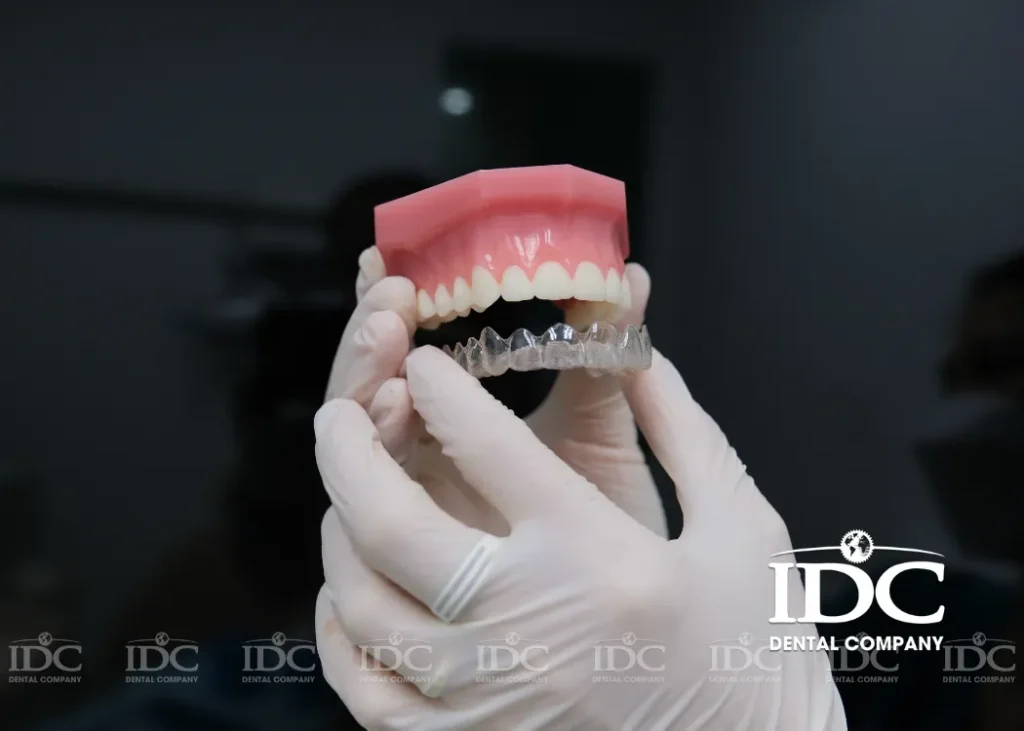
Invisalign uses a series of customized clear aligners to gradually move teeth into planned positions. Each aligner applies controlled forces to specific teeth according to a digital treatment plan.
For suitable cases, Invisalign may help:
- Reposition protruding front teeth
- Reduce certain types of overjet
- Improve tooth alignment
- Correct some types of crowding
- Create or manage space for tooth movement
- Improve certain bite relationships
- Coordinate the position of upper and lower teeth
However, Invisalign does not simply push the front teeth backward. Tooth movement must be carefully planned according to the patient’s bite, bone support, tooth roots, gum health, and overall dental anatomy.
How Does Invisalign Move Protruding Teeth?
The treatment begins with a detailed assessment of your teeth and bite. A digital scan can be used to create a three-dimensional model of your teeth. Based on this information, the dental professional develops a customized treatment plan.
The aligners are designed to apply controlled pressure to specific areas of the teeth. As you progress through the series, your teeth gradually move toward their planned positions.
Some cases may require additional features such as attachments or elastics. Attachments are small tooth-colored shapes placed on selected teeth to help the aligners perform specific movements. Elastics may be used when additional control of the bite is needed.
The exact approach depends on your individual diagnosis and treatment goals.
Is Invisalign Suitable for Everyone With Protruding Teeth?
Not every case of protruding teeth can be treated in exactly the same way. The most important question is why the teeth are protruding and how severe the problem is.
Mild to Moderate Protruding Teeth
People with mild to moderate protrusion may be suitable candidates for Invisalign, particularly when the issue is primarily related to tooth alignment.
For example, if the upper front teeth are positioned too far forward but the underlying jaw relationship is relatively balanced, clear aligners may be able to gradually improve their position.
Treatment may also address related problems such as crowding, spacing, or certain bite irregularities.
Severe Protruding Teeth
More severe cases can require more complex orthodontic movements. Invisalign may still be considered in some situations, but additional techniques could be necessary.
Depending on the diagnosis, treatment may involve:
- Invisalign attachments
- Interarch elastics
- Space management
- Tooth reshaping when clinically appropriate
- Other orthodontic techniques
- Traditional braces in certain cases
The important point is that the severity of protrusion should be evaluated rather than assuming that one orthodontic method will work for everyone.
Protruding Teeth Caused by Jaw Structure
There is an important difference between dental protrusion and skeletal protrusion.
Dental protrusion occurs when the teeth themselves are positioned too far forward. Skeletal problems involve the relationship or development of the upper and lower jaws.
Invisalign is primarily designed to move teeth. It cannot significantly reposition the jaw in the same way that certain surgical or orthopedic approaches may.
If a patient’s protruding teeth are strongly related to an underlying skeletal discrepancy, a dentist or orthodontist may recommend a more comprehensive treatment approach.
Invisalign Treatment Process for Protruding Teeth
If you are considering Invisalign, the process usually begins with a detailed evaluation.
1. Initial Dental Examination
Your dentist or orthodontist will examine your teeth, gums, bite, and overall oral health. They may also ask about your concerns and what you would like to achieve through treatment.
The goal is to determine whether your protruding teeth are primarily related to tooth position, bite alignment, jaw structure, or a combination of factors.
2. Digital Scan and Imaging
A digital intraoral scan can create a detailed 3D model of your teeth. Dental photographs and X-rays may also be used when clinically indicated.
These records help the dental professional evaluate:
- Tooth position
- Tooth roots
- Bite relationships
- Bone support
- Crowding or spacing
- Jaw relationships
- Overall oral health
3. Customized Treatment Plan
If Invisalign is appropriate, a customized treatment plan can be created based on your dental condition.
The plan determines how your teeth are expected to move during each stage of treatment. Your dentist can also discuss the estimated treatment duration, expected results, and any additional procedures that may be needed.
4. Wearing Invisalign Aligners
You will receive a series of customized aligners. Each aligner is designed for a specific stage of tooth movement.
For treatment to work effectively, you need to wear the aligners according to your dental professional’s instructions.
Because Invisalign aligners are removable, you can take them out when eating and when performing your normal oral hygiene routine. However, removing them unnecessarily or not wearing them consistently can affect treatment progress.
5. Follow-Up Appointments
Regular follow-up appointments allow your dental professional to monitor your progress.
They may evaluate:
- Tooth movement
- Bite changes
- Aligner fit
- Gum health
- Treatment progress
If your teeth are not moving as expected, adjustments may be made to the treatment plan.
6. Retainers After Treatment
Completing your Invisalign treatment does not necessarily mean your teeth will remain permanently in the same position without further care.
Teeth can naturally shift over time. Retainers are commonly recommended after orthodontic treatment to help maintain the corrected alignment.
Your dentist will provide instructions regarding the type of retainer and how often it should be worn.
How Long Does Invisalign Take to Correct Protruding Teeth?
There is no single treatment duration that applies to every patient with protruding teeth.
The length of Invisalign treatment can depend on:
- Severity of the protrusion
- Amount of tooth movement required
- Degree of overjet or overbite
- Crowding or spacing
- Patient compliance
- Number of aligners required
- Use of attachments or elastics
- Overall oral health
Milder cases may require fewer stages, while more complex cases can take longer.
It is important to be cautious about any treatment provider that promises an exact treatment time before examining your teeth and bite. A personalized assessment provides a more realistic estimate.
Benefits of Invisalign for Protruding Teeth
Nearly Invisible Appearance
One of the main reasons people choose Invisalign is its discreet appearance. The clear aligners are designed to be less noticeable than traditional metal braces.
This can be particularly appealing to adults and professionals who want orthodontic treatment without prominent brackets and wires.
Removable Design
Unlike fixed braces, Invisalign aligners can be removed for eating, drinking, brushing, and flossing.
This allows patients to maintain their normal oral hygiene routine more easily.
Customized Treatment
Every Invisalign treatment plan is designed around the patient’s individual dental condition. The aligners are produced according to the planned tooth movements.
Convenient for Daily Life
Clear aligners can fit into many everyday routines. Patients can remove them during meals and continue enjoying a wide range of foods without the same type of dietary restrictions associated with some fixed orthodontic appliances.
Potential Smile and Bite Improvements
Depending on the diagnosis, Invisalign may improve both the appearance of protruding teeth and certain bite problems.
However, the expected outcome depends on the individual case.
Limitations of Invisalign for Protruding Teeth
Although Invisalign can be effective for many patients, it is not the right solution for every situation.
Potential limitations include:
- Severe skeletal jaw discrepancies
- Complex orthodontic movements
- Significant dental crowding
- Certain types of severe bite problems
- Limited patient compliance
- Anatomical limitations affecting tooth movement
Patients also need to understand that Invisalign requires active participation. Clear aligners are removable, which means wearing them consistently is an important part of treatment.
Some cases may also require attachments, elastics, or additional orthodontic procedures.
Invisalign vs. Traditional Braces for Protruding Teeth
Both Invisalign and traditional braces can be used to correct various orthodontic problems, but they work differently and offer different experiences.
Appearance: Invisalign aligners are clear and generally less noticeable, while traditional braces use visible brackets and wires.
Removability: Invisalign can be removed when eating and cleaning your teeth. Traditional braces remain attached throughout treatment.
Oral hygiene: Removable aligners can make brushing and flossing more straightforward. Braces require careful cleaning around brackets and wires.
Compliance: Invisalign depends on the patient wearing the aligners as instructed. Traditional braces are fixed to the teeth.
Treatment complexity: Both methods can address a wide range of orthodontic conditions, but the appropriate option depends on the specific diagnosis.
Rather than choosing a treatment based only on appearance, patients should consider their dental condition and treatment goals.
How Much Does Invisalign Cost for Protruding Teeth?
The cost of Invisalign varies from patient to patient. There is no universal price for correcting protruding teeth because treatment complexity can be significantly different between individuals.
Factors that may influence the cost include:
- Severity of tooth protrusion
- Number of aligners required
- Overall treatment duration
- Complexity of tooth movement
- Attachments or elastics
- Dental examinations and imaging
- Retainers and follow-up care
A dental consultation is the best way to understand the expected cost for your specific treatment.
When comparing treatment options, consider the complete treatment plan rather than looking only at the initial price.
Who May Be a Good Candidate for Invisalign?
You may be considered for Invisalign if you have:
- Mild to moderate protruding teeth
- Certain types of overjet
- Crowded front teeth
- Spacing between teeth
- Certain bite irregularities
- Healthy teeth and gums
- Realistic expectations about treatment
- The ability to wear aligners consistently
However, only a professional dental examination can determine whether Invisalign is appropriate for your particular case.
Who May Need Another Orthodontic Treatment?
Some patients may require a different or more comprehensive orthodontic approach.
This can include people with:
- Significant jaw discrepancies
- Severe skeletal malocclusion
- Complex tooth movement requirements
- Severe crowding
- Insufficient space for planned tooth movement
- Bite problems that cannot be adequately addressed with clear aligners alone
In these situations, your dentist or orthodontist can explain the available treatment options and why a particular approach may be recommended.
Frequently Asked Questions
Can Invisalign fix protruding front teeth?
Yes, Invisalign can correct many cases of protruding front teeth when the problem is primarily related to tooth position. The suitability of treatment depends on the severity and underlying cause.
Can Invisalign fix an overjet?
Invisalign may improve certain types of overjet by gradually repositioning the teeth and coordinating the upper and lower arches. The amount of correction possible depends on the individual bite and jaw structure.
Can Invisalign push protruding teeth backward?
In suitable cases, Invisalign can move protruding teeth toward a more appropriate position. However, tooth movement must remain within biological and anatomical limits.
Is Invisalign effective for buck teeth?
Invisalign can be an option for some people with buck teeth, particularly when the condition is caused primarily by tooth alignment. More severe cases may require additional orthodontic treatment.
How long does Invisalign take for protruding teeth?
Treatment time varies depending on the severity of the condition, the amount of tooth movement required, and patient compliance. A personalized examination is necessary to estimate treatment duration.
Is Invisalign better than braces for protruding teeth?
There is no single treatment that is better for every patient. Invisalign and traditional braces have different advantages and limitations. The appropriate option depends on the patient’s dental condition, treatment goals, and clinical needs.
Do protruding teeth come back after Invisalign?
Teeth can shift after orthodontic treatment. Wearing retainers as recommended is important for maintaining the alignment achieved through Invisalign.
Is Invisalign painful?
Patients may experience temporary pressure, tightness, or mild discomfort when starting a new aligner. The experience varies between individuals.
Do I need retainers after Invisalign?
Retainers are commonly recommended after Invisalign to help maintain the position of the teeth. Your dental professional will provide instructions based on your treatment.



 WhatsApp