
Swollen gums in children are a common dental concern. Parents may notice that their child’s gums look red, puffy, tender, or bleed during brushing. In some cases, the cause is relatively simple, such as plaque buildup, food trapped between the teeth, or a tooth coming in.
However, persistent or painful gum swelling may also be related to gingivitis, tooth decay, or a dental infection.
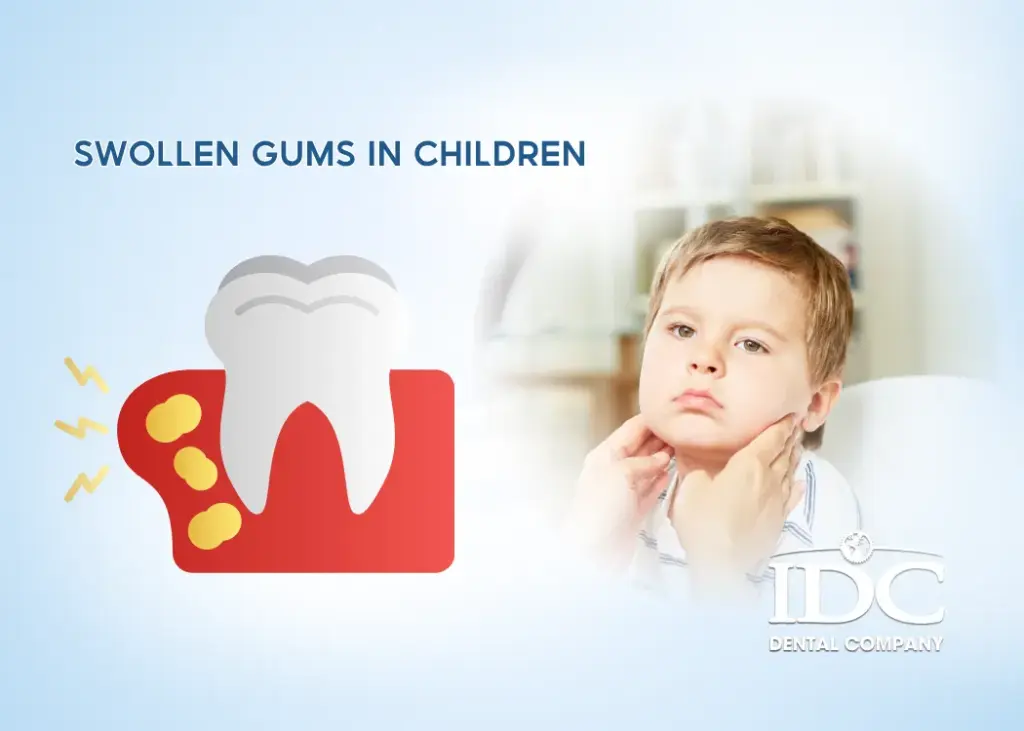
Understanding the possible causes and warning signs can help parents know when home care may be enough and when their child should see a dentist.
What Do Swollen Gums in Children Look Like?
Healthy gums are generally firm and fit closely around the teeth. When the gums become inflamed, parents may notice:
- Red or puffy gums
- Tenderness around the teeth
- Bleeding during brushing
- Swelling around one or several teeth
- Pain when eating or chewing
- Persistent bad breath
- A small bump on the gum
- Pus around a tooth
Swollen gums are a symptom rather than a specific diagnosis, so the underlying cause needs to be identified.
Common Causes of Swollen Gums in Children
1. Plaque Buildup and Gingivitis
Plaque accumulation around the gumline is one of the most common causes of gum inflammation. When plaque is not removed effectively, the gums may become red, swollen, and prone to bleeding.
Young children often need help from their parents to brush areas around the gumline and back teeth properly.
2. Teething and Tooth Eruption
Babies and young children may develop mild, localized gum swelling when a new tooth is coming through.
School-age children can experience similar symptoms when their permanent teeth begin to erupt.
Mild tenderness can be normal during tooth eruption. However, significant swelling, pus, severe pain, or facial swelling should not automatically be considered normal teething symptoms.
3. Tooth Decay
Untreated cavities can eventually cause gum swelling.
As tooth decay progresses deeper into the tooth, bacteria may reach the pulp and cause infection. Parents may notice other symptoms such as:
- Toothache
- Sensitivity
- Pain when chewing
- A visible cavity
- Darkening of the tooth
- Swelling near the affected tooth
A swollen gum around one tooth, especially when accompanied by tooth pain, should be evaluated by a dentist.
4. Dental Abscess
A dental abscess is an infection that can develop around a tooth or its supporting tissues.
Possible signs include:
- Painful gum swelling
- A pimple-like bump on the gum
- Pus or an unpleasant taste
- Severe toothache
- Pain when biting
- Facial swelling
- Fever
A suspected dental abscess requires professional dental care because treating the source of infection is important.
5. Food Trapped Between Teeth
Food can become lodged between two teeth and irritate the gum.
Parents may notice localized redness, tenderness, or swelling between the teeth. Gentle cleaning may help when food impaction is the cause.
If food repeatedly becomes trapped in the same area, a dentist should check for cavities or other dental problems.
6. Gum Injury
Children can injure their gums by biting hard foods, brushing aggressively, falling, or placing objects in their mouths.
Minor irritation may improve with time, but persistent pain, bleeding, tooth movement, or increasing swelling should be evaluated.
7. Braces and Orthodontic Appliances
Braces can make cleaning around the teeth more difficult. Plaque may accumulate around brackets and along the gumline, increasing the risk of gum inflammation.
Children with braces should pay extra attention to daily brushing and cleaning between the teeth.
Swollen Gums Around One Tooth vs. Multiple Teeth
The location of swelling may provide useful clues.
Swelling around one tooth may be related to an erupting tooth, food impaction, tooth decay, trauma, or a localized dental infection.
Swelling around several teeth is more commonly associated with plaque accumulation and gingivitis.
However, a dental examination is often necessary to determine the exact cause.
What Should Parents Do When Their Child Has Swollen Gums?
Start by looking carefully at the affected area. Check for an erupting tooth, trapped food, visible cavity, bleeding, injury, or a bump on the gum.
Continue gentle brushing with a soft-bristled toothbrush. Parents should not stop cleaning the area completely simply because the gums are sensitive or bleed slightly.
If food is trapped between teeth, carefully clean between them using an age-appropriate method.
Soft foods may also make eating more comfortable temporarily if the area is painful.
Most importantly, monitor the child for worsening symptoms such as increasing pain, fever, pus, facial swelling, or difficulty eating.
What Should Parents Avoid?
Parents should avoid trying to treat a suspected dental infection themselves.
Do not:
- Squeeze or pop a gum abscess.
- Place aspirin directly on the gums.
- Give leftover antibiotics from a previous illness.
- Apply unknown medications or chemicals to the swollen area.
- Delay dental care when swelling continues to worsen.
Home remedies may temporarily reduce discomfort but cannot eliminate the source of a dental infection.
When Should Your Child See a Dentist?
Arrange a dental examination if:
- Swelling persists or repeatedly returns.
- The child has toothache.
- Gums frequently bleed.
- There is a visible cavity.
- A bump appears on the gum.
- Pain occurs while chewing.
- Bad breath persists despite good oral hygiene.
- Swelling becomes progressively worse.
The dentist can examine the teeth and gums, look for cavities or signs of infection, and recommend dental X-rays when clinically necessary.
When Is Swollen Gum an Emergency?
Parents should seek urgent professional care when gum or dental swelling is accompanied by:
- Rapidly increasing facial swelling
- Significant swelling of the jaw or neck
- Fever with worsening swelling
- Difficulty opening the mouth
- Difficulty swallowing
- Difficulty breathing
- A child who appears seriously unwell
Difficulty breathing or swallowing with facial, mouth, or neck swelling requires immediate medical attention.
How Are Swollen Gums in Children Treated?
Treatment depends on the underlying cause.
For plaque-related gingivitis, improved oral hygiene and professional dental cleaning when necessary may help reduce inflammation.
If the problem is tooth decay, the affected tooth may require restorative treatment depending on the extent of the cavity.
When a dental abscess is present, the source of infection needs to be treated. Antibiotics may sometimes be necessary, but they are not automatically required for every case of swollen gums and do not replace appropriate dental treatment.
When swelling is simply related to tooth eruption, maintaining good oral hygiene and monitoring the area may be sufficient.
How Can Parents Prevent Swollen Gums?
Good daily oral hygiene can reduce the risk of many common gum problems.
Parents should encourage children to:
- Brush twice a day with fluoride toothpaste appropriate for their age.
- Clean between teeth regularly.
- Limit frequent sugary snacks and drinks.
- Drink water regularly.
- Attend routine dental examinations.
- Ask for help with brushing until they can clean their teeth effectively on their own.
Preventive dental visits can also help identify cavities and gum inflammation before they become painful.
Frequently Asked Questions
Can teething cause swollen gums?
Yes. Mild localized swelling may occur when a tooth is erupting. Severe pain, pus, facial swelling, or significant illness should not simply be attributed to teething.
Can cavities cause swollen gums?
Yes. Deep tooth decay can eventually affect the pulp and surrounding tissues, potentially causing localized swelling or a dental abscess.
Why is my child’s gum swollen around only one tooth?
Possible causes include tooth eruption, food trapped between teeth, tooth decay, trauma, or infection.
Should I stop brushing if my child’s gums are swollen?
Generally, no. Gentle plaque removal remains important. Use a soft toothbrush and avoid aggressive brushing.
Does my child need antibiotics?
Not necessarily. Antibiotics are only appropriate in certain situations. A dentist should determine whether they are needed and address the underlying dental problem.


 WhatsApp