
Cavities in baby teeth need treatment in many cases, even though primary teeth will eventually fall out. Baby teeth are important for chewing, speech development, and maintaining proper space for permanent teeth.
Without appropriate care, tooth decay can progress and cause pain, difficulty eating, infection, or premature tooth loss. The best treatment depends on the cavity’s severity, the child’s age, symptoms, and how long the affected tooth is expected to remain.
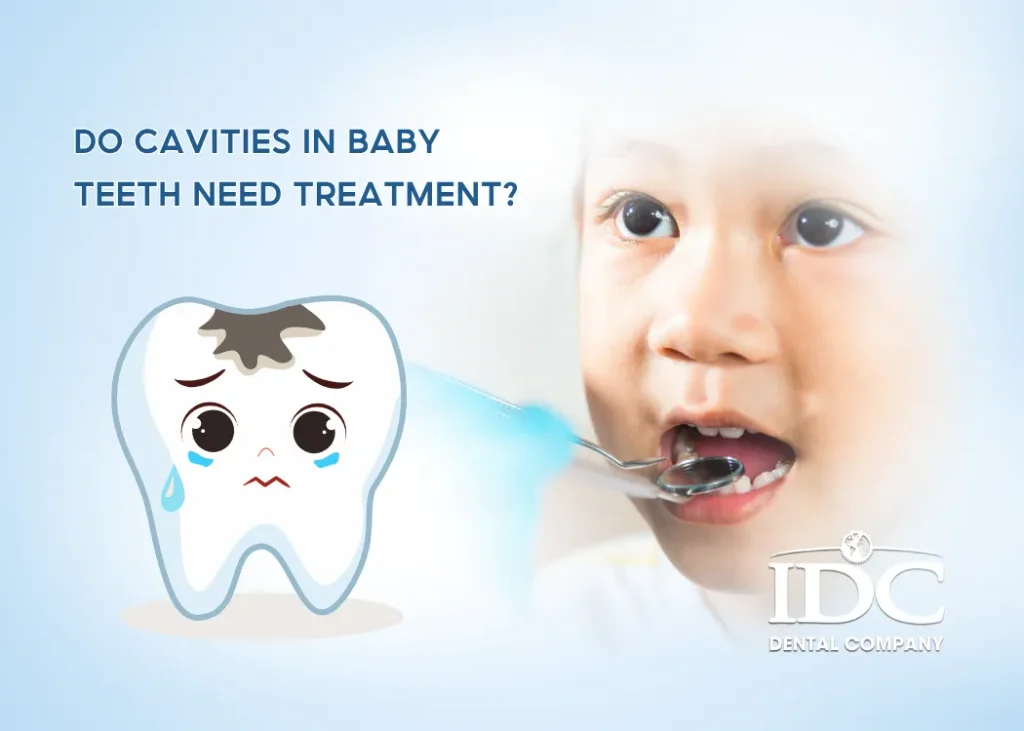
Understanding the available treatment and prevention options can help parents protect their child’s oral health and reduce the risk of future cavities.
Do Cavities in Baby Teeth Need Treatment?
In most cases, cavities in baby teeth should at least be evaluated by a dentist and managed appropriately.
A dentist will not necessarily recommend the same treatment for every cavity. For example, an early area of enamel demineralization may be managed differently from a large cavity that has reached the pulp.
The dentist may consider:
- The size and depth of the cavity
- Whether the child has pain or sensitivity
- Whether infection is present
- The child’s age
- How soon the tooth is expected to fall out naturally
- The condition of the surrounding teeth
- The child’s overall cavity risk
- Whether the tooth can be restored
- The child’s ability to cooperate with treatment
Therefore, the fact that a baby tooth will eventually fall out does not by itself mean treatment is unnecessary.
What Is a Cavity in a Baby Tooth?
A cavity develops through a process known as dental caries or tooth decay.
Bacteria in dental plaque use sugars and other fermentable carbohydrates from food and drinks and produce acids. Frequent acid exposure can remove minerals from tooth enamel.
The process can be simplified as:
Plaque bacteria + sugar → acid production → mineral loss → tooth decay
Initially, this process may cause a white or chalky area on the tooth without creating an actual hole.
If the process continues, the enamel can break down and a cavity may develop. Decay can then progress into the dentin and eventually reach the pulp, which contains nerves and blood vessels.
Once a true cavity has formed and tooth structure has been lost, the missing tooth structure does not simply grow back.
Why Are Baby Teeth Important?
One common misconception is that primary teeth are not important because permanent teeth will eventually replace them.
In reality, baby teeth perform several important functions during childhood.
Helping Children Eat
Healthy teeth allow children to bite and chew a variety of foods comfortably. A painful cavity may cause a child to avoid chewing on one side or avoid certain foods.
Supporting Speech Development
Teeth contribute to the production of certain sounds and support normal speech development during childhood.
Maintaining Space for Permanent Teeth
Baby teeth help maintain space in the dental arch for the permanent teeth developing underneath.
If a primary tooth is lost much earlier than expected, neighboring teeth may move into the available space in some cases. This can affect the space available for the permanent tooth.
Supporting Normal Oral Development
Healthy primary teeth contribute to normal function of the mouth and jaws during important developmental years.
For these reasons, keeping baby teeth healthy until they are naturally ready to fall out can be beneficial.
What Causes Cavities in Baby Teeth?
Several factors can contribute to tooth decay in children.
Frequent Sugary Foods and Drinks
The frequency of sugar exposure is particularly important.
If a child frequently consumes candy, cookies, juice, sweetened drinks, or sugary snacks throughout the day, bacteria in plaque have repeated opportunities to produce acids.
This means that repeatedly sipping or snacking on sugary foods may increase cavity risk.
Inadequate Brushing
Young children generally do not have the manual skills to clean every tooth surface effectively on their own.
Plaque can remain around the gumline, between teeth, and in the grooves of the back teeth if parents do not provide sufficient assistance.
Going to Sleep With Sugary Drinks
Prolonged exposure to milk, formula, juice, or other drinks containing sugars, particularly around bedtime after teeth have been cleaned, can increase the amount of time teeth are exposed to carbohydrates.
Inadequate Fluoride Exposure
Fluoride can help strengthen enamel and support remineralization. Using an appropriate amount of fluoride toothpaste based on the child’s age and dental professional recommendations is an important part of cavity prevention.
Tooth Anatomy
Baby molars can have grooves and pits where food and plaque accumulate. These areas may be more difficult to clean effectively.
Individual Cavity Risk
Children who have already developed cavities may be at increased risk of developing additional decay.
Diet, oral hygiene, saliva, tooth anatomy, fluoride exposure, and other individual factors can all influence cavity risk.
What Do Cavities in Baby Teeth Look Like?
The appearance of cavities in baby teeth depends on how far the decay has progressed.
Early Tooth Decay
One of the earliest signs may be a white or chalky area on the enamel.
At this stage, the tooth may not hurt and there may not yet be a visible hole.
Moderate Tooth Decay
As decay progresses, parents may notice:
- Brown or dark areas
- A visible hole
- Food becoming trapped in the tooth
- Sensitivity to certain foods or drinks
- Mild discomfort when chewing
Not every dark spot is necessarily a cavity, so professional evaluation is useful.
Advanced Tooth Decay
A larger cavity may cause:
- Significant loss of tooth structure
- Toothache
- Pain while chewing
- Sensitivity
- Nighttime pain
- Broken portions of the tooth
- Gum swelling
If infection develops, a bump containing or draining pus may appear on the gum near the affected tooth.
What Happens If Cavities in Baby Teeth Are Left Untreated?
Not every cavity progresses at exactly the same speed. However, once tooth structure has broken down, a cavity should not simply be expected to disappear.
The Cavity Can Become Larger
Decay may continue through the enamel into the dentin.
As more tooth structure is lost, treatment may become more complex.
Toothache May Develop
Children with deeper cavities may experience sensitivity to cold, sweets, or pressure.
Eventually, toothache may occur even when the child is not eating.
Eating May Become Difficult
A painful tooth can cause children to chew on the opposite side of the mouth, avoid harder foods, eat slowly, or become reluctant to eat.
Toothache Can Affect Sleep
Deep decay affecting the pulp can cause spontaneous or nighttime pain, potentially interfering with sleep.
Dental Infection Can Develop
When decay reaches the pulp, bacteria may cause an infection.
The progression may look like:
Cavity → deep decay → pulp involvement → infection → dental abscess
Possible symptoms include gum swelling, pus, a bump on the gum, severe toothache, facial swelling, or fever.
The Tooth May Be Lost Early
A severely damaged or infected primary tooth may sometimes be impossible or inappropriate to restore and may need to be extracted.
Depending on the child’s age and which tooth is lost, a dentist may evaluate whether a space maintainer is appropriate.
Developing Permanent Teeth May Be Affected in Some Cases
Permanent teeth develop close to the roots of primary teeth. Significant infection involving a baby tooth can sometimes affect nearby developing structures.
This does not mean every cavity in a baby tooth will damage the permanent tooth, but it is another reason significant dental infections should not be ignored.
Do All Cavities in Baby Teeth Need Fillings?
No. Not every cavity or early caries lesion automatically requires a traditional filling.
Treatment depends on the stage of the disease.
For example, very early areas of mineral loss without cavitation may sometimes be managed through improved plaque control, fluoride, dietary changes, and professional monitoring.
Other treatment options may include:
- Fluoride treatments
- Silver diamine fluoride in selected cases
- Dental fillings
- Pediatric dental crowns
- Pulp treatment
- Extraction
A dentist should determine which approach is appropriate for the individual child.
How Are Cavities in Baby Teeth Treated?
Early-Stage Tooth Decay
When decay is detected before a physical cavity has formed, the goal may be to stop or slow the disease process and support remineralization.
This may involve:
- Improved brushing
- Fluoride toothpaste
- Dietary changes
- Professional fluoride applications when appropriate
- Regular monitoring
Early detection can therefore make a significant difference in the type of treatment required.
Dental Fillings
Small to moderate cavities may be treated with a dental restoration.
The damaged area is managed and the tooth is restored with an appropriate material.
The purpose is to restore the shape and function of the tooth while protecting the remaining tooth structure.
Silver Diamine Fluoride
Silver diamine fluoride, commonly known as SDF, may be used to help arrest certain active cavities in selected children.
It can be particularly useful when conventional restorative treatment is difficult or needs to be delayed.
An important consideration is that SDF typically darkens decayed tooth structure. Parents should understand this effect before treatment.
SDF is not suitable for every cavity, so a dentist needs to evaluate whether it is appropriate.
Pediatric Dental Crowns
When a baby tooth has lost a significant amount of structure, a crown may provide greater coverage and protection than a small filling.
Crowns are commonly considered for extensively damaged primary molars or teeth requiring certain types of pulp treatment.
Pulp Treatment
When decay has reached or significantly affected the pulp, treatment may be required to manage the diseased pulp tissue while retaining the tooth when clinically appropriate.
The specific procedure depends on the condition of the pulp and the tooth.
Tooth Extraction
Sometimes a baby tooth is too severely damaged or infected to be predictably restored.
Extraction may be considered when:
- There is extensive structural destruction
- Significant infection is present
- The tooth cannot reasonably be restored
- Other clinical factors make extraction the appropriate option
After premature loss of certain primary teeth, the dentist may evaluate whether a space maintainer is necessary.
Can a Cavity Be Left Alone If the Baby Tooth Will Fall Out Soon?
Sometimes parents are told that a decayed baby tooth is close to falling out naturally. In certain situations, active restorative treatment may not be necessary.
However, this decision should be made by a dentist.
The dentist needs to consider:
- How soon the tooth is likely to fall out
- How deep the cavity is
- Whether the child has pain
- Whether infection is present
- The condition of the surrounding tissues
- The position of the developing permanent tooth
A painless cavity in a tooth that is expected to exfoliate soon may be managed differently from a deep cavity in a molar that should remain in the mouth for several more years.
Parents should therefore avoid simply waiting for a decayed tooth to fall out without first having it evaluated.
Does Filling a Baby Tooth Hurt?
Pediatric dental care is designed to make treatment as comfortable and manageable as possible.
Local anesthesia may be used when necessary to reduce discomfort during treatment.
Dentists may also use age-appropriate behavior guidance techniques to help children understand what is happening and become more comfortable with dental care.
For very young children, children with significant dental anxiety, extensive treatment needs, or specific medical or behavioral considerations, other approaches may sometimes be discussed.
No dental procedure can be promised to be completely painless, but modern pediatric dentistry provides several ways to manage discomfort and anxiety.
How Do Dentists Diagnose Cavities in Baby Teeth?
Diagnosis usually begins with a clinical dental examination.
The dentist may:
- Examine each tooth surface
- Look for white, brown, or dark areas
- Check visible cavities
- Examine between teeth
- Ask about pain or sensitivity
- Evaluate oral hygiene and diet
- Assess the child’s overall cavity risk
Dental X-rays may be recommended when clinically indicated.
This is particularly useful because cavities between baby teeth may not always be visible to parents or even fully visible during a basic visual examination.
When Should Parents Take Their Child to the Dentist?
Parents should arrange a dental examination if they notice:
- White spots on the teeth
- Brown or black areas
- A visible cavity
- Food repeatedly becoming trapped
- Tooth sensitivity
- Pain when chewing
- Toothache
- A broken or damaged tooth
- Gum swelling
- A bump on the gum
Do not wait for severe pain before arranging an examination. Cavities can be present and progress even when a child has no symptoms.
When Is a Cavity in a Baby Tooth an Emergency?
Seek prompt professional care if a child develops severe or persistent toothache, pus, significant gum swelling, facial swelling, or fever associated with a dental problem.
More urgent medical attention may be necessary if swelling is spreading quickly or the child develops difficulty opening the mouth.
Difficulty swallowing or breathing associated with facial, mouth, or neck swelling requires immediate medical attention.
These symptoms can indicate that an infection is spreading beyond the affected tooth.
How to Prevent Cavities in Baby Teeth
Prevention begins as soon as a child’s first teeth appear.
Brush Twice a Day
Children should brush twice daily using fluoride toothpaste appropriate for their age.
Young children need active parental assistance because they generally cannot clean their teeth thoroughly by themselves.
Clean Between the Teeth
Once adjacent teeth begin touching, plaque can accumulate in areas a toothbrush cannot easily reach.
Parents can help children clean between these teeth appropriately.
Limit Frequent Sugar Exposure
Preventing cavities does not simply mean eliminating all sugar.
The frequency of sugar exposure also matters.
Try to reduce frequent consumption of:
- Candy
- Cookies
- Sweetened drinks
- Juice
- Sugary snacks
- Soda
Keeping sugary foods to mealtimes rather than repeated snacking throughout the day may help reduce repeated acid attacks on teeth.
Avoid Sugary Drinks at Bedtime
After brushing at night, avoid prolonged exposure to drinks containing sugars.
Age-appropriate feeding advice can be discussed with the child’s pediatrician or dentist.
Encourage Water
Water is generally a better everyday beverage choice than repeatedly sipping sugary drinks.
Schedule Regular Dental Visits
Preventive dental examinations allow the dentist to monitor tooth development, assess cavity risk, identify early decay, and provide personalized recommendations.
Professional fluoride treatment may also be recommended based on the child’s cavity risk.
Common Myths About Cavities in Baby Teeth
“Baby teeth don’t need treatment because they will fall out.”
Baby teeth may remain in the mouth for years. Untreated cavities can cause pain and infection before the tooth is naturally ready to fall out.
“If my child isn’t in pain, the cavity isn’t serious.”
Not necessarily. Early and even relatively advanced cavities may produce few symptoms.
Pain is not a reliable way to determine whether a cavity requires attention.
“Children naturally get cavities.”
Cavities are common, but they are not an unavoidable part of childhood. Oral hygiene, fluoride, diet, and preventive dental care can significantly influence risk.
“Antibiotics can cure an infected baby tooth.”
Antibiotics may be necessary for certain dental infections, but they do not repair a cavity or automatically eliminate the underlying source of infection.
Dental treatment may still be required.
Frequently Asked Questions About Cavities in Baby Teeth
Can a cavity in a baby tooth heal naturally?
Very early mineral loss before a physical hole forms may sometimes be arrested or remineralized under appropriate conditions. Once tooth structure has broken down and a cavity has formed, the missing structure cannot naturally grow back.
Can cavities in baby teeth affect permanent teeth?
Severe infection involving a primary tooth can sometimes affect nearby developing permanent teeth. However, this does not occur with every cavity.
Should a baby tooth be filled or pulled?
The decision depends on the depth of decay, infection, restorability of the tooth, child’s age, and how long the tooth should remain in the mouth. A dentist should make this assessment.
Can toddlers get cavities?
Yes. Tooth decay can begin soon after teeth erupt if risk factors are present. This is one reason early oral hygiene and preventive dental visits are important.
Why does my child have cavities even though we brush?
Brushing is extremely important, but cavities are influenced by several factors, including diet, frequency of sugar exposure, fluoride, tooth anatomy, saliva, previous cavity history, and how effectively all tooth surfaces are cleaned.
How quickly do cavities progress in children?
There is no single timeline. Progression varies depending on the tooth, location, oral hygiene, diet, fluoride exposure, and individual cavity risk.


 WhatsApp