Diamond Dental Crown has gained significant popularity among patients looking for a premium dental restoration that combines natural beauty with long-lasting durability. Whether you have a cracked tooth, severe discoloration, or a tooth weakened by decay or root canal treatment, a Diamond Dental Crown can help restore both the appearance and function of your smile.
Known for its exceptional translucency, metal-free structure, and superior strength, this advanced dental crown is designed to look and feel like a natural tooth while providing years of reliable performance.
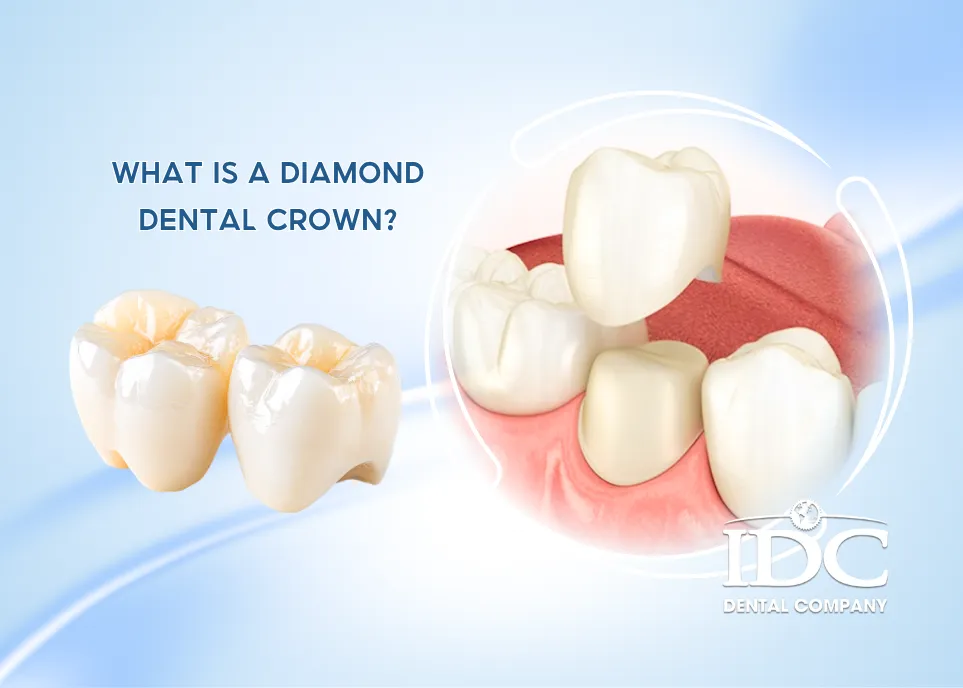
But what is a Diamond Dental Crown exactly? What are its advantages, how does the procedure work, and how much should you expect to pay? This comprehensive guide will answer all of these questions and help you decide whether a Diamond Dental Crown is the best option for your dental needs.
What Is a Diamond Dental Crown?
A Diamond Dental Crown is a premium all-ceramic dental crown designed to restore damaged, decayed, or aesthetically compromised teeth. It is considered one of the most advanced cosmetic dental restorations because it combines exceptional strength with a highly natural appearance.
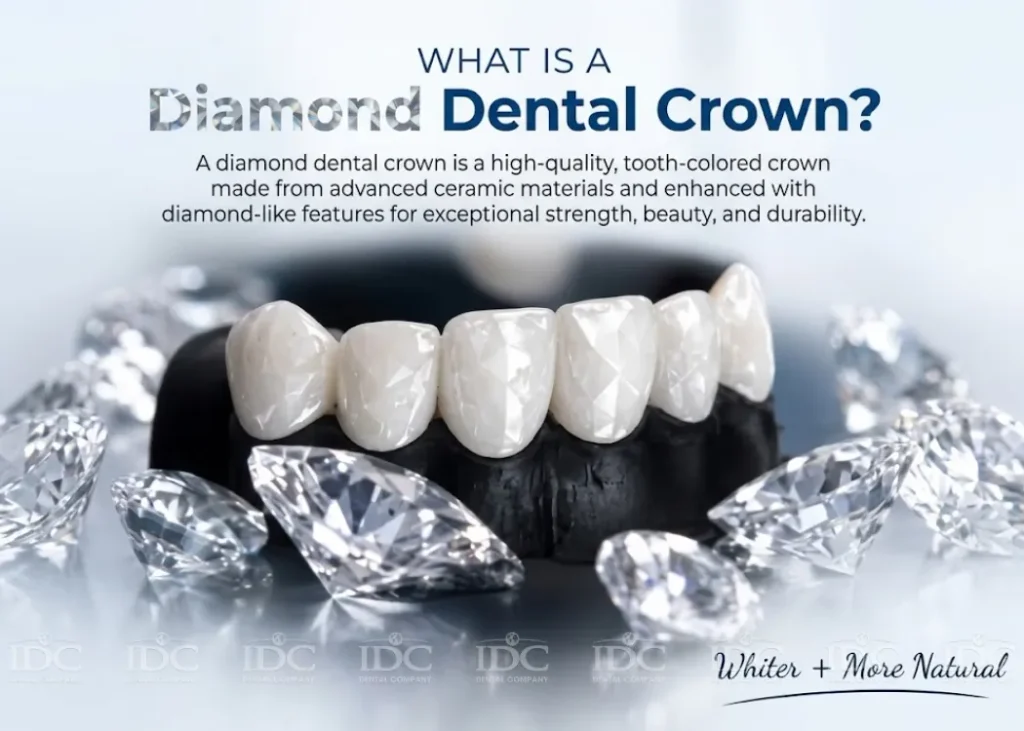
Unlike traditional porcelain-fused-to-metal crowns, Diamond Dental Crowns are completely metal-free. They are typically made with a strong Zirconium Oxide framework covered by a highly translucent ceramic layer, allowing the crown to mimic the appearance of natural teeth.
The name “Diamond Dental Crown” comes from its brilliant shine and translucency, which resembles the sparkle and clarity associated with diamonds. Although the crown does not contain real diamonds, its premium appearance has made it a preferred option for patients who value aesthetics.
Modern CAD/CAM technology is often used to manufacture Diamond Dental Crowns with exceptional precision. This technology ensures an accurate fit, improves comfort, and creates a restoration that blends seamlessly with surrounding teeth.
Who is a good candidate for a Diamond Dental Crown?
Diamond Dental Crowns are suitable for a wide range of dental conditions.
You may be a good candidate if you have:
- Teeth weakened by large cavities.
- Cracked or fractured teeth.
- Teeth that have undergone root canal treatment.
- Severely worn teeth.
- Discolored teeth that cannot be improved with whitening.
- Misshapen teeth affecting your smile.
- Old crowns that need replacement.
Many patients also choose Diamond Dental Crowns purely for cosmetic reasons. If you want a whiter, more balanced, and natural-looking smile, this type of crown may be an excellent solution.
However, your dentist will still need to examine your teeth and gums to determine whether this treatment is suitable for your specific condition.
Benefits of a Diamond Dental Crown
One of the reasons Diamond Dental Crowns are becoming increasingly popular is their ability to combine aesthetics and durability.
Natural Appearance
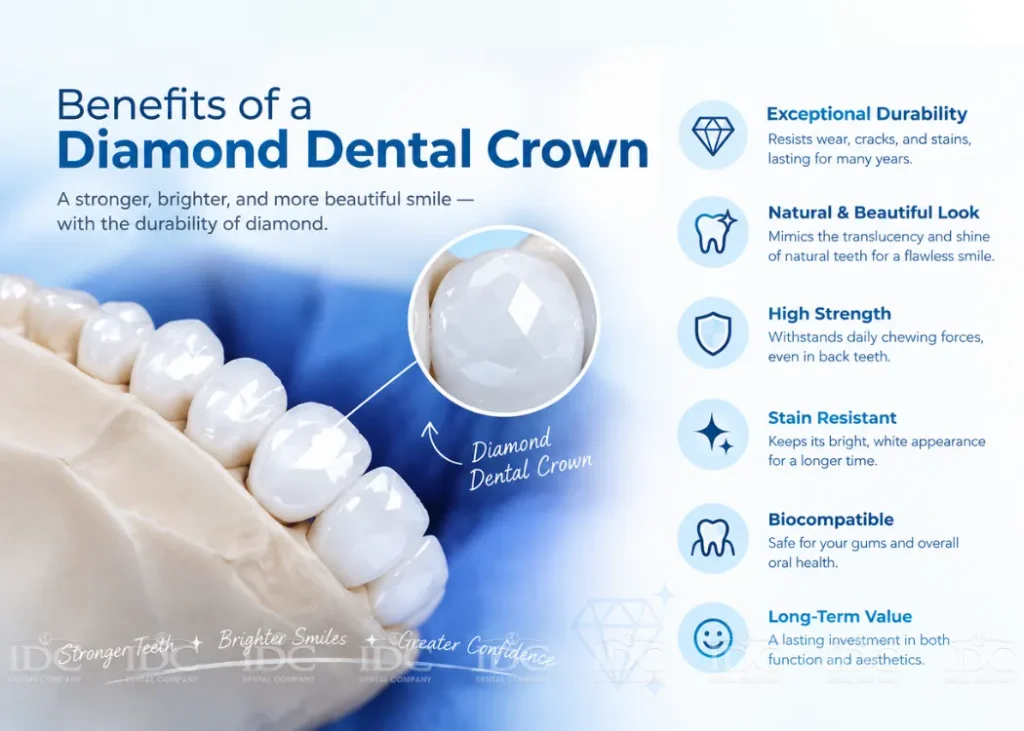
Perhaps the greatest advantage of a Diamond Dental Crown is its natural appearance.
The ceramic material used in the crown has a translucency similar to natural enamel, allowing light to pass through in the same way as a real tooth. This creates a lifelike effect that is difficult to distinguish from surrounding teeth.
The crown can also be customized in shape, size, and shade, ensuring a harmonious smile that complements your facial features.
For patients who are concerned about appearance, especially when restoring front teeth, Diamond Dental Crowns are often considered one of the best options available.
Exceptional strength and durability
Beauty is important, but strength matters too.
Diamond Dental Crowns are designed to withstand significant chewing forces and are much stronger than many traditional ceramic crowns.
The Zirconium Oxide core provides outstanding resistance to:
- Cracks.
- Fractures.
- Chipping.
- Wear over time.
This makes them suitable not only for front teeth but also for back teeth, where chewing pressure is greatest.
With proper care, Diamond Dental Crowns can last for many years while maintaining their appearance and function.
Excellent biocompatibility
Since Diamond Dental Crowns are completely metal-free, they are highly biocompatible.
This means:
- No risk of metal allergies.
- Minimal gum irritation.
- Reduced risk of inflammation.
- Safe for long-term use.
Many patients who have experienced gum discoloration or sensitivity with metal-based crowns choose Diamond Dental Crowns because of their excellent compatibility with oral tissues.
No dark gum line
One common problem with traditional porcelain-fused-to-metal crowns is the appearance of a dark gray line near the gums.
This occurs because the metal framework becomes visible over time.
Diamond Dental Crowns eliminate this issue completely. Since they contain no metal, the gum line remains natural and attractive for years.
This is especially important when restoring front teeth, where aesthetics are a major concern.
Long lifespan
Another reason many patients choose Diamond Dental Crowns is their impressive longevity.
With proper oral hygiene and regular dental check-ups, these crowns can last:
- 15 to 20 years on average.
- Even longer in some cases.
Their resistance to staining and wear also helps maintain a bright and beautiful smile over time.
Are there any disadvantages?
Although Diamond Dental Crowns offer many advantages, they are not perfect.
Higher Cost
The most obvious disadvantage is cost.
Because they use premium materials and advanced manufacturing technology, Diamond Dental Crowns are generally more expensive than traditional crowns.
However, many patients believe the superior aesthetics, comfort, and durability justify the investment.
Requires Skilled Dentists
Achieving excellent results requires experience and precision.
A dentist must:
- Prepare the tooth conservatively.
- Design a crown that matches adjacent teeth.
- Ensure perfect bite alignment.
- Select the ideal shade.
Poorly designed crowns may appear unnatural or cause discomfort when chewing.
Therefore, choosing an experienced cosmetic dentist is essential.
Not Suitable for Every Patient
Although versatile, Diamond Dental Crowns may not be the best option for everyone.
Patients with:
- Severe bite problems.
- Advanced gum disease.
- Uncontrolled teeth grinding.
may require additional treatment or alternative restorations.
A comprehensive dental examination is necessary before making the final decision.
Diamond dental crown vs other dental crowns
Many patients wonder how Diamond Dental Crowns compare to other popular options.
Diamond dental crown vs zirconia crown
Both crowns are strong and aesthetically pleasing.
However:
Diamond Dental Crown
- Superior translucency.
- More natural appearance.
- Premium cosmetic results.
- Higher cost.
Zirconia Crown
- Excellent durability.
- Slightly less translucent.
- More affordable.
- Popular for back teeth.
If aesthetics are your highest priority, Diamond Dental Crowns may be the better choice.
Diamond Dental Crown vs Porcelain Crown
Traditional porcelain crowns offer good aesthetics but are generally less durable.
Compared with porcelain crowns, Diamond Dental Crowns provide:
- Greater strength.
- Better fracture resistance.
- Improved longevity.
- Superior gum compatibility.
For long-term results, Diamond Dental Crowns often outperform conventional porcelain restorations.
Diamond dental crown procedure
The procedure for getting a Diamond Dental Crown is straightforward and usually completed over two visits.
Step 1: Dental Examination
Your dentist will first examine your teeth and gums.
This may include:
- Clinical examination.
- Digital X-rays.
- Intraoral photographs.
- Bite analysis.
The goal is to determine whether a Diamond Dental Crown is the best treatment option.
Step 2: Tooth Preparation
The damaged portion of the tooth is removed.
The remaining structure is then carefully reshaped to create space for the crown.
Dentists aim to preserve as much healthy tooth structure as possible.
Step 3: Digital Impression
Next, your dentist takes an impression of your prepared tooth.
Many clinics now use digital scanners instead of traditional impression materials.
Digital impressions provide:
- Greater accuracy.
- Improved comfort.
- Faster crown fabrication.
The information is then sent to a dental laboratory where the crown is designed using CAD/CAM technology.
Step 4: Temporary Crown
While the permanent crown is being fabricated, a temporary crown is placed.
This protects your tooth and allows you to eat and smile comfortably.
Step 5: Final Crown Placement
Once the Diamond Dental Crown is ready, your dentist will:
- Check the fit.
- Evaluate the bite.
- Match the color.
- Make any necessary adjustments.
The crown is then permanently cemented in place.
The result is a strong, natural-looking restoration that feels and functions like a real tooth.
How much does a diamond dental crown cost?
The cost of a Diamond Dental Crown varies depending on several factors.
In the United States, the average price ranges from:
$1,200 to $2,500 per crown.
Factors affecting the price include:
- Dentist’s experience.
- Geographic location.
- Complexity of treatment.
- Technology used.
- Dental insurance coverage.
Cost in Popular Dental Tourism Destinations
| Country | Average Cost |
|---|---|
| United States | $1,200 – $2,500 |
| Australia | $1,000 – $2,000 |
| Vietnam | $300 – $700 |
| Thailand | $400 – $800 |
Many international patients choose dental tourism destinations such as Vietnam because they can receive high-quality treatment at significantly lower costs.
Is a Diamond Dental Crown worth it?
For many patients, the answer is yes.
Although the initial investment may be higher, Diamond Dental Crowns offer:
- Outstanding aesthetics.
- Exceptional durability.
- Excellent gum compatibility.
- Natural appearance.
- Long-term value.
Rather than replacing cheaper restorations multiple times, investing in a premium crown can save money and provide better results in the long run.
How long does a diamond dental crown last?
On average, a Diamond Dental Crown lasts:
- 15 to 20 years.
- Sometimes longer with proper care.
Its lifespan depends on:
- Oral hygiene habits.
- Diet.
- Teeth grinding habits.
- Regular dental check-ups.
- Overall oral health.
Maintaining good oral care can significantly extend the life of your restoration.
How to care for a Diamond Dental Crown
Caring for a Diamond Dental Crown is similar to caring for natural teeth.
Here are some simple tips:
- Brush your teeth twice daily.
- Use a soft-bristled toothbrush.
- Floss every day.
- Avoid chewing ice or hard objects.
- Wear a night guard if you grind your teeth.
- Visit your dentist every six months.
These habits will help preserve both your crown and your overall oral health.



 WhatsApp