
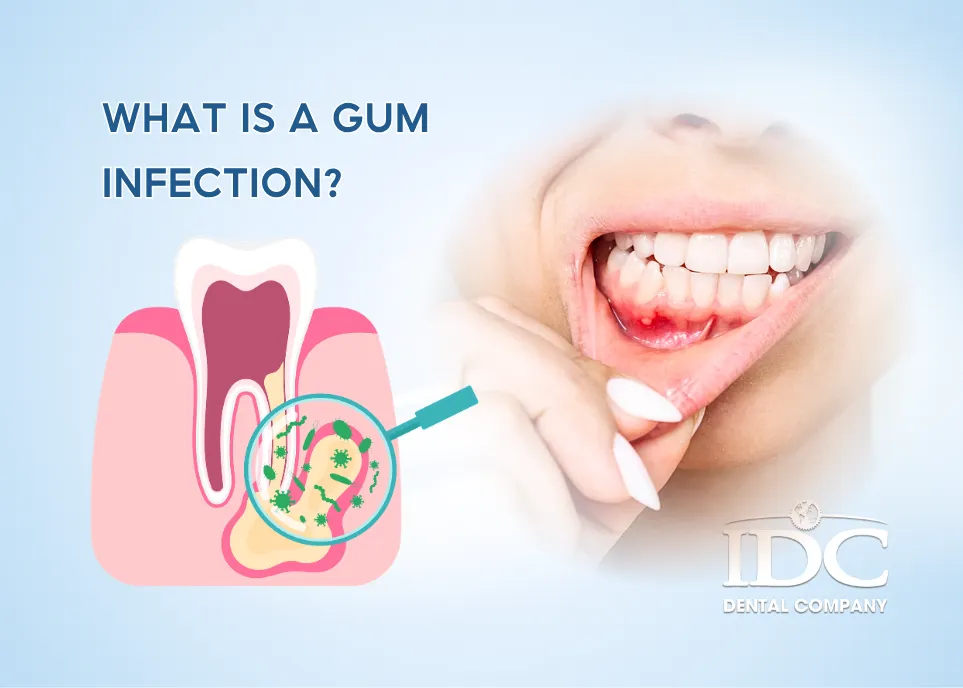
A gum infection is a bacterial infection that affects the gum tissue surrounding your teeth. It often develops when plaque and bacteria build up along the gumline, causing symptoms such as swollen or bleeding gums, redness, bad breath, and gum tenderness. If left untreated, the infection can spread to the supporting bone, increasing the risk of tooth loss.
The good news is that most gum infections can be successfully treated when diagnosed early. In this guide, you’ll learn the common signs, causes, treatment options, and practical tips to help prevent future gum infections.
What Is a Gum Infection?
A gum infection occurs when harmful bacteria invade the gum tissue and trigger an inflammatory response. The infection may affect a small area around a single tooth or involve multiple teeth throughout the mouth.
Healthy gums form a protective seal around the teeth, helping prevent bacteria from reaching the deeper tissues. However, when plaque is allowed to build up, bacteria multiply and irritate the gums. Without treatment, the infection may spread beneath the gumline, damaging the connective tissue and bone that support the teeth.
Many people confuse a gum infection with temporary gum irritation. While mild irritation caused by brushing too hard or food trapped between the teeth usually resolves quickly, a true bacterial infection continues to worsen unless the source of the infection is removed.
How Does a Gum Infection Develop?
Most gum infections develop gradually rather than suddenly.
The process typically follows these stages:
- Plaque builds up along the gumline.
- Bacteria multiply within the plaque.
- The gums become inflamed, leading to gingivitis.
- If plaque hardens into tartar, bacteria become more difficult to remove.
- The infection spreads below the gumline.
- The supporting tissues and bone begin to deteriorate, resulting in periodontitis.
Because gum infections often progress slowly, many people are unaware of the problem until noticeable symptoms appear.
What Are the Signs and Symptoms of a Gum Infection?
The symptoms of a gum infection vary depending on how advanced the condition has become. Some people experience only mild discomfort, while others develop severe pain and swelling.
Recognizing the early warning signs allows treatment to begin before permanent damage occurs.
Early Symptoms
In the earliest stages, symptoms are often mild and easy to overlook.
Common early signs include:
- Bleeding while brushing or flossing
- Red or darkened gums
- Mild swelling
- Tender gums
- Persistent bad breath
- Increased sensitivity around the gums
At this stage, the infection is often reversible with professional dental cleaning and improved oral hygiene.
Moderate Symptoms
As bacteria spread beneath the gumline, the infection becomes more noticeable.
Patients may experience:
- Swollen gums that remain enlarged
- Pain while chewing
- Gum recession
- Teeth appearing longer than before
- Persistent bad breath despite brushing
- Increased tooth sensitivity
The gums may also begin separating from the teeth, creating small periodontal pockets where bacteria continue to grow.
Advanced Symptoms
Without treatment, the infection can become severe and affect the tissues supporting the teeth.
Symptoms of advanced gum infection include:
- Pus between the gums and teeth
- Loose or shifting teeth
- Severe swelling
- Gum abscess
- Constant bad taste in the mouth
- Difficulty chewing
- Fever in severe infections
- Facial swelling
At this stage, immediate professional treatment is essential to prevent the infection from spreading further.
What Causes a Gum Infection?
A gum infection develops when harmful bacteria multiply around the teeth and gums. Several factors can increase the risk of bacterial growth and make infections more likely.
Poor Oral Hygiene
Poor oral hygiene is the leading cause of gum infections.
When plaque is not removed through regular brushing and flossing, bacteria accumulate along the gumline. As plaque remains on the teeth, it hardens into tartar, creating an even more favorable environment for bacteria.
Because tartar cannot be removed with brushing alone, professional dental cleaning becomes necessary.
Gingivitis
Gingivitis is the earliest stage of gum disease and one of the most common causes of gum infection.
At this stage, bacteria irritate the surface of the gums, causing inflammation without damaging the supporting bone.
Typical symptoms include:
- Bleeding during brushing
- Swollen gums
- Red gums
- Mild tenderness
Fortunately, gingivitis is usually reversible when treated promptly.
Periodontitis
If gingivitis is left untreated, the infection may progress into periodontitis.
In periodontitis, bacteria spread beneath the gums and begin destroying the connective tissue and jawbone that support the teeth.
As the infection advances, deep periodontal pockets form around the teeth, trapping even more bacteria and accelerating tissue destruction.
Without treatment, periodontitis is one of the leading causes of tooth loss in adults.
Food Trapped Between Teeth
Sometimes, a gum infection develops because food particles become trapped between two teeth or beneath the gumline.
As bacteria feed on the trapped debris, localized inflammation develops.
Common foods that may become lodged include:
- Popcorn kernels
- Meat fibers
- Seeds
- Nuts
If the debris is not removed, the irritation may progress into a bacterial infection.
Smoking and Tobacco Use
Smoking significantly increases the risk of gum infection.
Nicotine reduces blood flow to the gums, limiting the body’s ability to fight bacteria and heal damaged tissue.
Smokers are more likely to develop severe periodontal disease and often experience slower recovery after treatment.
Diabetes
People with poorly controlled diabetes have a much higher risk of developing gum infections.
High blood sugar levels promote bacterial growth while reducing the body’s ability to fight infection and repair damaged tissues.
At the same time, severe gum disease may make diabetes more difficult to control, creating a cycle that affects both oral and general health.
Weakened Immune System
A healthy immune system helps control bacteria in the mouth.
However, individuals with weakened immunity are more susceptible to gum infections.
Examples include people undergoing:
- Cancer treatment
- Organ transplantation
- Immunosuppressive therapy
- Certain autoimmune diseases
These patients often require closer dental monitoring to reduce the risk of serious oral infections.
Hormonal Changes
Hormonal fluctuations can increase blood flow to the gums and make them more sensitive to plaque.
This explains why gum infections are more common during:
- Pregnancy
- Puberty
- Menopause
- Menstrual cycles
Maintaining excellent oral hygiene during these periods is especially important.
Vitamin Deficiencies
A lack of essential nutrients—particularly vitamin C—may weaken the gums and reduce the body’s ability to repair damaged tissue.
Although uncommon in developed countries, nutritional deficiencies can increase susceptibility to gum infections and delay healing.
Dry Mouth (Xerostomia)
Saliva plays an important role in washing away bacteria and neutralizing acids inside the mouth.
When saliva production decreases, bacteria multiply more easily, increasing the likelihood of plaque buildup and gum infection.
Dry mouth may result from aging, certain medications, or medical conditions affecting the salivary glands.
Types of Gum Infections
Not all gum infections are the same. The severity of the condition depends on how deeply the bacteria have spread and how long the infection has been left untreated. Some infections affect only the surface of the gums, while others damage the tissues and bone supporting the teeth.
Understanding the different types of gum infections can help you recognize symptoms early and seek appropriate treatment.
Gingivitis
Gingivitis is the earliest and mildest form of gum infection. It develops when plaque accumulates along the gumline, allowing bacteria to irritate the gum tissue.
At this stage, the infection affects only the gums and has not yet damaged the underlying bone or connective tissues.
Common Symptoms
- Bleeding while brushing or flossing
- Swollen gums
- Red or dark pink gums
- Mild tenderness
- Persistent bad breath
Because no permanent damage has occurred, gingivitis is usually reversible with professional dental cleaning and improved oral hygiene.
Periodontitis
When gingivitis is left untreated, it may progress to periodontitis, a more advanced gum infection.
The bacteria spread below the gumline, causing the gums to pull away from the teeth and form deep periodontal pockets. These pockets trap additional bacteria, making the infection increasingly difficult to control.
Over time, the infection destroys the connective tissues and jawbone that support the teeth.
Symptoms
- Persistent bleeding gums
- Gum recession
- Loose teeth
- Pain while chewing
- Deep gum pockets
- Chronic bad breath
Unlike gingivitis, periodontitis requires professional periodontal treatment and ongoing maintenance to prevent further damage.
Periodontal Abscess
A periodontal abscess is a localized pocket of pus that forms when bacteria become trapped inside a periodontal pocket.
This type of infection often develops suddenly and is usually accompanied by significant discomfort.
Symptoms
- Severe swelling around one tooth
- Throbbing pain
- Pus draining from the gums
- Bad taste in the mouth
- Difficulty chewing
- Gum tenderness
A periodontal abscess should be treated promptly to prevent the infection from spreading to surrounding tissues.
Pericoronitis
Pericoronitis is an infection that commonly affects partially erupted wisdom teeth.
When part of the tooth remains covered by a flap of gum tissue, food particles and bacteria can become trapped beneath it, causing inflammation and infection.
Common Symptoms
- Swollen gums around the wisdom tooth
- Pain when chewing
- Difficulty opening the mouth
- Bad breath
- Pus around the affected tooth
Recurring infections may require removal of the wisdom tooth to prevent future problems.
How Dentists Diagnose a Gum Infection
Because several dental conditions can produce similar symptoms, your dentist will perform a comprehensive examination to determine the exact cause and severity of the infection.
Clinical Examination
The examination usually begins with a careful assessment of your gums and teeth.
Your dentist will check for:
- Gum swelling and redness
- Bleeding during examination
- Pus around the gums
- Gum recession
- Tooth mobility
- Pain when biting
- Areas of localized infection
The dentist will also review your symptoms, oral hygiene habits, and medical history.
Periodontal Assessment
A periodontal probe is used to measure the depth of the gum pockets surrounding each tooth.
Healthy gums usually have pocket depths of 1–3 mm. Deeper pockets may indicate periodontitis and help determine the severity of the infection.
Dental X-Rays
Dental X-rays help identify problems that cannot be seen during a visual examination.
They may reveal:
- Bone loss
- Hidden dental abscesses
- Deep tooth decay
- Impacted wisdom teeth
- Infection around the tooth roots
In more complex cases, a CBCT scan may be recommended for a detailed three-dimensional view.
Treatment Options for a Gum Infection
The most appropriate treatment depends on the type and severity of the infection. Early gum infections often respond well to conservative care, while advanced infections may require specialized periodontal treatment.
Professional Dental Cleaning
For mild gum infections caused by plaque buildup, professional dental cleaning is usually the first step.
Your dentist or dental hygienist removes plaque and hardened tartar from above and below the gumline, allowing the gums to heal.
Regular professional cleanings also help prevent future infections.
Scaling and Root Planing
Patients with periodontitis typically require scaling and root planing, also known as deep cleaning.
During this procedure, plaque, tartar, and bacteria are removed from beneath the gumline, and the tooth roots are smoothed to encourage the gums to reattach.
This treatment helps reduce periodontal pockets and slow the progression of gum disease.
Antibiotics
If the infection is severe or has spread beyond the gums, antibiotics may be prescribed.
Depending on the condition, your dentist may recommend:
- Oral antibiotics
- Antibiotic gels placed inside periodontal pockets
- Antibacterial mouth rinses
Antibiotics help reduce bacterial infection but are usually combined with professional dental treatment rather than used alone.
Drainage of a Gum Abscess
When a periodontal abscess is present, draining the accumulated pus is often necessary to relieve pressure and reduce pain.
After drainage, the infected area is thoroughly cleaned, and additional treatment is provided to eliminate the source of the infection.
Periodontal Surgery
If deep pockets remain after non-surgical treatment, periodontal surgery may be recommended.
Depending on the condition, procedures may include:
- Flap surgery to clean deep pockets
- Bone grafting to rebuild lost bone
- Guided tissue regeneration to encourage healthy tissue growth
These treatments aim to preserve natural teeth whenever possible.
Tooth Extraction
In cases where a tooth has been severely damaged by infection and cannot be saved, extraction may be the best option.
Removing the affected tooth prevents the infection from spreading and allows the area to heal before considering replacement options such as a dental implant or bridge.
Can a Gum Infection Heal on Its Own?
Minor gum irritation caused by trapped food or temporary trauma may improve after the source of irritation is removed.
However, a true bacterial gum infection rarely heals without professional treatment.
Without removing plaque, tartar, and bacteria, the infection continues to progress beneath the gumline, even if symptoms temporarily improve.
Delaying treatment increases the risk of:
- Periodontitis
- Bone loss
- Gum abscesses
- Loose teeth
- Tooth loss
Seeking dental care as soon as symptoms appear offers the best chance of preserving healthy gums and natural teeth.
Home Care for a Gum Infection
Professional treatment is essential for eliminating a gum infection, but proper home care can support healing and reduce the risk of recurrence.
Brush Twice Daily
Use a soft-bristled toothbrush and fluoride toothpaste to remove plaque without irritating the gums.
Floss Every Day
Daily flossing removes plaque and food debris between the teeth where toothbrushes cannot reach.
Rinse with Warm Salt Water
A warm saltwater rinse may help soothe inflamed gums and reduce bacteria while waiting for your dental appointment.
Use an Antibacterial Mouthwash
Your dentist may recommend an antimicrobial mouthwash to help control bacterial growth during treatment.
Stay Hydrated
Drinking plenty of water encourages saliva production, which naturally helps cleanse the mouth and reduce bacteria.
Eat a Balanced Diet
Foods rich in vitamin C, vitamin D, and calcium help support healthy gums and the body’s natural healing process.
Avoid Smoking
Smoking slows healing, weakens the immune response, and significantly increases the risk of recurrent gum infections.
What You Should Avoid
Do not attempt to drain an abscess yourself, stop brushing because your gums bleed, or take antibiotics without professional advice. These actions may worsen the infection or delay appropriate treatment.



 WhatsApp