
Gingivitis treatment in Da Nang is essential for anyone experiencing bleeding gums, redness, swelling, or persistent bad breath. These early signs of gum disease should not be ignored, as untreated gingivitis can progress to periodontitis, increasing the risk of bone loss and tooth loss.
At IDC Dental in Da Nang, patients receive a comprehensive gum examination and personalized treatment plan based on the severity of their condition. This guide explains the symptoms, causes, treatment options, and preventive measures to help maintain healthy gums and long-term oral health.
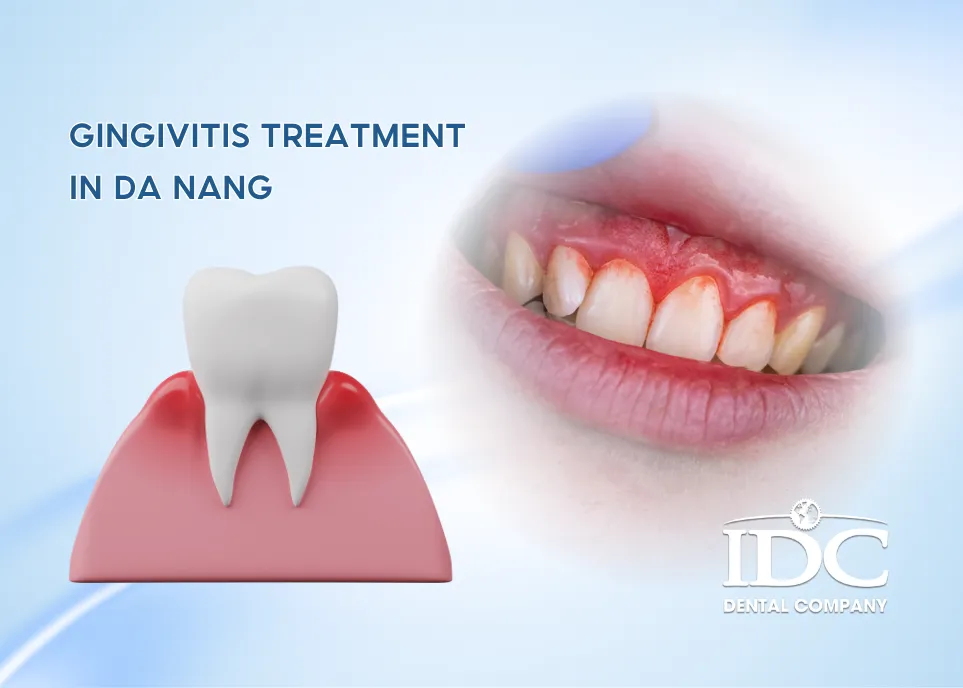
What is gingivitis?
Gingivitis is the mildest and earliest form of periodontal disease. It affects the gingiva, the soft gum tissue surrounding the base of the teeth.
Healthy gums are usually firm, fit closely around the teeth, and do not bleed during normal brushing or flossing. Gums affected by gingivitis may become red, swollen, tender, or more likely to bleed.
The condition is most commonly caused by plaque, a sticky biofilm containing bacteria that continuously forms on the teeth. When plaque is not removed effectively, it accumulates along the gumline and irritates the surrounding tissue.
Unlike periodontitis, gingivitis is generally limited to the gum tissue and does not involve irreversible destruction of the supporting bone or periodontal attachment. This is why early recognition and treatment are so important.
How does gingivitis develop?
The development of gingivitis usually begins with plaque accumulation.
After eating and drinking, bacteria combine with food particles and other substances in the mouth to form plaque. Daily brushing and interdental cleaning help remove this soft film. When plaque remains on the teeth, particularly around or below the gumline, bacterial by-products irritate the gums and trigger an inflammatory response.
The gums may then become red, swollen, and more likely to bleed. If plaque is not removed, it can harden into dental calculus, commonly called tartar. Unlike soft plaque, hardened calculus cannot be removed through ordinary brushing and generally requires professional dental cleaning.
Calculus also creates a rough surface on which more plaque can collect. This can make inflammation more difficult to control without professional care.
Common symptoms of gingivitis
Gingivitis does not always cause significant pain. Many patients may therefore overlook the early warning signs or assume that bleeding during brushing is normal.
Common symptoms include:
- Red or darker-looking gums
- Swollen or puffy gum tissue
- Bleeding while brushing or flossing
- Tenderness along the gumline
- Persistent bad breath
- An unpleasant taste in the mouth
- Soft or shiny-looking gums
- Mild discomfort when chewing or brushing
- Early changes in how the gums fit around the teeth
Redness, swelling, and easy bleeding are among the most characteristic signs of early gum disease.
Some patients may also notice gum recession or teeth appearing longer. However, recession can have several causes and may also suggest more advanced periodontal problems. A dental examination is necessary to determine whether the condition is simple gingivitis or has progressed further.
Why do gums bleed during brushing?
Bleeding occurs because inflamed gum tissue becomes more delicate and reactive. When a toothbrush or dental floss touches the area, small blood vessels in the irritated tissue may bleed more easily.
Patients sometimes respond by avoiding the bleeding area. However, reducing cleaning usually allows more plaque to accumulate and may worsen the inflammation.
Bleeding gums should not be managed by aggressive brushing either. Excessive force can injure the gums and contribute to recession. A dentist can demonstrate a gentle but effective brushing and interdental-cleaning technique.
What causes gingivitis?
Plaque accumulation is the most common direct cause, but several conditions and habits can increase the likelihood of gum inflammation.
Poor oral hygiene
Inconsistent brushing and failure to clean between the teeth allow plaque to remain along the gumline.
Even people who brush regularly may miss certain areas, especially behind the lower front teeth, around back molars, between crowded teeth, and near dental restorations.
Plaque and tartar build-up
Soft plaque can initially be removed at home. Once it hardens into tartar, professional cleaning is usually required.
Tartar may form above or below the gumline. Its rough surface encourages further plaque retention and makes daily cleaning less effective.
Smoking and tobacco use
Smoking is a significant risk factor for gum disease. It can affect immune response and healing while increasing the risk of periodontal destruction. Smokers may also show less obvious gum bleeding despite active disease, potentially making the condition harder to notice. The CDC recommends avoiding tobacco as part of preventing and managing gum disease.
Hormonal changes
Hormonal changes during puberty, pregnancy, and other life stages may increase gum sensitivity to plaque. The gums may become more swollen or bleed more easily even when the amount of plaque has not greatly changed.
This does not mean gum inflammation should be ignored during pregnancy. Professional evaluation and careful plaque control remain important.
Diabetes
Diabetes and periodontal health can affect one another. People with diabetes may have a higher risk of gum problems, particularly when blood glucose is not well controlled. The CDC advises people with diabetes to inform their dentist and seek care when gums become red, swollen, or bleed easily.
Dry mouth
Saliva helps cleanse the mouth and control bacteria. Reduced saliva flow can encourage plaque accumulation and increase the risk of decay and gum inflammation.
Dry mouth may be related to dehydration, medications, tobacco use, certain medical conditions, or previous radiation treatment.
Certain medications
Some medicines may reduce saliva, affect gum tissue, or contribute to gingival enlargement. Enlarged gum tissue can create areas that are difficult to clean and more likely to retain plaque.
Patients should not stop prescribed medication without consulting their doctor. Instead, they should tell their dentist which medicines they use so that oral care can be adjusted appropriately.
Crowded or misaligned teeth
Crooked and overlapping teeth can create narrow areas that are difficult for a toothbrush and floss to reach. This may increase plaque retention and recurrent gum inflammation.
Braces and orthodontic appliances
Brackets, wires, retainers, and other appliances can trap food and plaque. Patients undergoing orthodontic treatment often require additional tools, such as interdental brushes or water flossers, together with more careful professional monitoring.
Damaged or poorly contoured restorations
Overhanging fillings, damaged crowns, rough restoration margins, and poorly fitting dental work can trap plaque close to the gums. Treating the inflammation may require correcting the restoration as well as cleaning the area.
Nutritional and general health factors
An unbalanced diet, reduced immune defenses, stress, and certain health conditions may influence gum health. However, plaque control remains central in most cases of gingivitis.
Who is at greater risk?
Although gingivitis can affect people of any age, the risk may be greater among:
- People who brush or floss inconsistently
- Smokers and tobacco users
- Patients with diabetes
- Pregnant patients
- People experiencing dry mouth
- Patients wearing braces
- People with crowded teeth
- Older adults
- Patients taking medicines that affect saliva or gum tissue
- People who have not received professional dental cleaning for an extended period
Children and teenagers can also develop gingivitis, particularly around newly erupted teeth, orthodontic appliances, or areas that are not cleaned effectively.
Why gingivitis treatment should not be ignored
Gingivitis itself does not usually involve bone loss, but persistent inflammation can progress to periodontitis in susceptible individuals.
Periodontitis affects deeper supporting tissues. The gums may separate from the teeth and form periodontal pockets that trap plaque below the gumline. Over time, inflammation can damage the periodontal ligament and surrounding bone. Teeth may become mobile, chewing may become uncomfortable, and extraction may eventually be required in severe cases.
Not every case of gingivitis automatically becomes periodontitis, but it is not possible to predict progression simply by looking at symptoms at home. Dental assessment is therefore recommended when bleeding, swelling, or bad breath persists.
Gingivitis versus periodontitis
Gingivitis and periodontitis are related but are not the same condition.
With gingivitis, inflammation is generally limited to the gums. There is no clinical attachment loss or destruction of the supporting bone.
With periodontitis, the condition affects deeper structures around the teeth. Periodontal pockets, attachment loss, bone loss, gum recession, tooth movement, or changes in the bite may occur.
This distinction affects treatment. Mild plaque-induced gingivitis may improve with professional cleaning and better home care. Periodontitis may require deeper cleaning below the gumline, ongoing periodontal maintenance, medication in selected cases, or surgery when the disease is advanced.
How is gingivitis diagnosed?
Diagnosis usually begins with a discussion of symptoms, dental habits, medical history, medication use, smoking, pregnancy, diabetes, and previous gum treatment.
Clinical gum examination
The dentist examines the color, shape, texture, and firmness of the gums. Areas of swelling, bleeding, plaque, calculus, recession, or pus are recorded.
Periodontal probing
A periodontal probe may be used to measure the space between each tooth and the surrounding gum. The dentist also checks whether the gums bleed during gentle probing.
These measurements help distinguish uncomplicated gingivitis from periodontitis.
Assessment of plaque and calculus
The amount and distribution of plaque and tartar are evaluated. This allows the dental team to identify difficult-to-clean areas and explain where oral hygiene techniques need improvement.
Dental X-rays
X-rays are not always necessary for mild gingivitis. They may be recommended when the dentist suspects bone loss, deep decay, dental infection, or periodontitis.
Because gingivitis itself does not produce bone loss, X-rays are particularly useful when determining whether the disease has progressed beyond the gums.
Examination of dental restorations and bite
Fillings, crowns, bridges, implants, orthodontic appliances, and crowded teeth may be checked for areas that trap plaque or irritate the gums.
Comprehensive Gingivitis Treatment and Oral Hygiene Care in Da Nang
Treatment depends on the amount of plaque and tartar present, the severity of inflammation, and whether deeper periodontal disease has developed.
The principal goals are to remove bacterial deposits, reduce inflammation, improve home cleaning, and control contributing risk factors.
Professional dental cleaning
For many patients with early gingivitis, professional cleaning is the main clinical treatment.
The dentist or dental hygienist removes plaque and hardened calculus from the tooth surfaces and around the gumline. Areas that cannot be cleaned effectively with a toothbrush are treated using hand instruments, ultrasonic equipment, or a combination of techniques.
After the deposits are removed, the teeth may be polished to reduce external stains and smooth the surfaces. Professional cleaning combined with daily brushing and interdental cleaning can help treat early gum disease.
The procedure does not replace daily home care. Plaque begins forming again after cleaning, so long-term results depend on consistent maintenance.
Is scaling the same as teeth polishing?
Scaling and polishing are related but serve different purposes.
Scaling removes plaque and calculus from the teeth and gumline. This is the essential step for controlling plaque-induced gum inflammation.
Polishing removes some surface stains and helps smooth accessible tooth surfaces. Polishing alone cannot remove substantial tartar and should not be considered a complete treatment for gingivitis.
Scaling and root planing
Scaling and root planing, sometimes called deep cleaning, is primarily used when plaque and calculus have accumulated below the gumline or when periodontal pockets are present.
Scaling removes deposits from the teeth and root surfaces. Root planing smooths contaminated root areas and supports gum healing.
This treatment is more commonly associated with periodontitis than simple gingivitis. It should not automatically be recommended to every patient with bleeding gums. The need for deep cleaning depends on periodontal measurements, attachment levels, bone condition, and the location of deposits.
Local anesthesia may be used when deeper areas are treated. The procedure may be completed in sections over more than one appointment.
Personalized oral hygiene instruction
Professional treatment is most effective when combined with improved cleaning at home.
At a dental appointment, patients may be shown how to:
- Position the toothbrush along the gumline
- Use gentle circular or short vibrating movements
- Clean the outer, inner, and chewing surfaces
- Floss without injuring the gums
- Select an appropriately sized interdental brush
- Clean around braces, bridges, crowns, or implants
- Use a water flosser when suitable
Brushing twice daily with fluoride toothpaste and cleaning between the teeth each day are standard recommendations for reducing plaque and gingivitis risk.
The best interdental tool varies according to tooth spacing, gum condition, restorations, dexterity, and personal preference.
Antibacterial Mouthwash
An antibacterial mouthwash may be recommended in selected cases, but it is not a substitute for mechanical plaque removal.
A dentist may prescribe or recommend a rinse when inflammation is significant, cleaning is temporarily difficult, or additional short-term bacterial control is needed.
Some medicated rinses can cause staining, taste changes, or irritation if used incorrectly or for too long. Patients should therefore follow the recommended dose and duration rather than using them continuously without professional guidance.
Are antibiotics needed for gingivitis?
Routine plaque-induced gingivitis generally does not require oral antibiotics.
The main treatment is removal of plaque and calculus, combined with effective daily cleaning. Antibiotics do not remove tartar and are not a substitute for professional treatment.
Medication may be considered only when the dental condition is not typical simple gingivitis, such as certain acute infections or when there are specific medical indications. The dentist must first establish the diagnosis.
Correcting plaque-retentive factors
Recurrent gingivitis may not resolve fully if plaque continues to collect around a damaged filling, rough crown margin, poorly fitting appliance, or crowded area.
Depending on the cause, the treatment plan may include:
- Repairing or replacing a restoration
- Adjusting an appliance
- Improving cleaning around braces
- Treating decay
- Evaluating orthodontic options
- Managing dry mouth
- Coordinating diabetes or medication care with a physician
Home care after gingivitis treatment
The gums may remain slightly tender or bleed for a short time after professional cleaning, particularly when significant inflammation was present.
Patients should continue cleaning gently rather than avoiding the area.
Brush twice daily
Use a soft-bristled toothbrush and fluoride toothpaste. Electric and manual toothbrushes can both be effective when used correctly.
Brush for approximately two minutes and pay particular attention to the gumline.
Clean between the teeth daily
A toothbrush cannot fully clean the contact areas between teeth. Floss or interdental brushes help remove plaque from these spaces.
Interdental brushes may be more suitable where spaces are larger, around bridges, or in certain periodontal areas.
Avoid forceful brushing
Scrubbing aggressively does not remove tartar and may contribute to gum injury or recession. Use controlled pressure and replace a worn toothbrush head.
Avoid smoking
Stopping smoking supports gum health and improves the response to periodontal treatment.
Maintain a balanced diet
A balanced diet supports general and oral health. Frequent sugary snacks and drinks also increase the risk of tooth decay, which may complicate oral hygiene.
Stay hydrated
Adequate hydration supports saliva production. Patients with persistent dry mouth should discuss the possible cause with their dentist or physician.
Attend follow-up appointments
A follow-up examination allows the dentist to assess whether bleeding and swelling have improved. Patients with recurring inflammation or periodontitis may require a shorter maintenance interval than those with healthy gums.
Can gingivitis be reversed?
Plaque-induced gingivitis is generally preventable and reversible when bacterial deposits are controlled and professional treatment is provided where needed.
The speed of improvement depends on:
- The amount of plaque and tartar
- The duration of inflammation
- The quality of daily oral hygiene
- Smoking status
- Diabetes control
- Dry mouth
- Dental restorations or braces
- Whether periodontitis is already present
The gums may begin to look and feel healthier within days or weeks after effective plaque control. However, the absence of bleeding does not always confirm that all periodontal problems have resolved, especially in smokers. Follow-up assessment is important.
If attachment or bone has already been lost, that part of the condition is not classified as simple gingivitis and may not be fully reversible. Periodontitis requires ongoing management.
How long does gingivitis treatment take?
There is no single treatment time for every patient.
A professional cleaning may be completed in one appointment when the condition is mild. Patients with heavier calculus, sensitive gums, multiple restorations, braces, or suspected periodontal disease may require additional visits.
Improvement also depends on daily home care after treatment. Professional cleaning removes existing deposits, but new plaque begins forming quickly.
A follow-up appointment may be recommended to assess:
- Bleeding
- Gum swelling
- Plaque control
- Pocket measurements
- Persistent bad breath
- Areas requiring further treatment
Is Gingivitis Treatment Painful?
Routine cleaning for mild gingivitis is usually manageable, although inflamed gums may feel sensitive.
Patients with heavier deposits or more severe inflammation may experience discomfort during scaling. The dentist can adjust the procedure, use topical numbing products, or provide local anesthesia when clinically appropriate.
After treatment, temporary sensitivity to cold or mild gum tenderness may occur. Severe pain, increasing swelling, pus, fever, or facial swelling is not typical of simple gingivitis and should be assessed promptly.
How to Prevent Gingivitis
Prevention depends mainly on controlling plaque before it produces persistent inflammation.
Effective measures include:
- Brushing twice daily with fluoride toothpaste
- Cleaning between the teeth every day
- Attending regular dental examinations
- Having professional cleaning at an interval recommended by the dentist
- Avoiding tobacco
- Managing diabetes and dry mouth
- Cleaning carefully around braces and restorations
- Replacing worn toothbrushes or brush heads
- Seeking care when gums repeatedly bleed
- Treating plaque-retentive fillings, crowns, or decay
The correct interval between dental cleanings is individualized. Not every person needs the same schedule.
When Should You See a Dentist?
Arrange a dental examination when:
- Gums bleed repeatedly
- Redness or swelling persists
- Bad breath does not improve
- Gums appear to be receding
- Teeth feel loose
- Chewing becomes uncomfortable
- Pus appears around a tooth
- There is a new gap between teeth
- The bite seems to have changed
- Gum symptoms continue despite improved brushing
Urgent care is recommended if gum symptoms are accompanied by significant facial swelling, fever, difficulty swallowing, difficulty breathing, or severe spreading pain, as these features may indicate an infection other than uncomplicated gingivitis.
Why Choose IDC Dental for Gingivitis Treatment in Da Nang?
Effective gingivitis treatment begins with an accurate diagnosis. Bleeding gums may result from plaque-induced gingivitis, but similar symptoms can also occur with periodontitis, dental abscesses, trauma, medication effects, or other oral conditions.
At IDC Dental in Da Nang, the treatment process can include gum examination, plaque and tartar assessment, periodontal measurements, and dental imaging when clinically indicated.
Based on the findings, the dental team may recommend professional scaling, teeth polishing, personalized oral hygiene instruction, periodontal treatment, or correction of factors that retain plaque.
IDC Dental also supports local residents, expatriates, tourists, and international patients who require English-speaking dental care in Da Nang. Clear explanations help patients understand the diagnosis, proposed treatment, expected recovery, home-care responsibilities, costs, and follow-up schedule.
Patients with diabetes, pregnancy, braces, dental implants, crowns, or a history of periodontal disease should tell the dentist during the consultation so that care can be planned appropriately.
Frequently Asked Questions
Can gingivitis go away on its own?
Gingivitis may improve when plaque is removed effectively, but persistent symptoms should not simply be left untreated. Hardened tartar cannot normally be removed through brushing and may require professional cleaning.
Is gingivitis painful?
Gingivitis is often painless in its early stages. This is one reason many people do not seek care until bleeding or swelling becomes more noticeable.
Can gingivitis cause tooth loss?
Gingivitis itself does not produce the bone loss associated with loose teeth. However, untreated gum inflammation may progress to periodontitis, which can damage supporting tissues and contribute to tooth loss.
How often should I have professional teeth cleaning?
The appropriate interval depends on plaque accumulation, gum health, smoking, diabetes, restorations, orthodontic appliances, and previous periodontal disease. A dentist should recommend an individualized schedule after examination.
Do I need deep cleaning?
Not every patient with gingivitis needs scaling and root planing. Deep cleaning is more commonly indicated when deposits extend below the gumline or periodontal pockets and attachment loss are present.
Is mouthwash enough to treat gingivitis?
No. Mouthwash may support treatment in selected cases, but it does not replace brushing, interdental cleaning, or professional removal of tartar.
Is gingivitis contagious?
Gingivitis is not generally described as a contagious disease in the same way as a cold or flu. Oral bacteria can be shared through saliva, but whether gingivitis develops depends on plaque accumulation, oral hygiene, immune response, smoking, health conditions, and other risk factors.
Can children develop gingivitis?
Yes. Children and teenagers can develop gum inflammation, especially when plaque accumulates around the gumline, newly erupted teeth, crowded teeth, or braces.
Can pregnancy cause gingivitis?
Hormonal changes during pregnancy can make the gums more reactive to plaque. Pregnant patients should continue regular oral hygiene and inform the dentist about the pregnancy before treatment.
Can gingivitis return after treatment?
Yes. Gingivitis can return when plaque begins accumulating again. Long-term control requires daily oral hygiene and appropriate professional maintenance.
How much does gingivitis treatment cost in Da Nang?
The cost depends on the examination findings, amount of tartar, number of areas requiring treatment, whether routine scaling or deeper periodontal care is needed, and whether additional imaging or restoration treatment is required. An accurate estimate should be provided after the gums are examined.
 WhatsApp