
Swollen gums around one tooth is often a sign that something is affecting the health of your teeth or gums. While the problem may seem minor at first, it can result from trapped food, plaque buildup, gum disease, tooth decay, a cracked tooth, or even a dental abscess. Early diagnosis is important because untreated swelling may lead to more serious oral health complications.
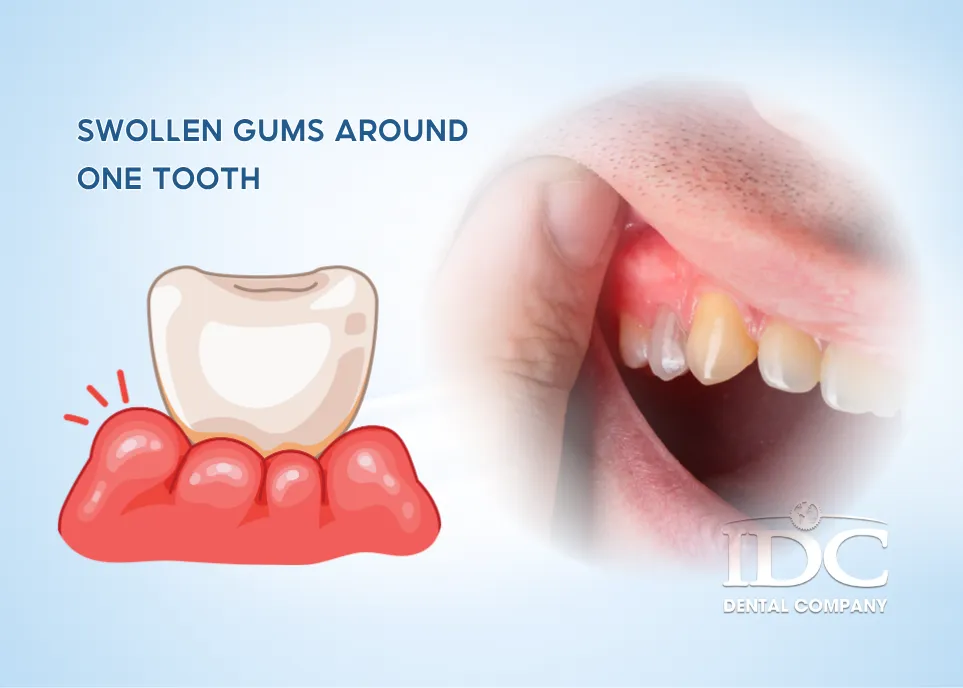
In this guide, you’ll learn the most common causes of a swollen gum around one tooth, effective treatment options, home care tips, and when it’s time to see a dentist.
What Does It Mean If Only One Tooth Has Swollen Gums?
Healthy gums should appear firm, pale pink, and fit snugly around each tooth. When the gum surrounding only one tooth becomes swollen, it typically indicates that the irritation or infection is localized rather than affecting the entire mouth.
Although some cases result from temporary irritation, swelling that lasts longer than a day or two should not be ignored. Even if there is little or no pain, the underlying problem may continue to worsen beneath the gumline.
Is It Normal?
Occasionally, the gum around one tooth may swell after food becomes lodged between the teeth or following minor trauma caused by aggressive brushing or flossing. These situations often improve once the source of irritation is removed.
However, swelling that persists or returns repeatedly is not considered normal. It may indicate bacterial infection, gum disease, deep tooth decay, or another dental condition requiring professional evaluation.
Common Symptoms
Localized gum swelling may occur together with one or more of the following symptoms:
- Red or darkened gum tissue
- Puffy or enlarged gums
- Tenderness when touching the area
- Pain while chewing
- Bleeding during brushing or flossing
- Persistent bad breath
- A bad taste in the mouth
- Tooth sensitivity to hot or cold foods
- Pus draining from the gum
- A loose tooth in more advanced cases
Some people experience significant swelling with very little pain, while others develop severe throbbing discomfort. The symptoms often depend on the underlying cause and the stage of the condition.
What Causes Swollen Gums Around One Tooth?
Many different dental conditions can cause swelling around a single tooth. Identifying the exact cause is essential because each condition requires a different treatment approach.
Food Trapped Between the Teeth
One of the simplest causes of localized gum swelling is food becoming trapped between two teeth.
Small pieces of popcorn, meat fibers, seeds, or other foods can become lodged beneath the gumline. As bacteria begin to accumulate around the trapped debris, the surrounding tissue becomes inflamed.
Typical Symptoms
- Swelling appears suddenly
- Mild discomfort when chewing
- Tender gum between two teeth
- Symptoms improve after the debris is removed
Although this type of inflammation is usually temporary, leaving trapped food in place for an extended period may increase the risk of infection.
Gingivitis (Early Gum Disease)
Gingivitis is the earliest stage of gum disease and develops when dental plaque accumulates along the gumline.
Although gingivitis often affects multiple teeth, poor cleaning around one particular tooth may result in localized inflammation.
Plaque contains millions of bacteria that irritate the gums. Without regular brushing and flossing, the bacteria trigger an inflammatory response, causing redness, swelling, and bleeding.
Common Signs
- Red gums
- Bleeding during brushing
- Puffy gum margins
- Mild tenderness
- Little or no pain
The good news is that gingivitis is usually reversible with professional cleaning and improved oral hygiene.
Periodontitis
If gingivitis is left untreated, it can progress into periodontitis, a more advanced form of gum disease.
In periodontitis, bacteria spread below the gumline and begin damaging the tissues and bone that support the tooth. Deep periodontal pockets develop, allowing even more bacteria to accumulate.
Unlike gingivitis, periodontitis cannot be reversed simply by brushing better at home.
Warning Signs
- Persistent swelling around one tooth
- Bleeding gums
- Gum recession
- Bad breath
- Loose teeth
- Pus around the gumline
Without treatment, periodontitis may eventually result in tooth loss.
Dental Abscess
A dental abscess is one of the most serious causes of swollen gums around one tooth.
An abscess occurs when bacteria infect the pulp inside the tooth or the tissues surrounding the tooth root. As infection progresses, pus accumulates beneath the gum, creating pressure and severe inflammation.
Symptoms of a Dental Abscess
- Severe throbbing toothache
- Swollen gums
- Facial swelling
- Fever
- Bad taste in the mouth
- Pus discharge
- Swollen lymph nodes
A dental abscess requires prompt treatment because the infection can spread to nearby tissues and, in rare cases, other parts of the body.
Tooth Decay Reaching the Dental Pulp
A small cavity may not cause any symptoms initially. However, when decay extends deep into the tooth and reaches the pulp, bacteria can infect the nerve and spread beyond the root.
As the infection exits through the root tip, the surrounding gum tissue may become swollen.
Patients often notice that only one tooth feels painful while the nearby gum becomes enlarged and tender.
Deep cavities frequently require root canal treatment to eliminate the infection while preserving the natural tooth.
Cracked or Fractured Tooth
Sometimes, a tooth develops a crack that is too small to see with the naked eye.
Even microscopic cracks allow bacteria to enter the tooth and surrounding tissues, leading to localized inflammation.
Patients with cracked teeth often report:
- Pain when biting
- Sensitivity to cold drinks
- Intermittent discomfort
- Swelling around only one tooth
Because cracks are not always visible on standard dental X-rays, dentists may perform additional tests to confirm the diagnosis.
Impacted Wisdom Tooth (Pericoronitis)
A partially erupted wisdom tooth often leaves a flap of gum tissue covering part of the tooth.
Food particles and bacteria can become trapped beneath this flap, leading to inflammation known as pericoronitis.
Common symptoms include:
- Swollen gum behind the last molar
- Pain while chewing
- Difficulty opening the mouth
- Bad breath
- Pus around the wisdom tooth
Recurring infections often require removal of the wisdom tooth to prevent future episodes.
Trauma or Injury
Localized gum swelling may also occur after accidental injury.
Examples include:
- Brushing too aggressively
- Floss snapping into the gum
- Sharp foods injuring the gum tissue
- Sports injuries
- Toothpick injuries
Minor trauma usually heals within several days, provided the area remains clean and free of bacteria.
Poorly Fitting Dental Restorations
Old fillings, crowns, or bridges that no longer fit properly can trap plaque around the edges.
The constant bacterial accumulation irritates the surrounding gum tissue, causing chronic localized inflammation.
Dentists often recommend replacing defective restorations to restore proper gum health.
Orthodontic Appliances
Patients wearing braces or clear aligners sometimes experience swelling around individual teeth.
Brackets and wires create additional areas where plaque can accumulate, making cleaning more difficult.
Maintaining excellent oral hygiene during orthodontic treatment significantly reduces the risk of localized gum inflammation.
How Dentists Diagnose Swollen Gums Around One Tooth
Because swollen gums around one tooth can have many different causes, an accurate diagnosis is essential before treatment begins. While the symptoms may appear similar, the underlying problem could range from mild gum irritation to a serious dental infection. Identifying the exact cause allows your dentist to recommend the most appropriate treatment and helps prevent unnecessary complications.
Clinical Examination
The first step is a thorough examination of your teeth and gums. During the appointment, your dentist will evaluate:
- The location and extent of the swelling
- The color and condition of the gum tissue
- Whether the area bleeds easily
- Signs of pus or drainage
- Tooth mobility
- Pain when biting or chewing
- Gum pocket depth around the affected tooth
Your dentist will also ask about your symptoms, including when the swelling started, whether you have pain or sensitivity, and if you’ve experienced recent trauma or dental treatment.
Dental X-Rays
Dental X-rays help identify problems that cannot be seen during a visual examination. They are commonly used to detect:
- Tooth decay beneath existing fillings
- Infection around the tooth root
- Dental abscesses
- Bone loss caused by periodontal disease
- Impacted wisdom teeth
- Cracks that may affect the root
In some cases, digital 3D imaging (CBCT) may be recommended for a more detailed view of the affected area.
Additional Diagnostic Tests
If necessary, your dentist may perform additional tests, such as:
- Pulp vitality testing to determine whether the tooth nerve is healthy
- Bite testing to identify a cracked tooth
- Periodontal probing to measure gum pocket depth
- Percussion testing to evaluate inflammation around the tooth root
These examinations help determine whether the swelling originates from the gums, the tooth itself, or the surrounding bone.
Treatment for Swollen Gums Around One Tooth
Treatment depends on the underlying cause of the swelling. While some cases require only professional cleaning, others may need more advanced procedures to eliminate infection and preserve the tooth.
Professional Dental Cleaning
If plaque and tartar buildup are responsible for the inflammation, a professional dental cleaning is often the first step.
During the cleaning, your dentist or dental hygienist removes hardened plaque (tartar) and bacterial deposits that cannot be eliminated with brushing alone. Once these irritants are removed, mild gum inflammation often begins to improve within a few days.
Professional cleanings are also an effective way to prevent gingivitis from progressing into more serious gum disease.
Scaling and Root Planing
For patients with early or moderate periodontitis, a deep cleaning procedure called scaling and root planing may be recommended.
This treatment removes bacteria and tartar from below the gumline and smooths the root surfaces, making it more difficult for bacteria to accumulate again. As the gums heal, they can reattach more closely to the tooth.
Depending on the severity of the condition, treatment may be completed over one or more appointments.
Antibiotics
Antibiotics are not necessary for every case of swollen gums. However, they may be prescribed when there is evidence of a bacterial infection, such as:
- A dental abscess
- Significant swelling
- Pus drainage
- Fever
- Facial swelling
Antibiotics help control the infection but do not eliminate its source. Additional dental treatment, such as drainage, root canal therapy, or tooth extraction, is often required.
Root Canal Treatment
If swelling is caused by an infection inside the tooth, root canal treatment may be the best option.
During the procedure, the infected pulp is removed, the root canals are thoroughly cleaned and disinfected, and the tooth is sealed to prevent reinfection. In many cases, a dental crown is later placed to restore the tooth’s strength and function.
Root canal treatment allows many infected teeth to be saved instead of extracted.
Tooth Extraction
Sometimes, a tooth cannot be preserved because of extensive decay, severe infection, advanced periodontal disease, or a vertical root fracture.
In these situations, extraction may be the safest treatment to remove the source of infection and protect the surrounding teeth and bone.
After healing, your dentist may discuss replacement options such as a dental implant, bridge, or partial denture.
Wisdom Tooth Removal
If an impacted or partially erupted wisdom tooth repeatedly causes swelling and infection, removal is often recommended.
Extracting the wisdom tooth helps eliminate the source of irritation and significantly reduces the likelihood of future episodes of pericoronitis.
Repairing a Cracked Tooth
Treatment for a cracked tooth depends on the location and severity of the fracture.
Possible treatment options include:
- Dental bonding for minor cracks
- A dental crown to protect the tooth
- Root canal treatment if the pulp is affected
- Extraction if the crack extends below the gumline
Early treatment offers the best chance of saving the tooth.
Can Swollen Gums Around One Tooth Heal on Their Own?
The answer depends on the cause of the swelling.
If the inflammation is due to temporary irritation, such as food trapped between the teeth or minor gum trauma, the swelling may improve within a few days after the area is cleaned and good oral hygiene is maintained.
However, swelling caused by plaque buildup, gum disease, tooth decay, or a dental abscess will not resolve permanently without professional treatment.
Although symptoms may temporarily improve, the underlying problem often continues to progress.
Delaying treatment increases the risk of complications, including deeper infection, bone loss, and tooth loss.
Home Care for Swollen Gums Around One Tooth
While home remedies cannot cure infections or gum disease, they may help relieve discomfort until you can visit a dentist.
Rinse with Warm Salt Water
Rinsing with warm salt water two or three times a day may help reduce bacteria and soothe irritated gum tissue.
Brush Gently
Continue brushing twice daily using a soft-bristled toothbrush. Avoid scrubbing the swollen area aggressively, as this may increase irritation.
Floss Carefully
If food is trapped between your teeth, gentle flossing may remove the debris and relieve the inflammation. Do not force the floss into swollen gums.
Apply a Cold Compress
If swelling extends to the face or jaw, applying a cold compress to the outside of your cheek for short periods may help reduce discomfort.
Take Over-the-Counter Pain Relievers
Pain relief medications may temporarily reduce discomfort, but they should not replace professional dental care.
Avoid These Mistakes
Do not attempt to drain an abscess at home, place aspirin directly on the gums, smoke, or ignore persistent swelling, as these actions can worsen the condition.



 WhatsApp