
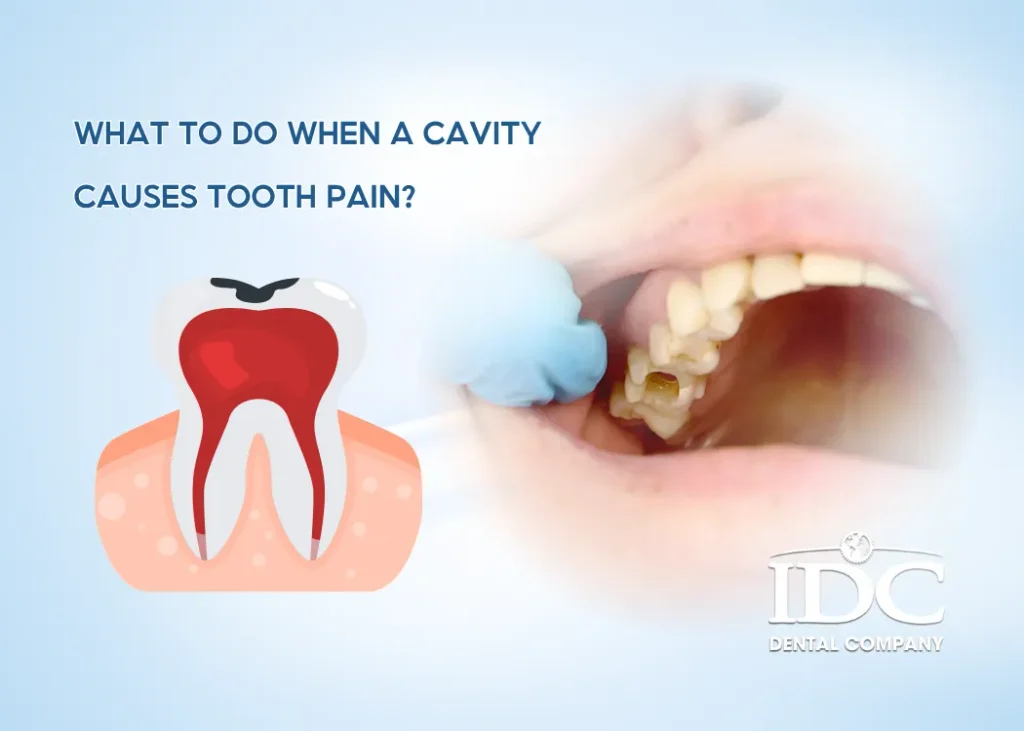
What should you do when a cavity causes tooth pain? Start by gently cleaning the painful area, rinsing with warm salt water, avoiding very hot, cold, or sugary foods, and using an over-the-counter pain reliever if it is safe for you and taken according to the label. These steps may provide temporary relief, but they cannot repair a cavity.
Once tooth decay begins causing persistent or recurring pain, the cavity may have reached deeper layers of the tooth and could be affecting the dental pulp. Depending on the severity, treatment may involve a dental filling, inlay or onlay, root canal treatment, a crown, or extraction if the tooth cannot be predictably restored.
If tooth pain is accompanied by facial swelling, fever, difficulty swallowing, difficulty breathing, or swelling spreading toward the neck, seek urgent medical or dental care.
Why Does a Cavity Cause Tooth Pain?
A cavity, also known as dental caries or tooth decay, develops when acids produced by bacteria in dental plaque repeatedly damage the mineralized structure of a tooth.
The process can be simplified as:
Dental plaque + fermentable carbohydrates → acid production → enamel demineralization → dentin involvement → pulp irritation or inflammation → possible infection
Pain often becomes more noticeable as decay progresses deeper into the tooth.
Early Enamel Decay
The outer layer of the tooth, called enamel, does not contain nerves. For this reason, early tooth decay may develop without causing any pain.
An early lesion may appear as a white, chalky area or other change in the tooth surface.
When decay has not yet created a physical cavity, preventive measures such as fluoride exposure, improved oral hygiene, dietary changes, and professional monitoring may sometimes help arrest or remineralize the lesion.
Decay Reaches the Dentin
Underneath the enamel is dentin, which is more sensitive.
Once decay reaches this layer, you may begin experiencing:
- Sensitivity to cold
- Pain when eating sweets
- Brief episodes of toothache
- Food repeatedly becoming trapped in the cavity
At this stage, professional dental treatment is often necessary to prevent the cavity from progressing further.
Decay Approaches the Dental Pulp
At the center of the tooth is the dental pulp, which contains nerves, blood vessels, and connective tissue.
When a deep cavity irritates or inflames the pulp, symptoms can become more significant. You may experience spontaneous pain, throbbing, lingering sensitivity after hot or cold foods, or tooth pain that becomes particularly noticeable at night.
Infection and Dental Abscess
If the pulp loses vitality and bacteria spread through the root canal system, infection may develop around the root of the tooth.
Possible signs include:
- Pain when biting
- Gum swelling
- A pimple-like bump on the gum
- Pus or drainage
- Facial swelling
- Fever
An abscessed tooth requires professional evaluation and should not be managed solely with home remedies.
What Does Cavity Pain Feel Like?
Cavity pain can feel different depending on the depth of the decay, the condition of the dental pulp, and the tissues surrounding the tooth.
Some people experience only mild sensitivity, while others develop significant pain.
Common symptoms include:
- Sharp tooth pain
- Dull, aching pain
- Throbbing toothache
- Sensitivity to cold drinks
- Sensitivity to hot foods
- Pain when eating sweets
- Pain when chewing
- Pain when biting down
- Spontaneous toothache
- Lingering sensitivity
- Tooth pain at night
- Pain that seems to spread toward the jaw or nearby areas
It is important to remember that pain intensity alone does not tell you exactly how severe a cavity is.
A tooth with significant damage may occasionally cause relatively little pain, particularly if the pulp has already lost vitality.
Why Does Cavity Pain Get Worse at Night?
Many people notice that a painful cavity becomes particularly uncomfortable when they are trying to sleep.
When you lie down, tooth pain may feel more noticeable for some people. At night there are also fewer activities and distractions, which can make you more aware of an existing toothache.
More importantly, spontaneous or persistent nighttime tooth pain can sometimes occur when the dental pulp has become significantly inflamed.
However, nighttime pain alone cannot determine whether you need a root canal. A dentist needs to evaluate the tooth and pulp before making that diagnosis.
Can Cavity Pain Go Away on Its Own?
Cavity pain can temporarily decrease or disappear, but that does not necessarily mean the dental problem has resolved.
This distinction is important.
An early, non-cavitated area of enamel demineralization may sometimes be arrested or remineralized under appropriate conditions. Once enough tooth structure has been destroyed to create an established cavity, however, the lost structure does not simply grow back.
Another situation deserves particular attention:
What if a severe toothache suddenly stops?
You might assume that the tooth has healed.
Unfortunately, that is not always the case.
In some situations, severe inflammation can eventually be followed by loss of vitality of the dental pulp. The pain may decrease even though bacteria remain within the tooth and infection may continue to develop.
Therefore, a tooth that was severely painful and then suddenly stopped hurting may still need dental evaluation.
No pain does not always mean no disease.
How Long Does Cavity Pain Last?
There is no universal timeline for cavity pain.
The duration and pattern of pain depend on factors such as:
- How deep the cavity is
- Whether the pulp is involved
- Whether infection is present
- Exposure to hot or cold foods
- Pressure during chewing
- The condition of the surrounding tissues
- Whether dental treatment has already been performed
Some discomfort may be brief and stimulus-related, while other pain can become spontaneous or persistent.
Rather than waiting a certain number of days, recurring or worsening cavity pain should be evaluated by a dentist.
10 Ways to Manage and Treat Tooth Pain Caused by a Cavity
It is useful to divide treatment into two categories.
Home care can temporarily control symptoms. Professional dental care addresses the underlying cause.
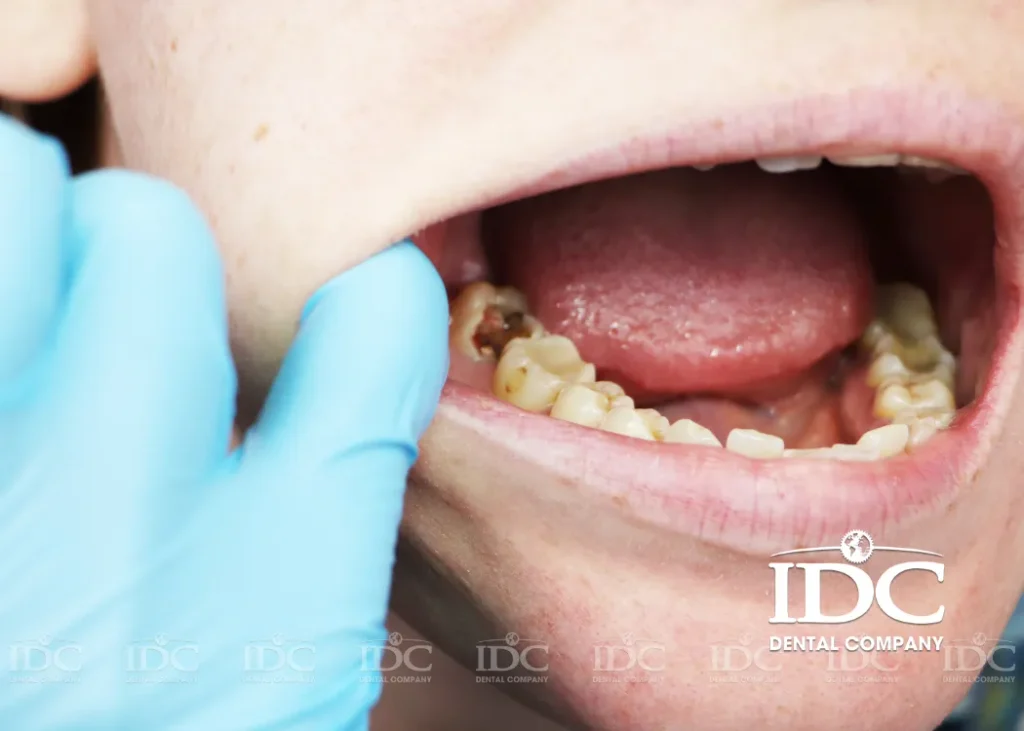
Here are five measures that may help while you are waiting for dental care, followed by five professional treatment options.
1. Rinse With Warm Salt Water
A gentle warm salt-water rinse can help clean the mouth and remove some food debris around the painful tooth.
It may also temporarily soothe irritated gum tissue surrounding the area.
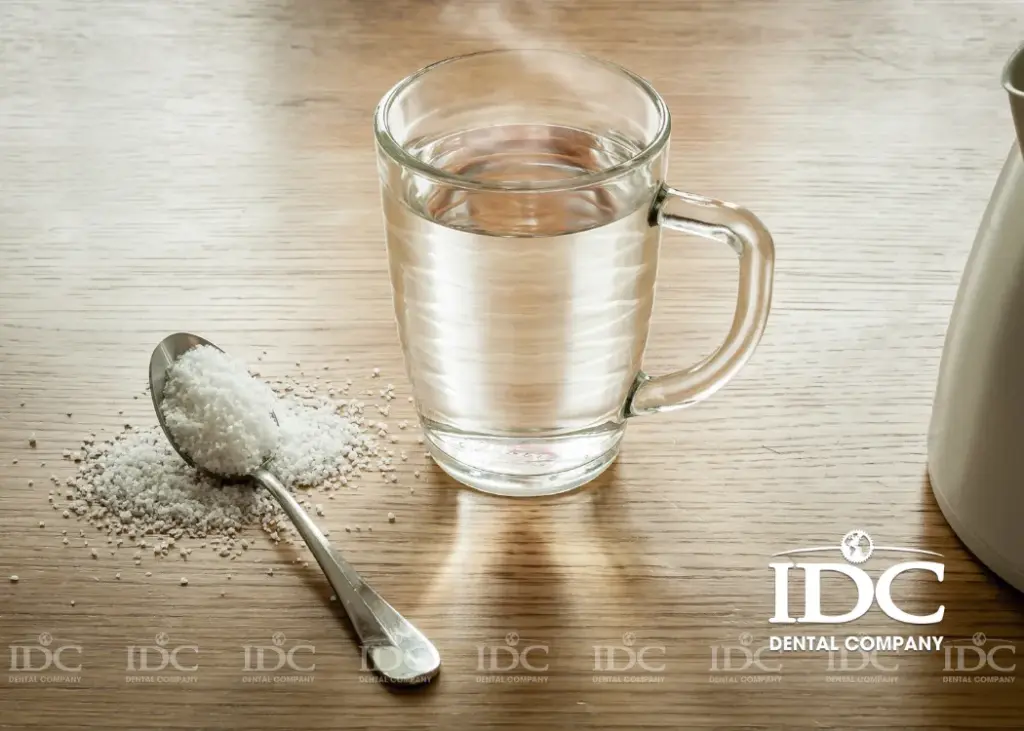
Avoid extremely hot water, particularly if the tooth is sensitive to temperature.
Most importantly:
Salt water cannot remove decay, fill a cavity, or treat an infected dental pulp.
Think of it as a temporary supportive measure rather than a treatment for the cavity itself.
2. Gently Clean Around the Painful Tooth
Food frequently becomes trapped inside a cavity or between teeth.
If this happens, pressure and irritation may make the tooth feel even more uncomfortable.
Continue brushing the area gently and use dental floss carefully to remove trapped food when possible.
Avoid using needles, pins, sharp toothpicks, or other objects to dig inside a cavity. Doing so can injure the gum or damage the remaining tooth structure.
Do not stop brushing the painful area completely. Accumulating plaque can worsen both tooth decay and gum inflammation.
3. Apply a Cold Compress
If tooth pain is associated with discomfort or localized swelling, applying a cold compress externally to the cheek may provide temporary relief.

Wrap the cold pack in a cloth rather than applying ice directly to your skin.
If your tooth is highly sensitive to cold, avoid placing ice directly against the tooth.
A cold compress is not a substitute for dental care. If facial swelling is significant or rapidly increasing, seek professional evaluation promptly.
4. Avoid Foods That Trigger Cavity Pain
Until you can see a dentist, try to minimize foods and drinks that make the tooth hurt.
These commonly include:
- Candy and sugary foods
- Soda and sweetened beverages
- Very cold drinks
- Ice cream
- Very hot foods or beverages
- Hard foods
- Sticky foods
You may find it more comfortable to choose softer foods and temporarily chew on the opposite side of your mouth.
Reducing these triggers can make the tooth feel better, but it will not stop the underlying decay.
5. Consider an Over-the-Counter Pain Reliever
Over-the-counter pain medication may help temporarily manage a toothache when it is medically appropriate for you.
Always follow the directions on the medication label and never exceed the recommended dose.
People who are pregnant, have certain medical conditions, take other medications, or have medication allergies should consult a healthcare professional or pharmacist if they are unsure which option is appropriate.
Never Put Aspirin Directly on Your Tooth
Placing aspirin directly against a painful tooth or gum is an old home remedy that should be avoided.
It does not repair the cavity and can irritate or damage the surrounding soft tissues.
Pain medication should be used according to its intended instructions.
6. Get a Dental Filling
If the decay can be removed while the tooth remains structurally restorable and the pulp does not require endodontic treatment, a dental filling may be sufficient.
Treatment generally involves:
Removing decay → preparing and cleaning the area → placing the restoration → restoring tooth shape and function
A filling seals and restores the damaged portion of the tooth.
This is one reason early diagnosis is beneficial: treating decay before extensive tooth structure or the dental pulp becomes involved can allow for more conservative treatment.
7. Restore a Larger Cavity With an Inlay or Onlay
Not every cavity can be appropriately restored with a simple direct filling.
When more tooth structure has been lost but the tooth remains restorable, an inlay, onlay, or another restorative approach may be considered.
An onlay, for example, can cover and support a larger portion of the tooth while preserving healthy structure when clinically appropriate.
The appropriate restoration depends on factors such as:
- Cavity size
- Tooth location
- Remaining tooth structure
- Bite forces
- Pulp condition
- Risk of fracture
Your dentist can determine which restoration provides an appropriate balance between conservation and strength.
8. Have Root Canal Treatment When the Pulp Is Severely Affected
A common concern is:
“If my cavity hurts, does that mean I need a root canal?”
Not necessarily.
Tooth pain alone does not automatically mean that root canal treatment is required.
If the pulp is still healthy or capable of recovery, other treatment may be possible. However, if the pulp becomes irreversibly inflamed, necrotic, or infected, root canal treatment may be recommended to preserve the tooth.
Treatment generally involves:
Removing diseased pulp tissue → cleaning and shaping the root canal system → disinfecting → filling and sealing the canals → restoring the tooth
Symptoms that may occur with significant pulp involvement include:
- Spontaneous toothache
- Lingering hot or cold sensitivity
- Severe nighttime pain
- Pain when biting
- Swelling
These symptoms are not sufficient by themselves to diagnose the condition.
A dentist may use clinical examination, pulp testing, bite or percussion tests, and dental X-rays to determine what is happening inside and around the tooth.
9. Restore a Severely Damaged Tooth With a Crown
Large cavities can leave relatively little healthy tooth structure behind.
After removing decay or completing root canal treatment, the dentist will evaluate whether the remaining tooth needs additional protection.
Depending on the situation, restoration might involve:
- An onlay
- An overlay
- A dental crown
A dental crown covers the remaining tooth structure and can help restore its shape and function when extensive restoration is required.
However, it is inaccurate to say that every root canal-treated tooth automatically requires a crown.
The decision depends on the tooth involved, the amount of remaining structure, functional demands, fracture risk, and other clinical factors.
10. Extract the Tooth if It Cannot Be Saved
Modern restorative dentistry generally aims to preserve natural teeth whenever they can be predictably restored.
Unfortunately, some teeth become too severely damaged to save.
Extraction may be considered when there is:
- Extensive destruction of tooth structure
- A severe fracture
- Very poor restorative prognosis
- Certain infections combined with a non-restorable tooth
- Insufficient healthy structure for predictable restoration
After extraction, the missing tooth may potentially be replaced with a:
- Dental implant
- Dental bridge
- Removable partial denture
The appropriate option depends on the location of the missing tooth, oral health, bone condition, neighboring teeth, medical factors, and individual needs.
How Do You Know if a Cavity Needs a Filling or Root Canal?
You cannot reliably determine this based only on how much the tooth hurts.
A dentist evaluates several factors, including:
- Depth and extent of decay
- Remaining tooth structure
- Pattern and duration of pain
- Response to hot and cold
- Pulp vitality
- Pain when biting or tapping the tooth
- Condition of tissues around the root
- Dental X-rays when indicated
A filling or another restoration may be appropriate when the decay can be managed without root canal treatment and the tooth remains restorable.
A root canal may be required when the dental pulp is irreversibly inflamed, necrotic, or infected.
Therefore:
Severe pain does not automatically mean root canal treatment, and mild pain does not automatically mean a simple filling will be enough.
Proper diagnosis matters.
Can You Treat Cavity Pain Without Going to the Dentist?
You may be able to manage the symptoms temporarily, but you cannot reliably repair an established cavity at home.
Warm salt water, careful cleaning, dietary changes, cold compresses, and appropriate pain medication may make you more comfortable while waiting for treatment.
But there is an important distinction:
Pain relief ≠ cavity treatment.
If tooth structure has already been destroyed, professional dental treatment is generally required to address the damage and determine whether the pulp is involved.
Do Antibiotics Help With Cavity Pain?
Antibiotics do not repair cavities and are not routinely required for uncomplicated tooth pain.
An antibiotic cannot:
- Replace missing tooth structure
- Remove a cavity
- Restore a damaged tooth
- Replace a filling or root canal when one is needed
In certain dental infections involving systemic symptoms or spreading infection, a dental or medical professional may prescribe antibiotics as part of treatment.
However, even then, antibiotics generally do not replace definitive treatment of the source of infection.
Do not take leftover antibiotics or use someone else’s prescription to treat a toothache.
What Should You NOT Do for Cavity Tooth Pain?
When a tooth hurts badly, it can be tempting to try aggressive home remedies. Some may cause additional harm.
Avoid:
- Putting aspirin directly on the tooth or gum
- Picking inside the cavity with sharp objects
- Taking antibiotics without appropriate professional guidance
- Applying unknown chemicals to the tooth
- Trying to “kill the tooth nerve” yourself
- Attempting to extract your own tooth
- Ignoring recurring pain because medication temporarily stopped it
Home care should focus on safe, temporary symptom management until professional evaluation is available.
When Should You See a Dentist for Cavity Pain?
Schedule a dental examination if you experience:
- Persistent toothache
- Pain that repeatedly returns
- Increasing pain
- Spontaneous pain
- Pain that wakes you at night
- Lingering hot or cold sensitivity
- Pain when chewing or biting
- A visible large cavity
- A broken tooth
- Gum swelling
- Pus or a pimple-like bump near the tooth
Waiting until a cavity becomes extremely painful can allow additional tooth structure to be lost and may make treatment more complex.
When Is Cavity Pain an Emergency?
Some dental infections can spread beyond the tooth and surrounding gum.
Seek urgent medical or dental assessment if tooth pain occurs with:
- Rapidly increasing facial swelling
- Swelling spreading toward the neck
- Difficulty swallowing
- Difficulty breathing
- Fever associated with facial or jaw swelling
- Significant worsening of your overall condition
Difficulty breathing or swallowing associated with facial or neck swelling requires particular attention because infection may be affecting deeper tissues.
How Does a Dentist Diagnose Cavity Tooth Pain?
Treatment begins with identifying what is actually causing the pain.
A dental evaluation may include:
Clinical Examination
The dentist may look for:
- Visible cavities
- Broken tooth structure
- Cracks
- Existing fillings or restorations
- Gum inflammation
- Swelling
- Drainage
Pulp Testing
Tests may be used to evaluate how the dental pulp responds to certain stimuli.
Bite and Percussion Tests
The dentist may check whether biting or gentle tapping causes discomfort, which can provide additional information about the tooth and surrounding tissues.
Dental X-Rays
When appropriate, X-rays can help evaluate the extent of decay, tissues around the roots, bone changes, and certain signs of infection.
No single symptom or test should necessarily be interpreted in isolation. The overall clinical picture guides diagnosis and treatment.
What Happens if You Ignore a Painful Cavity?
An untreated cavity can continue progressing.
A possible sequence is:
Tooth decay → deeper decay → pulp inflammation → pulp necrosis or infection → dental abscess → surrounding tissue damage → possible tooth loss
Potential consequences include:
- Repeated toothaches
- Pulpitis
- Pulp necrosis
- Dental infection
- Dental abscess
- Gum or facial swelling
- Difficulty chewing
- Greater loss of tooth structure
- More complex treatment
- Loss of the tooth in advanced cases
A tooth that might have been treated conservatively earlier may eventually require root canal treatment and more extensive restoration—or extraction if too much structure has been lost.
How to Prevent Cavities and Future Tooth Pain
Preventing tooth decay involves more than waiting until a tooth starts hurting.
Brush With Fluoride Toothpaste
Brush thoroughly, generally twice a day, using an appropriate fluoride toothpaste.
Fluoride helps strengthen enamel and supports the remineralization of early areas of demineralization.
Clean Between Your Teeth
Toothbrush bristles do not effectively clean every interproximal surface.
Dental floss or interdental brushes, when appropriate, can help remove plaque and food debris between teeth.
Reduce Frequent Sugar Exposure
Both the amount and frequency of sugar exposure can matter.
Try to limit:
- Sugary beverages
- Candy
- Frequent sweet snacks
- Slowly sipping sweetened drinks throughout the day
Have Dental Checkups Based on Your Individual Risk
There is no single examination interval that is ideal for everyone.
The appropriate schedule may depend on your cavity risk, gum health, previous dental history, restorations, medical factors, and oral hygiene.
Treat Decay Before It Becomes Painful
Cavities often develop before symptoms appear.
Finding decay earlier may provide more opportunities for preventive or conservative restorative care before extensive tooth structure or the pulp becomes involved.
Frequently Asked Questions About Cavity Tooth Pain
How can I stop cavity pain quickly?
Gentle cleaning, a warm salt-water rinse, avoiding foods that trigger pain, a cold compress, and an appropriate over-the-counter pain reliever may provide temporary relief. They do not repair the cavity, so dental evaluation is still important.
Can cavity pain go away on its own?
The pain may temporarily disappear, but an established cavity generally does not repair itself. A sudden disappearance of severe pain can occasionally occur after the dental pulp loses vitality, so the tooth should still be evaluated.
Why does my cavity hurt when I eat sweets?
When decay exposes or affects dentin, changes caused by sweet foods can stimulate the tooth and produce sensitivity or pain.
Why does my cavity hurt when I drink cold water?
Cold sensitivity can occur when dentin is exposed or when the dental pulp becomes irritated. The duration and pattern of the sensitivity can provide useful diagnostic information.
Does cavity pain mean I need a root canal?
No. Some painful cavities can still be treated without root canal therapy. Root canal treatment is generally considered when the pulp is irreversibly inflamed, necrotic, or infected.
Can a painful cavity still be filled?
Yes, in some cases. Whether a filling is appropriate depends on the depth of decay, pulp condition, remaining tooth structure, and other clinical findings.
Can antibiotics cure cavity pain?
Antibiotics do not repair a cavity and are not routinely needed for uncomplicated toothache. They may be prescribed in certain cases of spreading or systemic infection, but definitive dental treatment is still usually necessary.


 WhatsApp