
A root canal procedure is one of the most effective treatments for saving a tooth that has been severely damaged or infected.
Although many patients associate root canals with pain, modern dental technology has made the procedure safe, comfortable, and highly successful.
In fact, a root canal procedure is designed to eliminate infection, relieve discomfort, and preserve your natural tooth whenever possible.
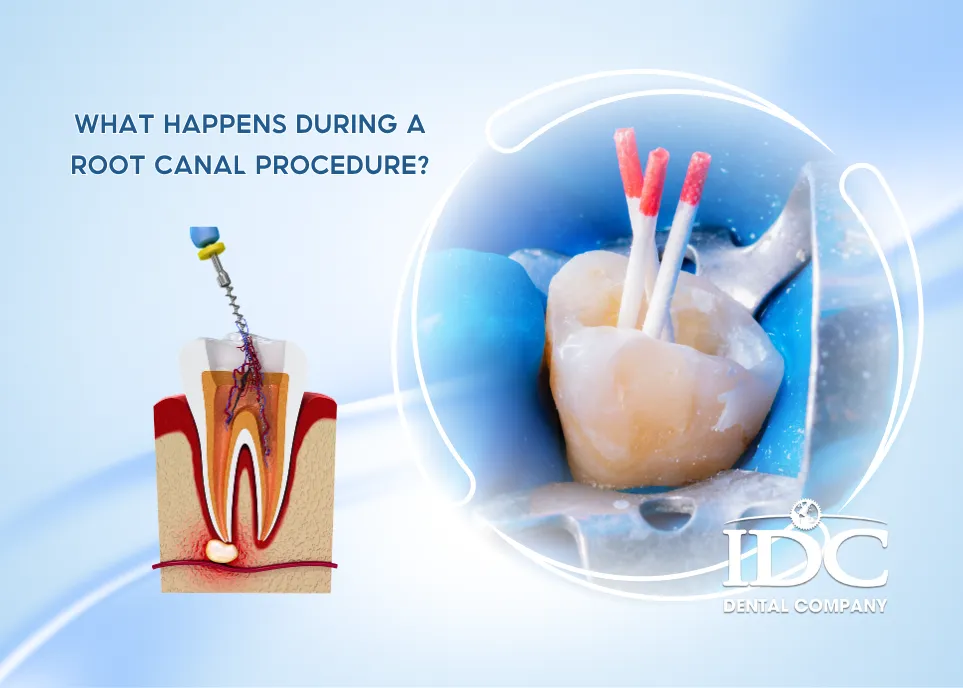
If your dentist has recommended this treatment, understanding what happens during a root canal procedure can help reduce anxiety and give you confidence about the process. In this guide, we’ll explain each step of the procedure, what to expect during recovery, and how root canal therapy helps restore your oral health.
What Is a Root Canal Procedure?
A root canal procedure is a dental treatment that removes infected or damaged pulp from inside a tooth. The pulp contains nerves, blood vessels, and connective tissue that help the tooth develop during its early years.
When bacteria reach the pulp, inflammation and infection can occur. Since the pulp cannot heal itself once severely infected, the damaged tissue must be removed to prevent further complications.
The primary goals of root canal therapy are:
- Eliminate infection
- Relieve pain and discomfort
- Preserve the natural tooth
- Prevent the need for extraction
- Restore normal chewing function
With proper treatment and restoration, a tooth that has undergone root canal therapy can last for many years.
Understanding the Anatomy of a Tooth
To better understand the procedure, it helps to know the basic structure of a tooth.
Enamel
The enamel is the hard outer layer that protects the tooth from daily wear and bacterial attack.
Dentin
Located beneath the enamel, dentin forms the main structure of the tooth and contains microscopic channels that can transmit sensations.
Dental Pulp
The pulp chamber contains nerves, blood vessels, and connective tissue. This area is located in the center of the tooth and extends into the roots.
Root Canals
Root canals are narrow pathways that extend from the pulp chamber down through the roots of the tooth. During root canal therapy, these canals are cleaned and disinfected.
Why Might You Need a Root Canal Procedure?
Several conditions can damage the pulp and make root canal therapy necessary.
Deep Tooth Decay
Untreated cavities can penetrate through the enamel and dentin, eventually reaching the pulp.
Cracked or Fractured Teeth
Cracks can provide bacteria with access to the inner structures of the tooth.
Dental Trauma
A sports injury, accident, or fall may damage the pulp even if no visible fracture exists.
Repeated Dental Procedures
Multiple fillings or restorations on the same tooth can weaken and irritate the pulp over time.
Severe Infection
When bacteria invade the pulp, infection may spread to the surrounding bone and soft tissues.
Signs That May Indicate You Need Root Canal Therapy
Patients requiring root canal treatment often experience symptoms such as:
Persistent Tooth Pain
Pain that continues for days or weeks should never be ignored.
Sensitivity to Hot and Cold
Lingering sensitivity after consuming hot or cold foods may indicate pulp inflammation.
Pain When Chewing
Discomfort while biting down often suggests infection around the tooth root.
Swollen Gums
Localized swelling near a tooth can signal infection.
Tooth Discoloration
An infected tooth may gradually become darker than surrounding teeth.
Gum Abscess
A pimple-like bump on the gums may indicate a dental abscess requiring immediate attention.
Step-by-Step: What Happens During a Root Canal Procedure?
Step 1: Comprehensive Examination and Diagnosis
Before treatment begins, your dentist or endodontist performs a thorough examination.
This may include:
- Clinical evaluation
- Digital X-rays
- CBCT imaging (when necessary)
- Pulp vitality testing
These diagnostic tools help determine the extent of infection and confirm whether root canal therapy is needed.
Step 2: Administering Local Anesthesia
One of the biggest concerns patients have is pain.
Fortunately, modern root canal procedures are performed under local anesthesia, which numbs the tooth and surrounding tissues.
Most patients report feeling little to no pain during treatment. In fact, many compare the experience to receiving a routine dental filling.
The anesthesia ensures comfort throughout the procedure.
Step 3: Isolating the Tooth
Once the area is numb, a rubber dental dam is placed around the tooth.
This protective barrier serves several important purposes:
- Keeps the treatment area dry
- Prevents saliva contamination
- Improves visibility
- Enhances patient safety
The dental dam allows the dentist to work in a clean and controlled environment.
Step 4: Creating an Access Opening
The dentist creates a small opening through the top of the tooth.
This access point allows entry into the pulp chamber and root canals.
Using specialized instruments, the infected or damaged pulp tissue is carefully removed.
At this stage, the source of pain and infection begins to be eliminated.
Step 5: Cleaning and Shaping the Root Canals
This is one of the most important phases of root canal therapy.
The dentist uses tiny instruments to:
- Remove infected tissue
- Eliminate bacteria
- Clean the canal walls
- Shape the canals for filling
Throughout the process, disinfecting solutions are used to flush out debris and kill remaining bacteria.
Modern rotary instruments and advanced irrigation techniques make cleaning more precise and efficient than ever before.
Step 6: Filling the Root Canals
After the canals have been thoroughly cleaned and disinfected, they are filled with a biocompatible material called gutta-percha.
Gutta-percha helps:
- Seal the canals
- Prevent bacterial re-entry
- Stabilize the internal structure of the tooth
A special dental sealer is also used to ensure a tight seal.
This step significantly reduces the risk of future infection.
Step 7: Temporary Restoration
In some cases, a temporary filling is placed after the root canal procedure.
This temporary restoration protects the tooth until a permanent restoration can be completed.
Patients are typically advised to avoid chewing hard foods on the treated tooth during this period.
What Happens After the Root Canal?
After treatment, the tooth needs to be restored to full function.
Depending on the amount of remaining tooth structure, your dentist may recommend:
- A permanent filling
- An onlay
- A dental crown
For back teeth, crowns are often recommended because they provide additional strength and protection.
A properly restored tooth can function normally for many years and often for decades.
Does a Root Canal Procedure Hurt?
Modern root canal therapy is designed to eliminate pain rather than cause it.
Most discomfort patients experience comes from the infection itself, not the treatment.
After the procedure, mild soreness or tenderness may occur for a few days. This is usually manageable with over-the-counter medications and gradually improves as healing progresses.
For many patients, the relief from infection-related pain is noticeable almost immediately after treatment.




 WhatsApp