
Weak tooth enamel can make your teeth more sensitive and vulnerable to cavities, discoloration, and acid erosion. Enamel is the protective outer layer of your teeth, but it can gradually wear down due to acids, poor oral hygiene, diet, and other factors.
Common signs include tooth sensitivity, white spots, yellowish teeth, rough surfaces, and frequent cavities. Early enamel damage can often be managed with good oral hygiene, fluoride, and remineralization. However, enamel that has been permanently lost cannot naturally grow back.
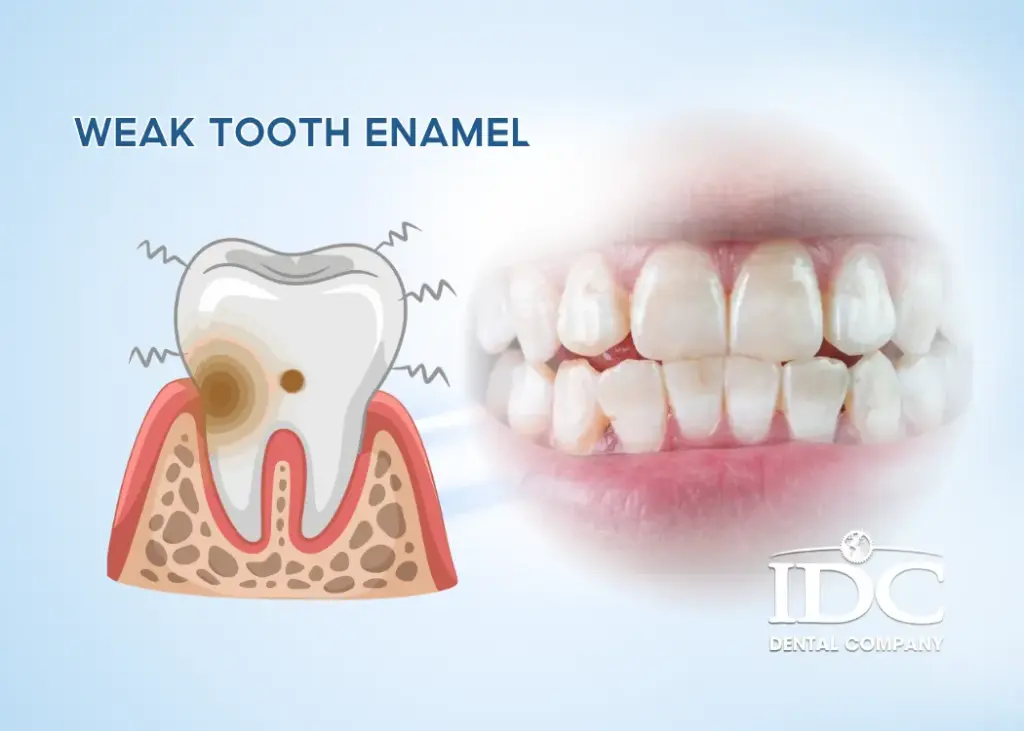
Understanding the causes of weak tooth enamel and treating the problem early can help protect your teeth and maintain a healthier smile.
What Is Tooth Enamel?
Tooth enamel is the outermost protective layer covering the visible part of your teeth. It is composed primarily of mineral crystals, especially hydroxyapatite, which gives enamel its remarkable hardness.
Enamel protects the underlying dentin and dental pulp from:
- Acid exposure
- Bacteria and plaque
- Hot and cold temperatures
- Pressure from chewing
- Physical and chemical wear
Unlike many tissues in the body, mature tooth enamel does not contain living cells. This means that once enamel is completely lost, the body cannot regenerate a new layer of enamel.
However, enamel is constantly exposed to a process called demineralization and remineralization.
Acids can remove minerals from enamel, while saliva and fluoride can help replace or strengthen minerals during remineralization. When detected early, this process may help stop or slow the progression of enamel damage.
What Does Weak Tooth Enamel Mean?
“Weak tooth enamel” is a common term used to describe enamel that is more vulnerable to mineral loss, erosion, wear, or damage.
It is important to distinguish several related conditions.
Enamel demineralization
Demineralization occurs when acids cause minerals to leave the enamel surface. Early demineralization may appear as white spots on the teeth.
Enamel erosion
Enamel erosion refers to the gradual loss of tooth structure caused primarily by chemical or acid exposure.
Thin enamel
Some people naturally have thinner enamel, while others may develop reduced enamel thickness because of developmental conditions or long-term tooth wear.
Enamel defects
Conditions such as enamel hypoplasia can affect the development and quality of enamel, sometimes beginning during childhood.
Because these conditions have different causes, a dental examination may be necessary to determine why your enamel appears weak.
Signs of Weak Tooth Enamel
Weak or damaged enamel does not always cause obvious symptoms at first. Some people only discover the problem during a routine dental examination.
Common signs include:
Tooth Sensitivity
You may experience a sharp or uncomfortable sensation when eating or drinking:
- Cold foods
- Ice cream
- Hot beverages
- Sweet foods
- Acidic foods
Sensitivity may occur when enamel becomes thinner and exposes the underlying dentin.
However, tooth sensitivity does not always mean you have weak enamel. Gum recession, cavities, cracked teeth, worn fillings, and other dental problems can also cause sensitivity.
White Spots on Teeth
White spots may be an early sign of enamel demineralization. They can occur when minerals are lost from the enamel surface.
However, white spots may also have other causes, including developmental enamel defects, so they should not automatically be assumed to be caused by poor oral hygiene.
Yellow or Translucent Teeth
As enamel becomes thinner, the naturally yellowish color of the dentin underneath may become more visible.
The edges of teeth may also appear translucent, particularly when enamel has been significantly worn or eroded.
Rough or Uneven Tooth Surfaces
Healthy enamel is generally smooth. Enamel erosion or wear may cause changes in the texture and shape of the tooth surface.
Chipped or Cracked Teeth
Severely worn or structurally compromised teeth may become more vulnerable to chips, cracks, or fractures.
Increased Risk of Cavities
Demineralized enamel is more vulnerable to further mineral loss and tooth decay, particularly when combined with plaque, frequent sugar exposure, and inadequate oral hygiene.
What causes weak tooth enamel?
Several factors can contribute to enamel weakening. Often, more than one factor is involved.
1. Acid Erosion
Acid exposure is one of the most important causes of enamel erosion.
Acids can come from:
- Soda
- Energy drinks
- Sports drinks
- Fruit juices
- Citrus fruits
- Vinegar-based foods
- Other acidic foods and beverages
When the oral environment becomes acidic, minerals can be removed from the enamel.
Frequent exposure is particularly important. Drinking a small amount of an acidic beverage once is very different from sipping it continuously throughout the day.
2. Sugar and Dental Plaque
Sugar itself does not simply dissolve enamel. The problem is what happens after sugar interacts with bacteria in dental plaque.
Oral bacteria can metabolize sugars and produce acids. These acids can lower the pH around the teeth and contribute to enamel demineralization.
Frequent consumption of sugary snacks and drinks can therefore increase the number of times your teeth are exposed to an acidic environment.
3. Poor oral hygiene
Inadequate brushing and failure to clean between teeth can allow plaque to accumulate.
Plaque contains bacteria that contribute to acid production and tooth decay.
At the same time, brushing too aggressively can contribute to tooth wear and gum recession. Good oral hygiene is therefore about proper technique rather than simply brushing harder.
4. Teeth Grinding and Clenching
Bruxism, or chronic teeth grinding and clenching, can place excessive mechanical forces on the teeth.
Over time, this may contribute to:
- Flattened tooth surfaces
- Enamel wear
- Tooth sensitivity
- Cracks
- Chipping
If you regularly wake up with jaw discomfort or headaches, or notice unusual tooth wear, talk to a dentist about possible bruxism.
5. Dry Mouth
Saliva plays an important role in protecting teeth.
It helps:
- Neutralize acids
- Wash away food particles
- Provide minerals
- Support enamel remineralization
Reduced saliva flow can therefore increase the risk of tooth decay and enamel damage.
Dry mouth may be associated with dehydration, certain medications, medical conditions, or other factors.
6. Acid Reflux
People with gastroesophageal reflux disease (GERD) may experience repeated exposure of their teeth to stomach acid.
Over time, this can contribute to dental erosion.
If you experience frequent heartburn, acid reflux, regurgitation, or unexplained enamel erosion, discuss these symptoms with an appropriate healthcare professional.
7. Developmental and Nutritional Factors
Enamel quality is also influenced by how teeth develop.
Some people may have enamel defects that developed during childhood. These may affect the thickness, structure, or appearance of enamel.
Nutrition is also important for overall oral health. Calcium, phosphorus, vitamin D, protein, and other nutrients contribute to normal development and maintenance of teeth.
However, having weak enamel does not automatically mean that you have a calcium deficiency.
Can Weak Tooth Enamel Be Restored?
This is one of the most important questions about enamel health.
Can tooth enamel grow back?
Unfortunately, completely lost tooth enamel cannot naturally grow back.
Mature enamel does not contain living cells capable of regenerating a new layer of enamel.
However, early enamel damage may be different.
Can enamel remineralize?
Yes. Early enamel demineralization can potentially undergo remineralization.
During remineralization, minerals from saliva and other sources can return to the enamel structure.
Fluoride can also help strengthen enamel and make it more resistant to acid attacks.
The goal is therefore not to “regrow” enamel that has disappeared but to:
- Stop or slow mineral loss
- Support remineralization
- Protect remaining enamel
- Reduce acid exposure
- Prevent cavities
- Treat structural damage when necessary
Weak Tooth Enamel: What Should You Do?
If you suspect that your enamel is weak, several practical steps can help protect your teeth.
Use Fluoride Toothpaste
Fluoride is one of the most important tools for preventing tooth decay and supporting enamel remineralization.
Brush your teeth twice a day with fluoride toothpaste unless your dentist recommends a different routine.
People with a higher risk of cavities may benefit from additional fluoride treatments or prescription-strength fluoride products under professional guidance.
Use a Soft-Bristled Toothbrush
Choose a soft-bristled toothbrush and avoid excessive pressure.
Brushing harder does not necessarily clean your teeth better. Aggressive brushing can contribute to gum recession and tooth wear.
Reduce Acid Exposure
Try to limit frequent exposure to acidic foods and beverages.
You do not necessarily need to eliminate every acidic food from your diet. Instead, focus on reducing frequency and prolonged contact with your teeth.
After consuming an acidic beverage, drinking or rinsing with water can help clear the mouth.
Avoid brushing immediately after significant acid exposure because the enamel surface may temporarily be more vulnerable to mechanical wear.
Reduce Frequent Sugar Consumption
Try to avoid continuously snacking on sugary foods or sipping sugary drinks throughout the day.
Reducing the frequency of sugar exposure can help lower the number of acid attacks your teeth experience.
Drink Water
Water helps maintain hydration and supports normal saliva function.
If you frequently experience dry mouth, however, it is important to identify the underlying cause rather than simply relying on water.
How to Strengthen Weak Tooth Enamel at Home
Although you cannot regrow enamel that has already been completely lost, you can take steps to protect existing enamel and support remineralization.
A good daily routine includes:
- Brush twice a day with fluoride toothpaste.
- Use a soft-bristled toothbrush.
- Clean between your teeth regularly.
- Limit sugary snacks and beverages.
- Reduce frequent exposure to acidic drinks.
- Drink water regularly.
- Maintain a balanced diet.
- Visit your dentist for routine examinations.
Avoid DIY Enamel Treatments
Some popular home remedies can actually increase enamel damage.
Avoid using lemon juice or vinegar to whiten teeth. Their acidity can contribute to enamel erosion.
Similarly, excessive use of abrasive powders or baking soda may damage tooth surfaces if used improperly or too aggressively.
If you want whiter teeth, talk to your dentist about safer professional or dentist-recommended whitening options.
Does Calcium Restore Weak Tooth Enamel?
Calcium is an important mineral for healthy bones and teeth, but taking calcium supplements does not automatically rebuild lost enamel.
Enamel weakness does not necessarily mean that your body lacks calcium.
The health of enamel depends on multiple factors, including:
- Saliva
- Fluoride
- Oral bacteria
- Acid exposure
- Diet
- Oral hygiene
- Tooth development
- Individual risk factors
If you suspect a nutritional deficiency, speak with a healthcare professional rather than taking supplements without an appropriate evaluation.
Professional Treatments for Weak Tooth Enamel
If enamel has already been damaged, a dentist can determine how advanced the problem is and identify the underlying cause.
Professional Fluoride Treatment
Professional fluoride treatments may be recommended for people with a higher risk of tooth decay or enamel demineralization.
Fluoride can help strengthen enamel and improve resistance to acid attacks.
Remineralization Support
For early enamel lesions, your dentist may recommend products or treatments designed to support remineralization.
The specific approach depends on your oral health, cavity risk, and severity of mineral loss.
Dental Fillings or Bonding
If enamel damage has progressed to a cavity or caused a structural defect, a filling or dental bonding may be used to restore the affected tooth.
These treatments can help protect the remaining tooth structure and restore function.
Veneers
Veneers may sometimes be considered for cosmetic or structural concerns involving enamel loss.
However, veneers are not automatically appropriate for everyone with weak enamel. Your dentist should evaluate the condition of the tooth before recommending cosmetic treatment.
Dental Crowns
Crowns may be considered when a significant amount of tooth structure has been lost or when a tooth has become structurally compromised.
The goal is to protect and restore the tooth rather than simply treat the appearance of weak enamel.
Weak Enamel and Tooth Sensitivity
Enamel protects the dentin underneath it.
When enamel becomes significantly thinner or is lost, dentin can become exposed.
This can lead to sensitivity through stimulation of structures within the dentin.
You may notice sensitivity when consuming:
- Cold water
- Ice cream
- Hot coffee
- Sweet foods
- Acidic foods
However, persistent sensitivity should not automatically be attributed to weak enamel.
Other possible causes include:
- Gum recession
- Tooth decay
- Cracked teeth
- Worn fillings
- Teeth whitening
- Exposed dentin
A dental examination can help determine the actual cause.
Does Weak Enamel Cause Cavities?
Weak or demineralized enamel can increase susceptibility to tooth decay, particularly when combined with plaque and frequent sugar exposure.
The process can be summarized as:
Plaque + sugar → acid production → mineral loss → enamel damage → cavity formation
Early enamel demineralization may appear as white spots.
If the process continues, the enamel can break down and eventually form a cavity.
Early detection is important because preventive treatment may be possible before significant tooth structure is lost.
Common Mistakes That Can Damage Tooth Enamel
Brushing Too Hard
Excessive brushing pressure can contribute to tooth wear and gum recession.
Using a Hard-Bristled Toothbrush
A soft-bristled brush is generally a better choice for daily cleaning.
Drinking Soda Throughout the Day
Frequent exposure to acidic beverages can increase the risk of enamel erosion.
Brushing Immediately After Acidic Foods
Waiting before brushing may help reduce mechanical wear on enamel that has recently been exposed to acid.
Using Lemon to Whiten Teeth
Lemon is acidic and is not a safe enamel-whitening treatment.
Excessive Baking Soda Use
Baking soda does not rebuild enamel, and excessive or aggressive use may contribute to surface wear.
Ignoring Persistent Tooth Sensitivity
Sensitivity can be an early warning sign of enamel erosion, cavities, gum recession, or other dental problems.
When Should You See a Dentist?
Schedule a dental examination if you notice:
- Persistent tooth sensitivity
- Increasing sensitivity
- Visible enamel erosion
- White, brown, or black spots
- Tooth discoloration
- Chipped teeth
- Cracked teeth
- Pain when chewing
- Cavities
- Significant tooth wear
- Frequent teeth grinding
- Symptoms of acid reflux
A dentist can determine whether your symptoms are related to enamel erosion, demineralization, tooth decay, gum recession, bruxism, or another condition.
Frequently Asked Questions About Weak Tooth Enamel
Can weak tooth enamel grow back?
No. Enamel that has been completely lost cannot naturally grow back. However, early enamel demineralization may be managed through remineralization and preventive dental care.
Can damaged enamel repair itself?
Early mineral loss can potentially be reversed or stabilized through remineralization. However, enamel that has physically worn away cannot regenerate naturally.
What is the best toothpaste for weak enamel?
A fluoride toothpaste is generally an important part of protecting enamel and preventing cavities. Your dentist can recommend a specific product based on your individual needs.
Does fluoride strengthen tooth enamel?
Yes. Fluoride can help strengthen enamel and make it more resistant to acid-related mineral loss.
Does calcium rebuild tooth enamel?
Calcium is important for dental health, but taking calcium supplements does not automatically rebuild enamel that has already been lost.
Can weak enamel cause sensitive teeth?
It can. Enamel loss can expose dentin and contribute to sensitivity. However, sensitivity has many possible causes.
Can I whiten my teeth if I have weak enamel?
If you have enamel erosion or significant sensitivity, it is best to have your teeth evaluated before whitening. Whitening products may increase sensitivity in some people.
How long does enamel remineralization take?
The timeline varies depending on the severity of mineral loss, oral hygiene, fluoride exposure, diet, saliva, and other individual factors. Early intervention is generally more favorable than waiting for significant enamel loss.


 WhatsApp