
Replacing dental crowns in Da Nang is a suitable option for patients with old, damaged, loose, discolored, or poorly fitting crowns. Over time, crowns may need replacement due to wear, changes in the supporting tooth, gum recession, or aesthetic concerns.
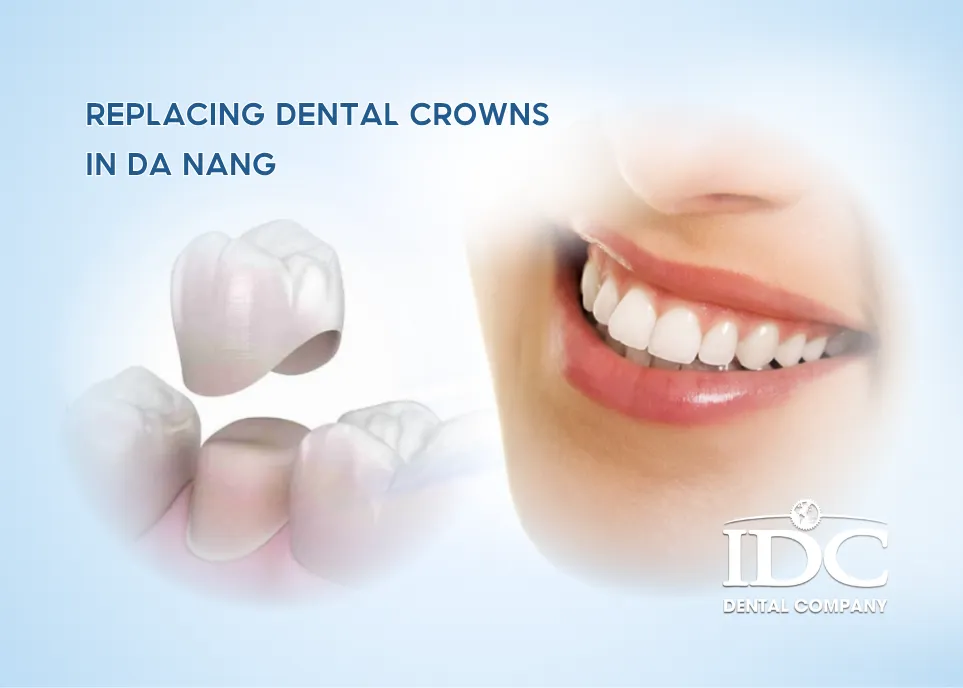
With modern options such as zirconia and all-ceramic crowns, patients can restore both dental function and a natural-looking smile. Before replacement, a dentist should evaluate the existing crown, underlying tooth, gums, and bite to determine the most appropriate treatment.
What Is Dental Crown Replacement?
Dental crown replacement is the process of removing an existing crown and restoring the tooth with a new one.
A dental crown is a custom-made restoration that covers the visible portion of a prepared tooth. It may be used to restore a heavily damaged tooth, protect a tooth after certain dental procedures, improve function, or enhance appearance.
Replacing an existing crown differs from receiving a crown for the first time. Once the old crown is removed, the dentist must carefully evaluate what has happened to the natural tooth underneath.
The replacement process may involve:
- Removing the existing crown
- Examining the underlying tooth
- Checking for decay, cracks, or other problems
- Assessing the gums and crown margins
- Rebuilding damaged tooth structure when necessary
- Preparing or refining the tooth
- Taking a digital scan or dental impression
- Designing and fabricating a new crown
- Checking the fit, bite, shape, and color
- Cementing or bonding the final restoration
The exact procedure depends on the condition of each tooth.
How Long Do Dental Crowns Last?
There is no single lifespan that applies to every dental crown. Some crowns remain functional for many years, while others may need attention earlier because of damage, decay, gum changes, or excessive biting forces.
Several factors can affect crown longevity, including:
- Crown material
- Quality of fit
- Oral hygiene
- Gum health
- Condition of the supporting tooth
- Bite forces
- Teeth grinding or clenching
- Dietary habits
- Tooth location
- Regular dental care
Importantly, an older crown does not automatically need to be replaced. If it remains stable, comfortable, functional, and clinically acceptable, a dentist may recommend continuing to monitor it.
Replacement is generally considered when there is a functional, biological, structural, or aesthetic reason to do so.
Signs Your Dental Crown May Need Replacement
Some crown problems are easy to recognize, while others may only be detected during a dental examination.
Cracked or Chipped Crown
Porcelain or ceramic surfaces can occasionally chip or fracture. Minor defects may sometimes be managed without replacing the entire crown, while more significant damage may require a new restoration.
The dentist will evaluate the location and extent of the fracture before recommending treatment.
Loose Dental Crown
A crown that moves when chewing or touching it should be examined.
Possible reasons include deterioration of the cement, decay underneath the restoration, changes in the supporting tooth, or problems related to biting forces.
A loose crown should not simply be ignored because bacteria and food debris may enter the space around the restoration.
Pain or Sensitivity
Pain around a crowned tooth does not necessarily mean the crown itself has failed.
Sensitivity or discomfort may result from:
- Tooth decay
- Gum inflammation
- Bite problems
- Pulp inflammation
- Cracks in the supporting tooth
- Problems around the crown margin
A dental examination is necessary to identify the cause before deciding whether replacement is appropriate.
Dark Line Around the Crown
Some patients notice a dark line near the gumline, particularly around older restorations.
This can result from the crown material, gum recession, exposure of the restoration margin, or changes to the underlying tooth.
For front teeth, visible dark margins can also become an aesthetic concern.
Poor Color Match
Natural teeth can change appearance over time, and patients may also undergo teeth whitening or other cosmetic procedures. Existing crowns do not whiten in the same way as natural enamel.
As a result, an older crown may eventually look noticeably different from surrounding teeth.
Replacing the crown may be considered when improving smile aesthetics is an important treatment goal.
Gum Recession
When gums recede, the edge of a crown or part of the natural root may become visible.
This can create aesthetic concerns and sometimes make the area more difficult to keep clean. The dentist should evaluate both the crown and the health of the surrounding periodontal tissues.
Food Trapping Around the Crown
If food repeatedly becomes trapped between a crown and neighboring teeth, there may be an issue with the contact area, crown contour, gum condition, or tooth position.
Persistent food trapping can contribute to plaque accumulation and gum irritation.
Can Tooth Decay Develop Under a Dental Crown?
Yes. A crowned tooth can still develop tooth decay.
A crown covers much of the visible tooth structure, but the natural tooth remains underneath. The area where the crown meets the tooth—known as the crown margin—can still accumulate plaque.
If bacteria and plaque remain around this area, decay may develop in the exposed natural tooth structure and potentially spread underneath the restoration.
Possible warning signs include:
- Sensitivity
- Pain when biting
- Bad taste
- Persistent bad breath
- Changes around the crown margin
- Gum inflammation
However, decay beneath a crown may not always cause noticeable symptoms in its early stages.
This is one reason routine dental examinations remain important even when crowns appear to be functioning normally.
Should Every Old Dental Crown Be Replaced?
No. The age of a crown alone is not enough to determine whether replacement is necessary.
If an older crown remains structurally sound, has acceptable margins, functions comfortably, and there are no significant problems with the underlying tooth or surrounding gums, replacement may not be required.
A dentist generally considers several factors before recommending treatment:
- Crown integrity
- Crown margins
- Tooth structure
- Gum health
- Bite
- Aesthetic appearance
- Symptoms
- Evidence of decay or infection
Replacing a healthy restoration unnecessarily may require additional removal of tooth structure. Therefore, treatment decisions should be based on clinical findings rather than age alone.
How Is an Existing Dental Crown Evaluated?
Before replacing a dental crown in Da Nang, a comprehensive evaluation is important.
The dentist may examine:
- The crown’s surface and margins
- Gum health
- Tooth sensitivity
- Bite and occlusion
- Remaining natural tooth structure
- Signs of decay
- Previous fillings or core restorations
- Existing root canal treatment
- Surrounding periodontal tissues
Dental X-rays may also be recommended when clinically appropriate.
These examinations help determine whether the problem is limited to the crown or involves the tooth underneath.
Dental Crown Replacement Procedure in Da Nang
The exact process varies from patient to patient, but dental crown replacement commonly involves several stages.
Step 1: Consultation and Examination
Treatment begins with an evaluation of the existing crown and surrounding oral structures.
Patients should tell the dentist about symptoms such as sensitivity, pain when biting, looseness, food trapping, or aesthetic concerns.
For patients replacing front crowns, smile appearance, tooth proportions, shade, and gumline may also be evaluated.
Step 2: Dental Imaging When Necessary
Dental X-rays may be used to evaluate the roots, surrounding bone, previous root canal treatment, or possible decay beneath the crown.
Not every patient requires the same diagnostic procedures.
Step 3: Removing the Existing Crown
The old crown is carefully removed so the dentist can access and inspect the underlying tooth.
In some situations, the crown may need to be sectioned during removal, meaning it cannot be reused.
Step 4: Examining the Tooth Underneath
Once the old restoration has been removed, the dentist can directly assess the condition of the supporting tooth.
Possible findings include:
- Healthy remaining tooth structure
- Tooth decay
- An old filling or core that needs replacement
- A crack or fracture
- Insufficient remaining tooth structure
- Signs of pulp or root problems
This stage is particularly important because the final treatment plan may change depending on what is discovered.
Step 5: Treating Existing Dental Problems
If decay is present, the affected tooth structure may need to be treated before the new crown is made.
Some patients may require a core build-up to provide adequate support for the new restoration. Root canal treatment may be considered when there is a clinical indication involving the dental pulp or existing infection.
The goal is to create a healthy and stable foundation before placing the replacement crown.
Step 6: Tooth Preparation
The tooth is prepared or refined to create appropriate space and geometry for the new crown.
Whenever possible, preserving healthy natural tooth structure is an important consideration.
Step 7: Digital Scan or Dental Impression
The dentist records the prepared tooth, neighboring teeth, and bite using a digital scanner or conventional dental impression.
This information is used to design the replacement restoration.
Step 8: Temporary Crown
When the final crown cannot be placed immediately, a temporary crown may be used to protect the prepared tooth.
Patients should follow instructions regarding chewing and cleaning around temporary restorations.
Step 9: Creating the New Crown
The replacement crown is designed according to factors such as:
- Tooth position
- Available space
- Bite
- Shape of neighboring teeth
- Tooth shade
- Gumline
- Aesthetic expectations
For visible front teeth, additional attention may be given to translucency, proportions, surface texture, and how the crown interacts with the patient’s smile.
Step 10: Final Placement
Before final cementation or bonding, the dentist checks:
- Crown fit
- Marginal adaptation
- Contact with neighboring teeth
- Bite
- Shape
- Shade
- Overall appearance
Adjustments may be made before the restoration is finalized.
What Types of Dental Crowns Are Available?
The most appropriate crown material depends on tooth position, bite forces, remaining tooth structure, and aesthetic requirements.
Zirconia Crowns
Zirconia is widely used in modern restorative dentistry because of its strength and tooth-colored appearance.
Different types of zirconia offer different balances between strength and translucency. Depending on the clinical situation, zirconia may be considered for both front and back teeth.
All-Ceramic Crowns
All-ceramic restorations can provide highly aesthetic results, particularly in visible areas of the smile.
Their optical properties can help reproduce characteristics such as translucency and natural tooth color.
The specific ceramic material should be selected according to the tooth’s position and functional requirements.
Porcelain-Fused-to-Metal Crowns
Porcelain-fused-to-metal, or PFM, crowns combine a metal substructure with an outer porcelain layer.
They have been widely used for many years and can provide functional restorations. However, some patients may develop aesthetic concerns when a darker margin becomes visible near the gumline.
This is one reason patients with older PFM crowns sometimes consider replacing them with newer tooth-colored restorations.
Zirconia or Ceramic: Which Is Better?
There is no crown material that is automatically best for every patient.
Zirconia may be particularly useful when strength is a major consideration, while certain ceramic restorations can provide excellent optical properties for highly visible teeth.
Material selection should consider:
- Front or back tooth
- Bite forces
- Bruxism
- Amount of remaining tooth structure
- Available restorative space
- Desired aesthetics
- Condition of neighboring teeth
A dentist can recommend a material after examining the individual case.
Replacing Front Dental Crowns for a More Natural Smile
Replacing front crowns often involves a strong cosmetic component.
Patients may seek replacement because their existing crowns:
- Look too white or opaque
- Have dark margins
- Appear bulky
- Do not match neighboring teeth
- Have uneven shapes
- No longer fit the current gumline
Creating a natural-looking front crown involves more than choosing a shade.
The dentist and dental laboratory may consider tooth proportions, translucency, surface texture, incisal characteristics, smile line, neighboring teeth, and gum symmetry.
When several front crowns are being replaced, the overall relationship between the teeth becomes especially important.
Can Several Dental Crowns Be Replaced at the Same Time?
Yes. Multiple crowns can sometimes be replaced within the same treatment plan.
This may be appropriate for patients with several aging restorations or those seeking greater consistency in the appearance of their front teeth.
However, replacing multiple crowns requires careful planning because the dentist must consider:
- Bite relationships
- Tooth proportions
- Gum health
- Tooth alignment
- Smile symmetry
- Functional contacts
The decision should therefore be based on clinical needs rather than simply replacing every older crown automatically.
Is Dental Crown Replacement Painful?
Patient comfort is an important part of restorative dental treatment.
Local anesthesia may be used when necessary during crown removal and tooth preparation. Patients may notice pressure or vibration during the procedure, but anesthesia can help control discomfort when treatment involves sensitive natural tooth structure.
Some temporary sensitivity may occur afterward, particularly if the underlying tooth remains vital.
The level of discomfort varies depending on the condition of the tooth and the complexity of treatment.
Persistent or increasing pain after treatment should be reported to the dentist.
How Long Does Dental Crown Replacement Take?
Treatment time depends on the individual case.
A relatively straightforward crown replacement may require fewer appointments than a tooth with extensive decay, gum problems, or a need for root canal treatment.
Other factors include:
- Number of crowns
- Crown material
- Laboratory workflow
- Digital technology
- Need for temporary restorations
- Additional restorative treatment
International patients should therefore avoid assuming that every crown can be replaced within the same fixed timeframe.
A dental examination allows the treatment team to provide a more realistic schedule.
Can Dental Crowns Be Replaced During a Short Trip to Da Nang?
For some patients, crown replacement can be incorporated into a trip to Da Nang. However, the required length of stay depends on the number of crowns and the complexity of treatment.
A typical treatment journey may include:
Consultation → examination → treatment planning → old crown removal → tooth preparation → scan or impression → crown fabrication → try-in → final placement.
Additional appointments may be necessary if underlying dental problems are discovered.
International patients considering treatment during a holiday should ideally contact the dental clinic before arriving. Existing X-rays, dental records, and photographs may provide useful preliminary information, although an in-person examination is still necessary for a definitive treatment plan.
Why Consider Dental Crown Replacement in Da Nang?
Da Nang has become a destination where international visitors can access a range of dental services while staying in one of Vietnam’s major coastal cities.
Patients looking for dental crown replacement in Da Nang may consider factors such as:
- Availability of restorative and cosmetic dental services
- Modern dental imaging and digital workflows at appropriately equipped clinics
- Access to zirconia and ceramic restorations
- English-speaking dental teams at clinics serving international patients
- Ability to coordinate treatment with travel schedules
- Potential differences in treatment costs compared with some countries
Cost alone, however, should not be the only consideration. Patients should also evaluate diagnosis, treatment planning, materials, sterilization procedures, communication, aftercare, and how complications would be managed if they occur.
Dental Crown Replacement for International Patients
International patients may benefit from planning treatment before traveling.
When contacting a dental clinic, useful information may include:
- Which teeth currently have crowns
- How old the restorations are
- Current symptoms
- Previous root canal treatment
- Recent dental X-rays
- Photographs of the teeth
- Travel dates
- Desired aesthetic changes
This information can help the dental team understand the case before arrival.
However, online consultations should be considered preliminary. The final diagnosis and treatment plan generally require an in-person clinical examination.
For travelers, it is also useful to ask how many appointments are expected and how much time should remain after final crown placement for review or adjustment.
How Much Does Dental Crown Replacement Cost in Da Nang?
The cost of replacing dental crowns varies depending on the individual treatment plan.
Factors affecting the total cost may include:
- Crown material
- Number of crowns
- Condition of the supporting teeth
- Need for core build-ups
- Existing tooth decay
- Root canal treatment when required
- Gum treatment
- Diagnostic imaging
- Additional restorative procedures
For this reason, comparing prices based only on the advertised cost of a single crown may not provide an accurate estimate.
A personalized treatment plan after dental evaluation provides a clearer understanding of the expected costs.
How to Care for Your New Dental Crowns
A crown still requires daily care because the natural tooth and gums around it remain vulnerable to dental disease.
Patients should:
- Brush twice daily
- Clean between teeth every day
- Pay particular attention to crown margins
- Avoid chewing extremely hard objects such as ice
- Avoid using teeth to open packaging
- Maintain regular dental examinations
Floss, interdental brushes, or other cleaning aids may be recommended depending on the restoration and spacing between teeth.
Patients who grind or clench their teeth may also be advised to use a night guard when clinically appropriate.
When Should You See a Dentist About an Existing Crown?
Arrange a dental evaluation if you notice:
- A crown becoming loose
- Cracks or chips
- Pain when biting
- Persistent tooth sensitivity
- Swollen or bleeding gums around the crown
- Repeated food trapping
- Persistent unpleasant taste or odor
- Visible dark crown margins
- Significant changes in appearance
Early evaluation may sometimes allow a problem to be managed before more extensive treatment becomes necessary.
Frequently Asked Questions About Dental Crown Replacement
How do I know if my crown needs to be replaced?
Possible signs include looseness, fractures, recurrent decay, persistent discomfort, poor fit, exposed margins, or significant aesthetic concerns. A dentist should evaluate the crown before replacement is recommended.
Can tooth decay develop underneath a crown?
Yes. Natural tooth structure remains underneath and around the restoration, so decay can occur near the crown margin and potentially spread beneath it.
Can a crown on a root canal-treated tooth be replaced?
In many cases, yes. However, the dentist needs to evaluate the remaining tooth structure, existing root canal treatment, root condition, and surrounding tissues before determining the treatment plan.
Can a metal-based crown be replaced with zirconia?
It may be possible in appropriate cases. The suitability of zirconia depends on factors such as tooth position, remaining tooth structure, restorative space, bite, and aesthetic requirements.
Should all old crowns be replaced together?
Not necessarily. Crowns that remain clinically acceptable may not require replacement. Multiple crowns may be replaced together when there is a functional or aesthetic reason supported by appropriate treatment planning.
How many times can a dental crown be replaced?
There is no universal number. Each replacement requires evaluation of how much healthy tooth structure remains and whether the tooth can continue to support another restoration.
How long should I stay in Da Nang for crown replacement?
The required time varies according to the number of crowns, condition of the supporting teeth, laboratory workflow, and whether additional treatment is necessary. International patients should confirm their expected treatment schedule before finalizing travel plans.



 WhatsApp